
Foxtail orchid
Rhynchostylis retusa, family Orchidaceae
In its own language: কপৌ ফুল
A long, hanging orchid with many pink-spotted white blooms
Foxtail orchid is an epiphytic orchid with dense, drooping spikes of small, white flowers marked with pink. Native to forests across South and Southeast Asia, it grows on trees and is especially valued in Assam and Sri Lanka, where it is a floral emblem and part of traditional celebrations.
- Produces hanging spikes with over 100 pink-spotted white flowers
- Grows on tree trunks in forests from India to Southeast Asia
- State flower of Assam and Arunachal Pradesh in India
- Worn by dancers during Bihu festival in Assam
- Used in traditional medicine for various ailments
What does Foxtail orchid look like?
This orchid grows on trees and produces long, hanging clusters of over a hundred small flowers. Each flower is white with pink spots, and the whole spike can reach up to 60 cm in length. The plant has short, thick stems and up to a dozen curved, fleshy leaves that are deeply grooved. Its dense floral spikes give it the name 'foxtail orchid.'
Where does Foxtail orchid come from?
Rhynchostylis retusa is found growing wild from the Himalayan foothills through Southeast Asia, including India, Nepal, Bhutan, Sri Lanka, and several other countries in the region. It prefers open forests and forest edges, clinging to tree trunks at moderate elevations. The plant has become rare in parts of India due to over-collection. It is celebrated as a floral symbol in Assam, Arunachal Pradesh, and Uva Province.
When and how Foxtail orchid blooms
The foxtail orchid blooms in winter and early spring, sending out its long, flower-laden spikes from the leaf bases. It thrives in humid, shaded spots with indirect light and needs regular watering, but the leaves should stay dry. Gardeners often grow it attached to bark or wood, mimicking its natural habitat as an epiphyte.


How Foxtail orchid is used
In Assam, the orchid is woven into wedding traditions and worn by Bihu dancers. It is also kept as an ornamental plant in gardens and homes. Traditional medicine in India and Nepal uses parts of the plant for a range of ailments, including wounds and rheumatism, though these uses are based on local practice.
Kinds of Foxtail orchid
The plant is known by different names in local languages, such as kopou phool in Assam and Chintaranamu in Andhra Pradesh. Its appearance is fairly consistent, but its cultural importance varies by region. There are no widely recognized horticultural varieties mentioned in the sources.
What Foxtail orchid means
In Assam, the foxtail orchid is a symbol of love, joy, and fertility. It is the state flower of both Assam and Arunachal Pradesh, and is also the provincial flower of Uva in Sri Lanka. The orchid is closely tied to festivals, weddings, and dance costumes, especially during the Bihu celebrations.
Questions people ask about Foxtail orchid
Where does the foxtail orchid come from?
It grows wild in forests across South and Southeast Asia, from the Himalayas through India, Nepal, Bhutan, Sri Lanka, and into countries like China, Thailand, and Indonesia.
What does the foxtail orchid look like?
It has long, drooping spikes packed with small white flowers, each marked with pink spots. The plant has fleshy, curved leaves and grows attached to trees.
How is the foxtail orchid used in culture?
In Assam, it is part of wedding ceremonies and worn by Bihu dancers. It is a symbol of love and festivity, and serves as a state or provincial flower in parts of India and Sri Lanka.
Is the foxtail orchid used in traditional medicine?
Yes, in India and Nepal, various parts of the plant have been used in local remedies for wounds, rheumatism, and other conditions.
When does the foxtail orchid bloom?
It typically flowers in winter and early spring, producing its long, dense floral spikes during these seasons.
Good reading and sources
- Plants of the World OnlineRoyal Botanic Gardens, Kew, Plant database
- Where it has been recordedGBIF, Plant database
- Sightings and photos by naturalistsiNaturalist, Plant database
- Rhynchostylis retusa on WikipediaEncyclopedia
- More photos on Wikimedia CommonsPhotos
- Wikidata recordOpen data
The facts on this page come from the Wikipedia article "Rhynchostylis retusa", written by its contributors and used under the CC BY-SA 4.0 licence, and from its Wikidata record (CC0). Phool rewrote the text in its own words, with AI assistance, and compares every page with the article to make sure no passage is copied. It may be reused under the same CC BY-SA 4.0 licence with a link back.
It may contain mistakes. It is not medical or foraging advice: many flowers are poisonous, and traditional uses are reported, not recommended. If something is wrong, tell us. Last refreshed 2026-10-03.
Others in the family Orchidaceae
The whole family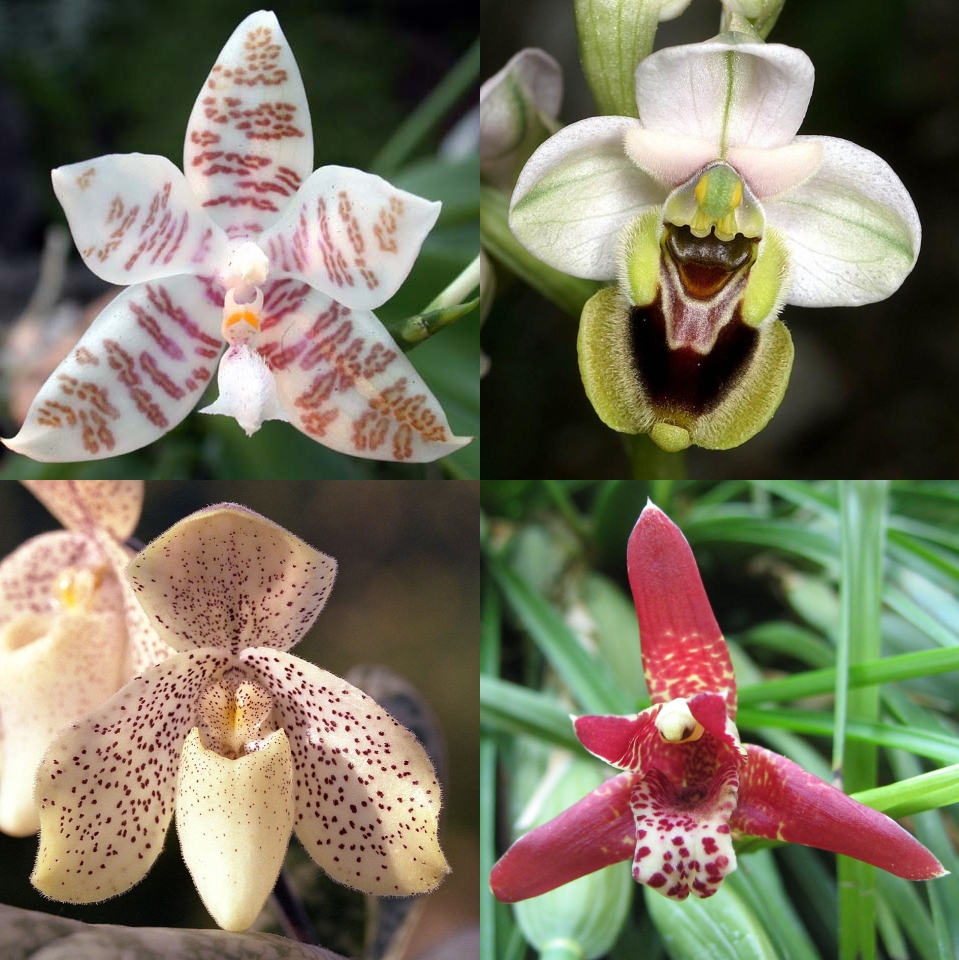 OrchidOrchidaceae
A vast family of colourful, often fragrant flowers found almost everywhere on earth
Orchidaceae · Wildflower
OrchidOrchidaceae
A vast family of colourful, often fragrant flowers found almost everywhere on earth
Orchidaceae · Wildflower
 Vanilla
Climbing orchids with pods used for the world’s most popular flavor
🇲🇽 Mexico and 7 more · Wildflower
Vanilla
Climbing orchids with pods used for the world’s most popular flavor
🇲🇽 Mexico and 7 more · Wildflower
 Orchis
A group of wild orchids with tuberous roots from Europe, North Africa and Asia
🇹🇷 Turkey and 7 more · Wildflower
Orchis
A group of wild orchids with tuberous roots from Europe, North Africa and Asia
🇹🇷 Turkey and 7 more · Wildflower
 Fire star orchidEpidendrum radicans
A bright orange orchid that roots along its whole stem
🇲🇽 Mexico and 7 more · Orchid
Fire star orchidEpidendrum radicans
A bright orange orchid that roots along its whole stem
🇲🇽 Mexico and 7 more · Orchid
More from India
All the flowers of India PeachPrunus persica
A flowering fruit tree from China, grown for its pink blossoms and sweet fruit
🇨🇳 China and 7 more · Flowering tree
PeachPrunus persica
A flowering fruit tree from China, grown for its pink blossoms and sweet fruit
🇨🇳 China and 7 more · Flowering tree
 PomegranatePunica granatum
A shrub with bright red flowers and a fruit full of edible seeds
🇮🇷 Iran and 9 more · Flowering shrub
PomegranatePunica granatum
A shrub with bright red flowers and a fruit full of edible seeds
🇮🇷 Iran and 9 more · Flowering shrub
 TulipTulipa
Spring-blooming bulbs with showy, cup-shaped flowers in many colours
🇳🇱 Netherlands and 7 more · Wildflower
TulipTulipa
Spring-blooming bulbs with showy, cup-shaped flowers in many colours
🇳🇱 Netherlands and 7 more · Wildflower
 FennelFoeniculum vulgare
A tall, aromatic herb with feathery leaves and yellow umbels, used for food and spice
🇨🇳 China and 7 more · Herb or useful flower
FennelFoeniculum vulgare
A tall, aromatic herb with feathery leaves and yellow umbels, used for food and spice
🇨🇳 China and 7 more · Herb or useful flower