
Scilla luciliae
A small blue-and-white spring bulb from western Turkey
Scilla luciliae is a bulbous perennial from western Turkey, known for its star-shaped blue flowers with white centers that bloom in early spring. It grows from small bulbs, produces just a few upward-facing blossoms per stem, and goes dormant after flowering. Gardeners value it for its hardiness and ability to naturalize.
- Native to western Turkey, especially Mahmut Mountain in İzmir Province
- Star-shaped blue flowers with a white center bloom in early spring
- Goes dormant soon after flowering until the next year
- Received the Royal Horticultural Society's Award of Garden Merit
- Often confused with similar species in gardens
What does Scilla luciliae look like?
Scilla luciliae is a small bulbous plant that produces two narrow leaves and a single short flowering stem. Each stem carries a loose cluster of two or three star-shaped flowers, each up to 3.5 cm across. The petals are violet-blue with a distinct white center, and the stamens are flattened and tightly grouped in the middle. The flowers face upwards and appear early in spring, often while snow is still on the ground.
Where does Scilla luciliae come from?
This species is native to western Turkey, with a restricted range in the Mahmut Mountain area of İzmir Province. It was first described in 1844 by Pierre Edmond Boissier, who named it after his wife Lucile. The plant was originally placed in the genus Chionodoxa, meaning 'glory-of-the-snow' in Greek, but is now classified as Scilla after taxonomic studies showed the two groups were not distinct enough to be separate genera.
When and how Scilla luciliae blooms
Scilla luciliae grows from small bulbs planted in autumn. It prefers well-drained soil and can tolerate cold winters, making it suitable for naturalizing in lawns or under trees. The plant emerges in early spring, flowers, and then quickly goes dormant, with leaves and stems dying back until the next year. It is hardy in a wide range of climates and does not require special care.


How Scilla luciliae is used
Gardeners grow Scilla luciliae for its early spring color and ability to spread over time. It is often planted in groups for a naturalized look in gardens, parks, and lawns. The species has received awards for its reliability and decorative value, and it has naturalized in some parts of North America. It is not commonly used for cut flowers or in ceremonies.
Kinds of Scilla luciliae
Scilla luciliae is part of a group of closely related species formerly in the genus Chionodoxa. It can be confused with Scilla forbesii and S. siehei, but differs by having fewer, slightly larger flowers per stem. Most garden plants labeled as this species are actually variants of S. siehei or S. forbesii.
What Scilla luciliae means
The plant's name honors Lucile Boissier and refers to its habit of blooming as snow melts. It has been grown in gardens since at least the 19th century and is recognized for its ornamental value, having received the Royal Horticultural Society's Award of Garden Merit. There is no major symbolic or religious use reported in the sources.
Where Scilla luciliae is used and seen

Questions people ask about Scilla luciliae
Where does Scilla luciliae come from?
Scilla luciliae is native to western Turkey, with a particularly restricted range in the Mahmut Mountain area of İzmir Province.
What does Scilla luciliae look like?
It is a small bulbous plant with two narrow leaves and a short stem bearing two or three upward-facing, star-shaped flowers. The petals are violet-blue with a white center.
When does Scilla luciliae flower?
It blooms in early spring, often while snow is still present, and then goes dormant until the following year.
How is Scilla luciliae used?
It is mainly grown in gardens for its early spring color and ability to naturalize. It is valued for its hardiness and has received horticultural awards.
What does Scilla luciliae symbolize?
The sources do not mention any particular symbolism or religious significance for this species.
Good reading and sources
- USDA Plants DatabaseUS Department of Agriculture, Article
- Plants of the World OnlineRoyal Botanic Gardens, Kew, Plant database
- Where it has been recordedGBIF, Plant database
- Sightings and photos by naturalistsiNaturalist, Plant database
- Scilla luciliae on WikipediaEncyclopedia
- More photos on Wikimedia CommonsPhotos
- Wikidata recordOpen data
The facts on this page come from the Wikipedia article "Scilla luciliae", written by its contributors and used under the CC BY-SA 4.0 licence, and from its Wikidata record (CC0). Phool rewrote the text in its own words, with AI assistance, and compares every page with the article to make sure no passage is copied. It may be reused under the same CC BY-SA 4.0 licence with a link back.
It may contain mistakes. It is not medical or foraging advice: many flowers are poisonous, and traditional uses are reported, not recommended. If something is wrong, tell us. Last refreshed 2026-10-03.
Others in the family Asparagaceae
The whole family Lily-of-the-valleyConvallaria majalis
A woodland plant with sweet-scented white bell flowers in late spring
🇫🇮 Finland and 4 more · Wildflower
Lily-of-the-valleyConvallaria majalis
A woodland plant with sweet-scented white bell flowers in late spring
🇫🇮 Finland and 4 more · Wildflower
 HyacinthHyacinthus
A spring-blooming bulb with fragrant, colourful flower spikes
🇹🇷 Turkey and 7 more · Bulb flower
HyacinthHyacinthus
A spring-blooming bulb with fragrant, colourful flower spikes
🇹🇷 Turkey and 7 more · Bulb flower
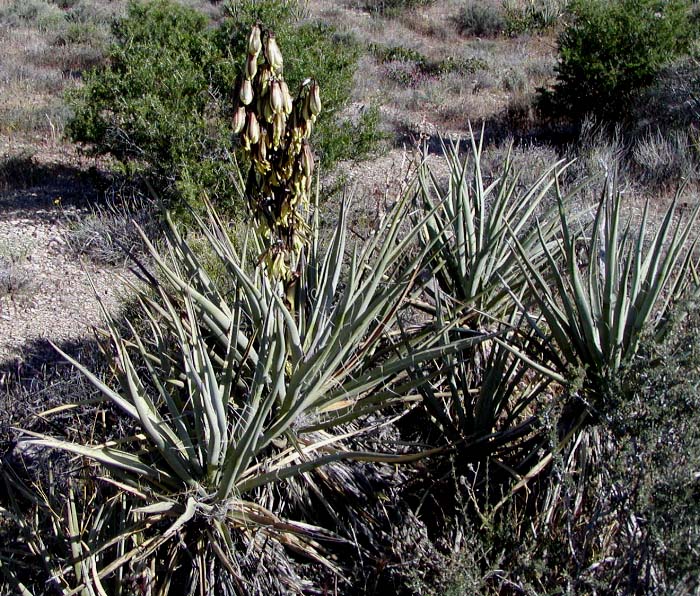 Yucca
Dry-climate plants with pointed leaves and clusters of creamy white flowers
🇲🇽 Mexico and 4 more · Wildflower
Yucca
Dry-climate plants with pointed leaves and clusters of creamy white flowers
🇲🇽 Mexico and 4 more · Wildflower
 Star-of-BethlehemOrnithogalum umbellatum
A white, star-shaped spring flower that opens late in the day
🇫🇷 France and 7 more · Wildflower
Star-of-BethlehemOrnithogalum umbellatum
A white, star-shaped spring flower that opens late in the day
🇫🇷 France and 7 more · Wildflower
More from Turkey
All the flowers of Turkey PeachPrunus persica
A flowering fruit tree from China, grown for its pink blossoms and sweet fruit
🇨🇳 China and 7 more · Flowering tree
PeachPrunus persica
A flowering fruit tree from China, grown for its pink blossoms and sweet fruit
🇨🇳 China and 7 more · Flowering tree
 PomegranatePunica granatum
A shrub with bright red flowers and a fruit full of edible seeds
🇮🇷 Iran and 9 more · Flowering shrub
PomegranatePunica granatum
A shrub with bright red flowers and a fruit full of edible seeds
🇮🇷 Iran and 9 more · Flowering shrub
 TulipTulipa
Spring-blooming bulbs with showy, cup-shaped flowers in many colours
🇳🇱 Netherlands and 7 more · Wildflower
TulipTulipa
Spring-blooming bulbs with showy, cup-shaped flowers in many colours
🇳🇱 Netherlands and 7 more · Wildflower
 Sour cherryPrunus cerasus
The small, tart cherry tree grown for its sour red fruit
🇹🇷 Turkey and 7 more · Flowering tree
Sour cherryPrunus cerasus
The small, tart cherry tree grown for its sour red fruit
🇹🇷 Turkey and 7 more · Flowering tree