
Ragged-robin
Silene flos-cuculi, family Caryophyllaceae
A wild pink flower with deeply cut petals and a ragged look
Ragged-robin is a perennial wildflower from Europe and Asia, now also found in parts of North America. It grows in wet meadows and along roadsides, with tall stems and pink, deeply divided petals that give the flower a ragged appearance. Butterflies and bees visit its blooms.
- Native to Europe and Asia, now naturalized in North America
- Pink flowers with deeply divided, ragged petals
- Blooms from May to August in wet meadows and along roads
- Important nectar source for butterflies and bees
- Several garden varieties include white and dwarf forms
What does Ragged-robin look like?
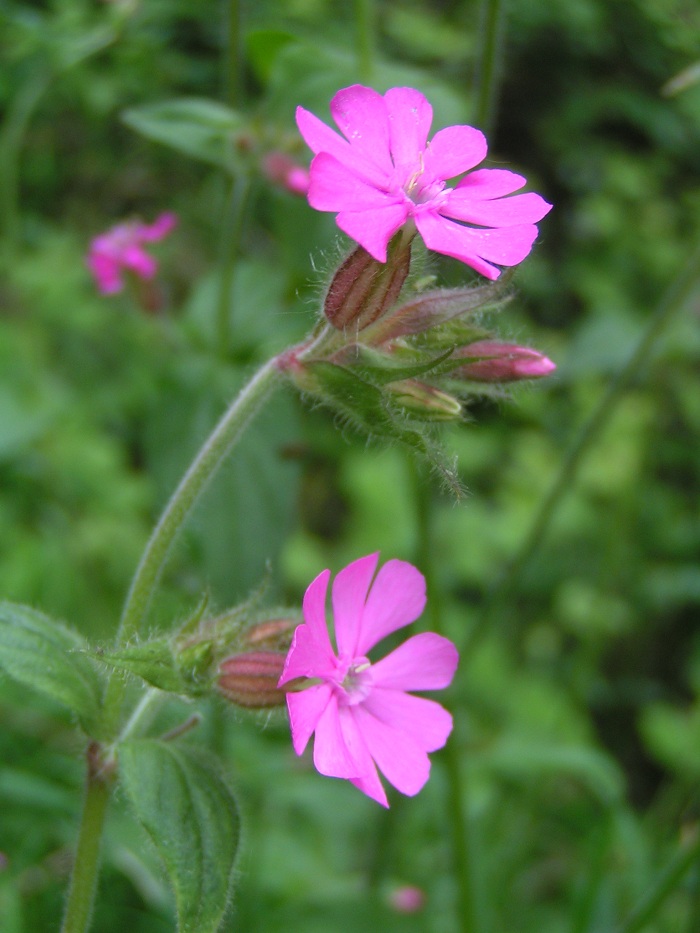
Ragged-robin is a perennial plant with a rosette of low leaves and several upright stems, reaching 30 to 90 cm tall. Its leaves are spoon-shaped at the base and narrow higher up, all smooth-edged. The pink flowers are 3 to 4 cm wide, each with five slender petals cut into four narrow lobes, giving them a messy, frayed look. The stems feel rough from downward-pointing hairs.
Where does Ragged-robin come from?
This plant is native to Europe and Asia, including Siberia, where it grows wild in wet meadows and pastures, and along roadsides. It has spread to North America, where it is now naturalized in parts of the United States and eastern Canada. The name 'ragged-robin' comes from the flower's divided petals.
When and how Ragged-robin blooms
Ragged-robin blooms from May to August, sometimes later. It grows best in damp soils and open, sunny spots. Gardeners often grow it from seed or by dividing mature plants. The plant produces small capsules with many seeds after flowering, which ripen from August onward.


How Ragged-robin is used
People grow ragged-robin in gardens for its unusual, frilly pink flowers and to attract pollinators like butterflies and bees. In the wild, it is an important nectar source for many insects. It is less common in Britain now due to changes in farming and wetland drainage.
Kinds of Ragged-robin
Several garden varieties exist, including 'Alba' with white flowers, 'Nana' which is a dwarf form, and 'White Robin'. 'Jenny' and 'Petite Jenny' are other named cultivars. These forms differ in flower color and plant size.
What Ragged-robin means
Ragged-robin is valued as a wildflower and for its role in supporting pollinators. In some areas, its decline is a concern due to habitat loss. There is no record of it being a symbol or having special meaning in art or religion.
Where Ragged-robin is used and seen

Questions people ask about Ragged-robin
Where does ragged-robin come from?
Ragged-robin is native to Europe and Asia, including Siberia, and has been introduced to North America where it grows in some parts of the United States and eastern Canada.
What does ragged-robin look like?
It has tall, rough stems with spoon-shaped lower leaves and narrow upper leaves. The pink flowers are about 3 to 4 cm wide, each with five petals split into narrow, ragged lobes.
When does ragged-robin flower?
It blooms from May to August, and sometimes later, producing its distinctive pink flowers during this period.
What is ragged-robin used for?
It is grown in gardens for its decorative flowers and to attract pollinators like butterflies and bees. In the wild, it is an important nectar source for insects.
Are there different types of ragged-robin?
Yes, garden varieties include 'Alba' with white flowers, 'Nana' which is a dwarf form, 'White Robin', and others that vary in size and flower color.
Good reading and sources
- Lychnis flos-cuculi [Jenny]Royal Horticultural Society, Article
- USDA Plants DatabaseUS Department of Agriculture, Article
- Plants of the World OnlineRoyal Botanic Gardens, Kew, Plant database
- Where it has been recordedGBIF, Plant database
- Sightings and photos by naturalistsiNaturalist, Plant database
The facts on this page come from the Wikipedia article "Silene flos-cuculi", written by its contributors and used under the CC BY-SA 4.0 licence, and from its Wikidata record (CC0). Phool rewrote the text in its own words, with AI assistance, and compares every page with the article to make sure no passage is copied. It may be reused under the same CC BY-SA 4.0 licence with a link back.
It may contain mistakes. It is not medical or foraging advice: many flowers are poisonous, and traditional uses are reported, not recommended. If something is wrong, tell us. Last refreshed 2026-10-03.
Others in the family Caryophyllaceae
The whole family Dianthus
A group of frilled, often pink, flowers grown in gardens and bouquets worldwide
Dianthus · Wildflower
CarnationDianthus caryophyllus
A fragrant flower with ruffled petals, grown worldwide for decoration and meaning
🇨🇳 China and 7 more · Garden flower
Dianthus
A group of frilled, often pink, flowers grown in gardens and bouquets worldwide
Dianthus · Wildflower
CarnationDianthus caryophyllus
A fragrant flower with ruffled petals, grown worldwide for decoration and meaning
🇨🇳 China and 7 more · Garden flower
 Red campionSilene dioica
A wild pink-red flower of woods and roadsides in northern and central Europe
🇮🇪 Ireland and 4 more · Wildflower
Red campionSilene dioica
A wild pink-red flower of woods and roadsides in northern and central Europe
🇮🇪 Ireland and 4 more · Wildflower
 Baby's breathGypsophila paniculata
A cloud of tiny white summer flowers used in bouquets and gardens
🇨🇳 China and 4 more · Herb or useful flower
Baby's breathGypsophila paniculata
A cloud of tiny white summer flowers used in bouquets and gardens
🇨🇳 China and 4 more · Herb or useful flower