
Stapelia
Succulent plants with large, hairy flowers that smell like rotting meat
Stapelia is a genus of low, spineless succulent plants mostly native to South Africa. Its flowers are often large, hairy, and emit a foul odour resembling rotten flesh to attract fly pollinators, though one species is sweetly scented.
- Flowers can reach 41 cm in diameter
- Most species smell like rotting flesh
- One species, S. flavopurpurea, is sweetly scented
- Native mainly to South Africa
- Attracts blowflies as pollinators
What does Stapelia look like?
Stapelia plants grow close to the ground and have fleshy, leafless stems. Their flowers can be huge, up to 41 cm across, and are often covered in fine hairs. Most bloom with colours and textures that mimic decaying meat, and they give off a strong stench of rot. One exception, Stapelia flavopurpurea, has a sweet fragrance instead.
Where does Stapelia come from?
The genus originates mainly in South Africa, with a few species found in other parts of Africa. Plants once classified as Stapelia in Asia and Latin America have since been moved to different genera based on updated botanical understanding.
When and how Stapelia blooms
These succulents thrive in full sun and need only light to moderate watering. They must be grown in well-drained soil or compost to avoid stem decay. In suitable climates, they are used in rock gardens; otherwise, they are kept as potted houseplants.
How Stapelia is used
A few Stapelia species are grown as ornamental container plants or in outdoor rockeries where winters are mild. Their striking, if smelly, blooms make them a curiosity for collectors rather than a mainstream garden flower.
Kinds of Stapelia
About 32 species are currently accepted. Some hybrids exist, such as Stapelia × dejecta and Stapelia × massonii. Many plants once placed in this genus, like those now in Orbea, Huernia, and Hoodia, have been reclassified into other related groups.
What Stapelia means
Stapelia’s common name, carrion flower, comes from its meat-like appearance and odour. This mimicry tricks blowflies into visiting the blooms, where they act as pollinators. The deception is so convincing that flies sometimes lay eggs on the flowers, mistaking them for carrion.
Questions people ask about Stapelia
Where does Stapelia come from?
It is predominantly native to South Africa, with a few species found in other parts of Africa.
Why do Stapelia flowers smell bad?
The foul odour mimics rotting meat to attract blowflies, which pollinate the flowers by mistake.
Are all Stapelia flowers smelly?
No, Stapelia flavopurpurea is an exception and has a sweet scent instead of a foul one.
How is Stapelia grown?
It needs full sun, light watering, and very well-drained compost to prevent stem rot.
What is Stapelia used for?
It is cultivated as a potted plant or in rock gardens in warm climates for its unusual flowers.
Good reading and sources
- USDA Plants DatabaseUS Department of Agriculture, Article
- Plants of the World OnlineRoyal Botanic Gardens, Kew, Plant database
- Where it has been recordedGBIF, Plant database
- Sightings and photos by naturalistsiNaturalist, Plant database
The facts on this page come from the Wikipedia article "Stapelia", written by its contributors and used under the CC BY-SA 4.0 licence, and from its Wikidata record (CC0). Phool rewrote the text in its own words, with AI assistance, and compares every page with the article to make sure no passage is copied. It may be reused under the same CC BY-SA 4.0 licence with a link back.
It may contain mistakes. It is not medical or foraging advice: many flowers are poisonous, and traditional uses are reported, not recommended. If something is wrong, tell us. Last refreshed 2026-10-03.
Others in the family Apocynaceae
The whole family OleanderNerium oleander
A showy, evergreen shrub with clusters of pink, white or red flowers
🇲🇦 Morocco and 8 more · Flowering shrub
OleanderNerium oleander
A showy, evergreen shrub with clusters of pink, white or red flowers
🇲🇦 Morocco and 8 more · Flowering shrub
 Plumeria
Fragrant tropical tree with waxy, five-petaled flowers in many colours
🇲🇽 Mexico and 6 more · Flowering tree
Plumeria
Fragrant tropical tree with waxy, five-petaled flowers in many colours
🇲🇽 Mexico and 6 more · Flowering tree
 Mandevilla
A tropical vine with large trumpet-shaped blooms in vivid colours
🇧🇷 Brazil and 2 more · Climber
Mandevilla
A tropical vine with large trumpet-shaped blooms in vivid colours
🇧🇷 Brazil and 2 more · Climber
 Pinwheel flowerTabernaemontana divaricata
A fragrant white-flowered shrub native to South and Southeast Asia
🇲🇲 Myanmar and 2 more · Flowering shrub
Pinwheel flowerTabernaemontana divaricata
A fragrant white-flowered shrub native to South and Southeast Asia
🇲🇲 Myanmar and 2 more · Flowering shrub
More from South Africa
All the flowers of South Africa Eucalyptus
The tall, aromatic trees and shrubs known as gum trees or eucalypts
🇦🇺 Australia and 7 more · Flowering tree
Eucalyptus
The tall, aromatic trees and shrubs known as gum trees or eucalypts
🇦🇺 Australia and 7 more · Flowering tree
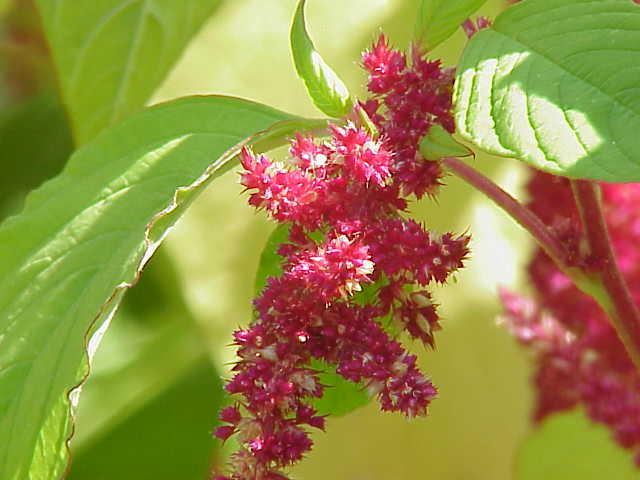 AmaranthAmaranthus
A tall, colourful plant grown for its flowers, leaves and edible seeds
🇲🇽 Mexico and 7 more · Wildflower
AmaranthAmaranthus
A tall, colourful plant grown for its flowers, leaves and edible seeds
🇲🇽 Mexico and 7 more · Wildflower
 Acacia
Shrubs and trees with golden or cream puffball flowers, native mostly to Australia
🇦🇺 Australia and 6 more · Wildflower
Acacia
Shrubs and trees with golden or cream puffball flowers, native mostly to Australia
🇦🇺 Australia and 6 more · Wildflower
 Sensitive PlantMimosa pudica
A touch-sensitive plant whose leaves fold up when disturbed
🇧🇷 Brazil and 8 more · Wildflower
Sensitive PlantMimosa pudica
A touch-sensitive plant whose leaves fold up when disturbed
🇧🇷 Brazil and 8 more · Wildflower