
Tillandsia
Rootless plants that live on trees, rock and air, grown as house plants
Tillandsia is a genus of about 650 evergreen perennials in the pineapple family, native to the forests, mountains and deserts of tropical and subtropical America. Known as air plants, most grow without soil, gripping tree branches or rock and taking water and nutrients from the air through silvery scales on their leaves.
- Around 650 species are known, and 635 of them are considered epiphytic
- Water and nutrients are taken in through leaf scales called trichomes
- The genus is named for the Swedish botanist Elias Tillandz (1640 to 1693)
- Four species are protected under CITES II, among them T. xerographica
- Spanish moss (T. usneoides) can survive night frosts down to about -10 °C
What does Tillandsia look like?
Tillandsia is a genus of evergreen, perennial plants that mostly live without soil. A typical plant is a rosette of narrow leaves, often silvery, held close together so they form a funnel that catches rain. The silver comes from tiny scales called trichomes, which take up water quickly. Flowers are carried on one or more stalks and are strongly coloured: red, yellow, purple and pink all occur, and some are multicoloured. Each flower has three pointed sepals and a double perianth. The foliage itself may change colour while the plant blooms, which helps draw pollinators, and the seeds have a silky parachute like a dandelion's.
Where does Tillandsia come from?
The genus belongs to the pineapple family, Bromeliaceae, and grows wild through the Neotropics: the forests, mountains and deserts that run from northern Mexico and the south-eastern United States through Mesoamerica and the Caribbean to central Argentina. Its native range is summed up as tropical and subtropical America. Carl Linnaeus named the genus after Elias Tillandz, a Swedish physician and botanist who lived from 1640 to 1693; his family name was originally Tillander. Around 650 species are recognised, and 635 of them are considered epiphytic, meaning they grow upon other plants rather than in the ground.
When and how Tillandsia blooms
Seed sets only when pollen comes from another plant of the same species, since these plants are not self-fertile. Depending on the species, a plant may take months or years to flower, and after flowering it forms offsets and dies. The roots, where there are any, work as a fragile support that grips bark or stone rather than feeding the plant; water and nutrients arrive through the leaf scales instead. Green-leaved species want cool, humid shade, while grey-leaved ones take full sun and drier air. Most do well between 10 and 32 °C, with frost tolerance differing by species.


How Tillandsia is used
Air plants have become popular as house plants because they need little care and no pot of soil. People mount them on wood or stone, set them in terrariums or in seashells, and water them by misting or a short soak in non-calcareous water, no more than four times a week, letting them dry fully. In the wild they belong to the canopy: epiphytes make up more than a third of a tropical forest's vascular plants, and that mass of growth helps support life up in the treetops, down to earthworms.
Kinds of Tillandsia
Two species are widely known under other names: ball moss is T. recurvata and Spanish moss is T. usneoides, the latter growing on tree limbs in places such as the Louisiana swamps and coping with night frosts near -10 °C. Green-leaved species generally come from cool, humid, shaded places, while grey-leaved ones, mostly epiphytes, prefer dry air and full sun. Tillandsia was once split into seven subgenera; a 2016 arrangement also recognises seven, among them subg. Aerobia, Anoplophytum, Diaphoranthema, Phytarrhiza, Pseudovriesea, Tillandsia and Viridantha, while the old subg. Pseudalcantarea has been raised to a genus of its own.
What Tillandsia means
The genus name keeps the memory of Elias Tillandz, the Swedish botanist whom Linnaeus honoured with it. In cultivation the plants have a following of their own: as of 2023 the Bromeliad Society International listed 34 registered bromeliad cultivars, from T. Bacchus to T. Yabba. Trade in some species is controlled. Tillandsia harrisii, T. kammii, T. mauryana and T. xerographica are the four listed under CITES II.
Where Tillandsia is used and seen

Questions people ask about Tillandsia
Where does Tillandsia come from?
It is native to the Neotropics: forests, mountains and deserts running from northern Mexico and the south-eastern United States down through Mesoamerica and the Caribbean to central Argentina. Its range is described as tropical and subtropical America.
Do air plants need soil?
No. Most Tillandsia species are epiphytes, growing on tree branches, rocks or other surfaces rather than in soil. They absorb water and nutrients through scales on their leaves, and any roots mainly grip whatever surface the plant sits on.
How are they watered?
By spraying the leaves often or briefly soaking the whole plant in a container of water. Non-calcareous water is recommended, and the plant should be allowed to dry completely. Watering more than four times a week is not needed.
What colours are the flowers?
Bright red, yellow, purple and pink flowers occur, and some are multicoloured. The foliage can also change colour when the plant blooms, which helps attract pollinators such as moths, hummingbirds and bats.
Why is it called an air plant?
Because it gathers water and nutrients from the air around it rather than from soil. Its leaves carry small absorbing structures called trichomes that catch rain, fog and dust, and its roots serve only to hold on.
Good reading and sources
- Encyclopaedia BritannicaArticle
- USDA Plants DatabaseUS Department of Agriculture, Article
- Plants of the World OnlineRoyal Botanic Gardens, Kew, Plant database
- Where it has been recordedGBIF, Plant database
- Sightings and photos by naturalistsiNaturalist, Plant database
The facts on this page come from the Wikipedia article "Tillandsia", written by its contributors and used under the CC BY-SA 4.0 licence, and from its Wikidata record (CC0). Phool rewrote the text in its own words, with AI assistance, and compares every page with the article to make sure no passage is copied. It may be reused under the same CC BY-SA 4.0 licence with a link back.
It may contain mistakes. It is not medical or foraging advice: many flowers are poisonous, and traditional uses are reported, not recommended. If something is wrong, tell us. Last refreshed 2026-10-03.
Others in the family Bromeliaceae
The whole family BromeliadsBromeliaceae
A family of tropical flowering plants from the Americas, including the pineapple
🇨🇱 Chile and 7 more · Wildflower
BromeliadsBromeliaceae
A family of tropical flowering plants from the Americas, including the pineapple
🇨🇱 Chile and 7 more · Wildflower
 Queen of the AndesPuya raimondii
The tallest bromeliad, blooming once after decades and then dying
🇵🇪 Peru and 1 more · Wildflower
Queen of the AndesPuya raimondii
The tallest bromeliad, blooming once after decades and then dying
🇵🇪 Peru and 1 more · Wildflower
 Urn plantAechmea fasciata
A pink-bracted bromeliad from Brazil, grown for its striking rosette and blue flowers
🇧🇷 Brazil · Wildflower
Urn plantAechmea fasciata
A pink-bracted bromeliad from Brazil, grown for its striking rosette and blue flowers
🇧🇷 Brazil · Wildflower
 Neoregelia
Epiphytic bromeliads with colorful rosettes and water-holding leaf cups
Neoregelia · Wildflower
Neoregelia
Epiphytic bromeliads with colorful rosettes and water-holding leaf cups
Neoregelia · Wildflower
More from Mexico
All the flowers of Mexico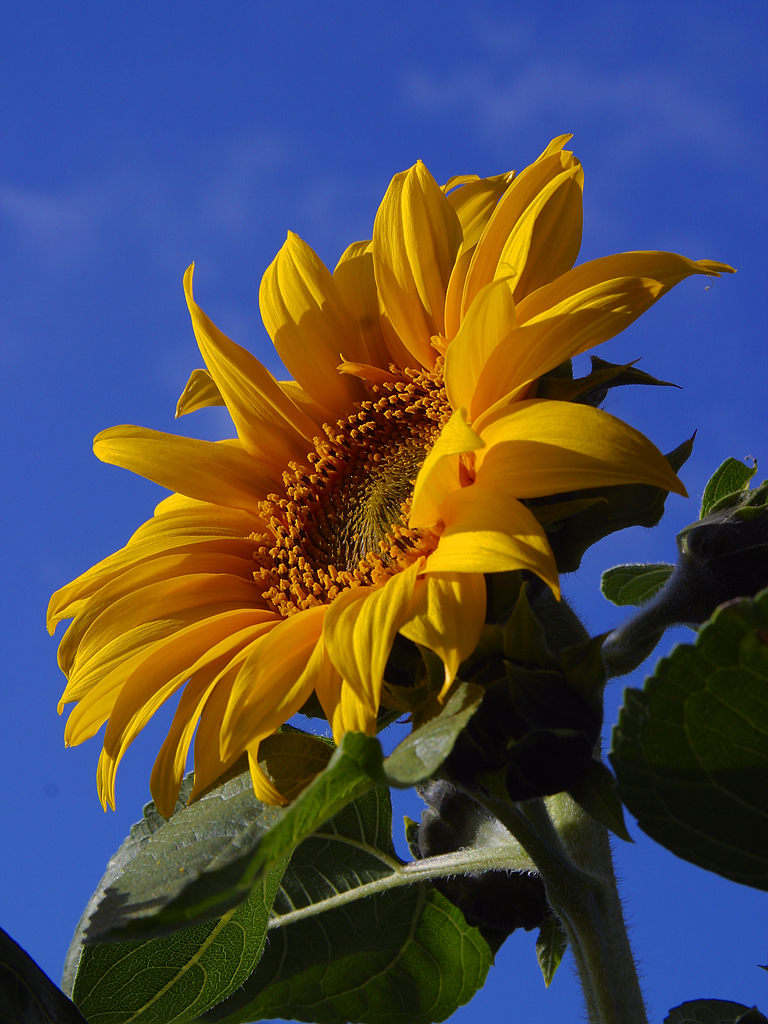 Common sunflowerHelianthus annuus
A tall annual plant grown for its large yellow flower heads and edible seeds
🇨🇦 Canada and 4 more · Wildflower
Common sunflowerHelianthus annuus
A tall annual plant grown for its large yellow flower heads and edible seeds
🇨🇦 Canada and 4 more · Wildflower
 CactusCactaceae
Succulent plants with spines, native to the Americas
🇲🇽 Mexico and 7 more · Wildflower
CactusCactaceae
Succulent plants with spines, native to the Americas
🇲🇽 Mexico and 7 more · Wildflower
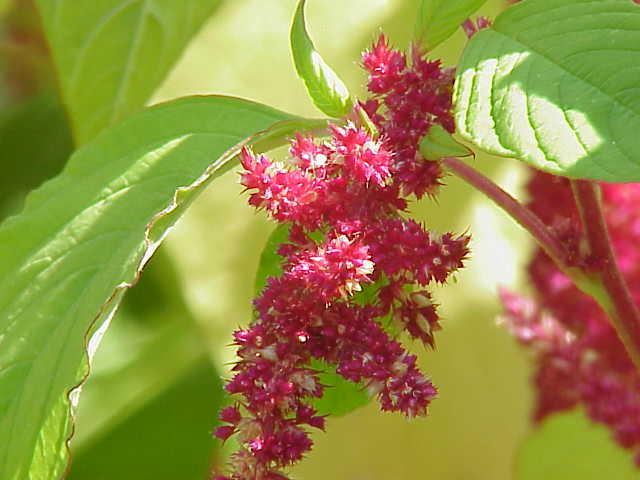 AmaranthAmaranthus
A tall, colourful plant grown for its flowers, leaves and edible seeds
🇲🇽 Mexico and 7 more · Wildflower
AmaranthAmaranthus
A tall, colourful plant grown for its flowers, leaves and edible seeds
🇲🇽 Mexico and 7 more · Wildflower
 HawthornCrataegus
A thorny shrub or tree with white or pink spring flowers and small edible fruits
🇮🇪 Ireland and 7 more · Wildflower
HawthornCrataegus
A thorny shrub or tree with white or pink spring flowers and small edible fruits
🇮🇪 Ireland and 7 more · Wildflower