
Featherflower
Verticordia, family Myrtaceae
Woody Australian shrubs with feathery, colourful flowers
Featherflowers (Verticordia) are a group of over 100 species of shrubs and small trees native to Australia, especially the southwest. Their flowers have feathery or hairy petals in many colours except blue, and are admired in the wild and used in floristry, though some are rare or hard to grow.
- Over 100 species, all but two native to Southwest Australia
- Flowers have feathery or hairy petals in many colours except blue
- Some species are rare or endangered due to habitat and collection
- Difficult to grow outside their natural Mediterranean climate
- Used in floristry and admired as wildflowers
What does Featherflower look like?
Featherflowers are mostly woody shrubs, though a few grow as small trees up to 7 metres. Most are under 2 metres tall. Their leaves are small to medium, and can be scattered or opposite, with shapes that vary widely between species and even on the same plant. The flowers are single, each on its own stalk, but often appear in clusters. Each has five sepals and five petals, usually with feathery or hairy edges, and comes in almost every colour except blue. The flowers can be solid or have changing colours as they age, creating vivid displays in the wild.
Where does Featherflower come from?
Verticordia is native to Australia, with nearly all species found in the southwest and two in the Northern Territory. The first European collection was made in 1791 near King George Sound. The genus was formally described in 1828, and its name is thought to refer to the Roman goddess Venus, whose sacred flower was the myrtle, a relative. Over time, botanists have described more than 100 species, grouped into three main subgenera. The plants grow in woodlands, sandy heaths, and on granite outcrops, mostly in areas with a Mediterranean climate.
When and how Featherflower blooms
Featherflowers bloom in their natural habitats, often forming massed displays in woodlands and heaths. They prefer sandy soils and dry summers with wet winters, typical of southwestern Australia. While some species are widespread, others are rare and need very specific conditions. In gardens, they require excellent drainage and are best suited to Mediterranean climates. Some species, like Verticordia plumosa, are more reliable for cultivation, while others are difficult to grow outside their native range.


How Featherflower is used
People admire featherflowers for their intricate, colourful blooms. They have been used as cut flowers and in gardens, though collecting from the wild is now restricted to protect rare species. Their beauty makes them popular with collectors and florists, but many species are challenging to grow in cultivation. Some hybrids and grafted plants have been developed to improve their reliability as garden or cut flowers.
Kinds of Featherflower
The genus includes over 100 species, divided into three subgenera and 24 sections. Species vary from tiny shrubs to small trees, with a wide range of flower shapes and colours. Hybrids between species and even between Verticordia and related genera have been recorded, such as the 'Eric John' variant. Some species are abundant, while others are rare or endangered.
What Featherflower means
Featherflowers have long been appreciated by both Indigenous Australians and botanists for their striking displays. The genus name, Verticordia, is linked to Venus, the Roman goddess, reflecting the plant's beauty. Some species have become rare due to over-collection for floristry. Today, restrictions help protect wild populations, and the flowers remain a symbol of Australia's unique flora.
Traditions that use it
Questions people ask about Featherflower
Where do featherflowers come from?
Featherflowers (Verticordia) are native to Australia, with almost all species found in the southwest region and two species in the Northern Territory.
What do featherflowers look like?
They are mostly woody shrubs with small to medium leaves and single flowers that have feathery or hairy petals. The flowers come in many colours except blue and often appear in clusters.
How are featherflowers used?
Featherflowers are admired for their beauty and used as cut flowers and in gardens. Some species are collected for floristry, but wild collection is now restricted to protect rare species.
Are featherflowers easy to grow?
Most species are difficult to grow outside their native habitat, as they require excellent drainage and a Mediterranean climate. Some, like Verticordia plumosa, are more reliable in cultivation.
What do featherflowers symbolise?
The genus name Verticordia refers to Venus, the Roman goddess, and means 'turner of hearts,' reflecting the plant's beauty and appeal.
Good reading and sources
- Plants of the World OnlineRoyal Botanic Gardens, Kew, Plant database
- Where it has been recordedGBIF, Plant database
- Sightings and photos by naturalistsiNaturalist, Plant database
The facts on this page come from the Wikipedia article "Verticordia", written by its contributors and used under the CC BY-SA 4.0 licence, and from its Wikidata record (CC0). Phool rewrote the text in its own words, with AI assistance, and compares every page with the article to make sure no passage is copied. It may be reused under the same CC BY-SA 4.0 licence with a link back.
It may contain mistakes. It is not medical or foraging advice: many flowers are poisonous, and traditional uses are reported, not recommended. If something is wrong, tell us. Last refreshed 2026-10-03.
Others in the family Myrtaceae
The whole family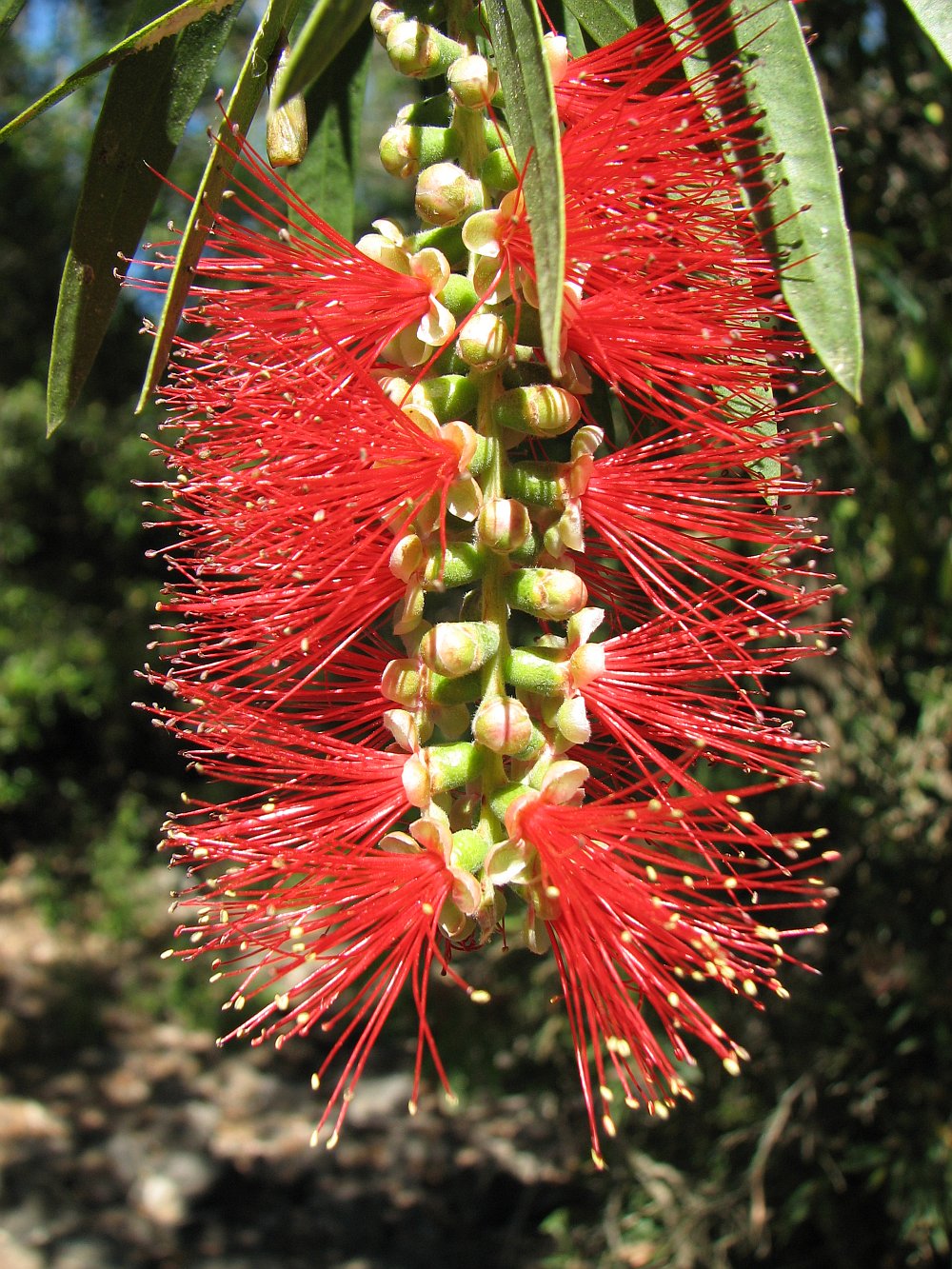 BottlebrushCallistemon
Shrubs with brush-shaped flowers native to Australia
🇦🇺 Australia · Flowering shrub
BottlebrushCallistemon
Shrubs with brush-shaped flowers native to Australia
🇦🇺 Australia · Flowering shrub
 Darwinia
Australian shrubs with bell-like flowers wrapped in colourful bracts
🇦🇺 Australia · Flowering shrub
Darwinia
Australian shrubs with bell-like flowers wrapped in colourful bracts
🇦🇺 Australia · Flowering shrub
 Common red bottlebrushMelaleuca citrina
A hardy Australian shrub with bright red brush-like flowers
🇦🇺 Australia · Flowering shrub
Common red bottlebrushMelaleuca citrina
A hardy Australian shrub with bright red brush-like flowers
🇦🇺 Australia · Flowering shrub
 Weeping bottlebrushMelaleuca viminalis
A red-flowered Australian tree with weeping branches and bottlebrush blooms
🇦🇺 Australia and 5 more · Flowering tree
Weeping bottlebrushMelaleuca viminalis
A red-flowered Australian tree with weeping branches and bottlebrush blooms
🇦🇺 Australia and 5 more · Flowering tree
More from Australia
All the flowers of Australia AlmondPrunus amygdalus
A Mediterranean tree grown for its fragrant spring flowers and edible seeds
🇮🇷 Iran and 6 more · Flowering tree
AlmondPrunus amygdalus
A Mediterranean tree grown for its fragrant spring flowers and edible seeds
🇮🇷 Iran and 6 more · Flowering tree
 FennelFoeniculum vulgare
A tall, aromatic herb with feathery leaves and yellow umbels, used for food and spice
🇨🇳 China and 7 more · Herb or useful flower
FennelFoeniculum vulgare
A tall, aromatic herb with feathery leaves and yellow umbels, used for food and spice
🇨🇳 China and 7 more · Herb or useful flower
 RosemarySalvia rosmarinus
A fragrant evergreen shrub with needle-like leaves and purple, blue, or white flowers
🇪🇸 Spain and 5 more · Flowering shrub
RosemarySalvia rosmarinus
A fragrant evergreen shrub with needle-like leaves and purple, blue, or white flowers
🇪🇸 Spain and 5 more · Flowering shrub
 Eucalyptus
The tall, aromatic trees and shrubs known as gum trees or eucalypts
🇦🇺 Australia and 7 more · Flowering tree
Eucalyptus
The tall, aromatic trees and shrubs known as gum trees or eucalypts
🇦🇺 Australia and 7 more · Flowering tree