
Jindai Botanical Garden
In its own language: 神代植物公園
Tokyo’s first botanical garden, with themed plant zones and a large greenhouse
Jindai Botanical Garden in Chōfu, Tokyo, covers over 42 hectares and displays about 4,500 plant varieties. Visitors find dedicated areas for roses, cherries, peonies, and other flowers, plus a greenhouse for tropical species and a wetland annex for aquatic plants.
- Features about 4,500 types of plants across themed sections
- A large greenhouse displays tropical species and a lily pond
- Wetland annex grows aquatic plants, especially irises
- Site was once a medieval fortress and later a tree nursery
- Labels help visitors identify each plant variety
What is Jindai Botanical Garden?
Jindai Botanical Garden is a public park in western Tokyo, known for its wide range of plants. The grounds are divided into thirty sections, each focusing on a particular group such as roses, cherries, or peonies. There is a large greenhouse with tropical species and a pond for lilies. A separate wetland area near the temple features aquatic plants like irises. Signs label each plant, helping visitors learn as they explore.
The history of Jindai Botanical Garden
The land where the garden now stands was once the site of a fortress from the 1500s. It later became a tree nursery that helped plant Tokyo’s street trees. After World War II, the area opened to the public as a green space, and in 1961 it was officially named Jindai Botanical Garden, becoming the first of its kind in Tokyo. A greenhouse was added in 1984 to house tropical collections.
What there is to see
The garden is organized into themed zones, each dedicated to a specific plant type. The greenhouse shelters tropical species and includes a lily pond. The wetland annex supports aquatic plants, especially irises. Throughout the year, visitors can see different flowers in bloom, and plant sales are held outside the rear gate.


When to go
People visit Jindai Botanical Garden to enjoy seasonal flower displays, learn about plant conservation, and take part in gardening events. The garden is open to the public with an entry fee, and it closes on Mondays except for national holidays. Educational activities and exhibitions are held for local residents.
Parts and collections
Each section of the garden highlights a different plant group, such as roses, azaleas, or wisteria. The greenhouse expands the range with tropical and aquatic species. The wetland annex provides a unique environment for irises and other water-loving plants.
Why Jindai Botanical Garden matters
Jindai Botanical Garden supports conservation of rare Japanese plants and offers educational programs. Its proximity to Jindaiji Temple, one of Tokyo’s oldest Buddhist temples, adds cultural interest. The garden is a member of Botanic Gardens Conservation International and is valued for its role in plant preservation and public education.
The flowers of Jindai Botanical Garden
 RoseWoody perennial plants with showy, often fragrant flowers in many colours
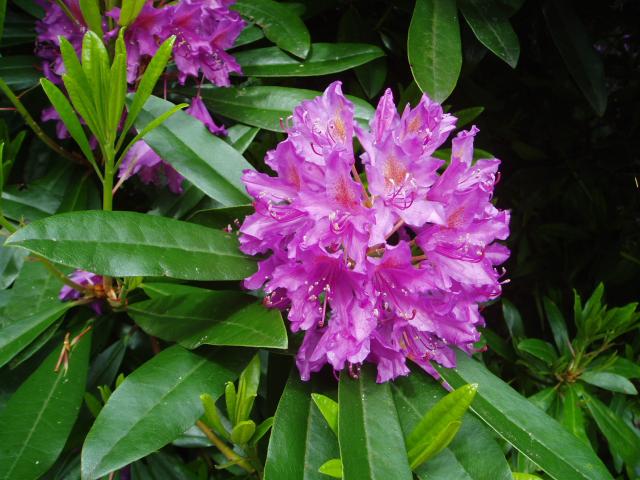 RhododendronA vast group of shrubs and trees with showy blooms in many colours
 IrisA large group of perennial flowers with striking, six-lobed blooms
 PeonyLarge spring flowers in pink, red, white, yellow and purple, grown in gardens worldwide
 DogwoodWoody trees and shrubs with showy bracts and colorful berries
 Prunus mumeThe fragrant plum blossom tree that blooms in winter across East AsiaIris damascenaA rare white and purple iris found only on a Syrian mountain
 Coastal IrisA dark-flowered iris native to Israel’s coastal plains
Questions people ask about Jindai Botanical Garden
Where is Jindai Botanical Garden located?
Jindai Botanical Garden is in Chōfu, western Tokyo, Japan. It sits near the Musashino plateau and is close to Jindaiji Temple.
What can visitors see at the garden?
Visitors can explore themed areas for roses, cherries, peonies, and more, as well as a greenhouse with tropical plants and a wetland annex for aquatic species like irises.
How old is the garden and what is its history?
The garden opened under its current name in 1961, but the site was used as a fortress in the 16th century and later as a tree nursery before becoming a public park.
Are there educational activities at Jindai Botanical Garden?
Yes, the garden offers exhibitions and gardening activities for local residents, and it labels all plant varieties for learning.
Is the garden involved in plant conservation?
Jindai Botanical Garden has a program to protect endangered Japanese plants and is a member of Botanic Gardens Conservation International.
Good reading and sources
- Jindai Botanical Garden on WikipediaEncyclopedia
- More photos on Wikimedia CommonsPhotos
- Wikidata recordOpen data
The facts on this page come from the Wikipedia article "Jindai Botanical Garden", written by its contributors and used under the CC BY-SA 4.0 licence, and from its Wikidata record (CC0). Phool rewrote the text in its own words, with AI assistance, and compares every page with the article to make sure no passage is copied. It may be reused under the same CC BY-SA 4.0 licence with a link back.
It may contain mistakes. Opening times, prices and bloom dates change: check with the place before you travel. If something is wrong, tell us. Last refreshed 2026-10-03.
More of the same kind
 Place
Tropical Botanical Garden and Research Institute
A major botanical garden and research centre in Thiruvananthapuram, Kerala
Thiruvananthapuram, 🇮🇳 India · Botanical garden
Place
Tropical Botanical Garden and Research Institute
A major botanical garden and research centre in Thiruvananthapuram, Kerala
Thiruvananthapuram, 🇮🇳 India · Botanical garden
 Place
Baldha Gardenবলধা গার্ডেন
A historic botanical garden in Old Dhaka with hundreds of plant species
Dhaka, 🇧🇩 Bangladesh · Botanical garden
Place
Baldha Gardenবলধা গার্ডেন
A historic botanical garden in Old Dhaka with hundreds of plant species
Dhaka, 🇧🇩 Bangladesh · Botanical garden
 Place
Hallim Park한림공원
A large botanical park with lava caves and themed gardens on Jeju Island
Hallim, 🇰🇷 South Korea · Botanical garden
Place
Hallim Park한림공원
A large botanical park with lava caves and themed gardens on Jeju Island
Hallim, 🇰🇷 South Korea · Botanical garden
 Place
Sim's Park, Coonoor
A century-old botanical garden in the Nilgiri hills of Tamil Nadu
Coonoor, 🇮🇳 India · Botanical garden, May
Place
Sim's Park, Coonoor
A century-old botanical garden in the Nilgiri hills of Tamil Nadu
Coonoor, 🇮🇳 India · Botanical garden, May
More from Japan
All the flowers of Japan Place
Tsuruma Park鶴舞公園
Nagoya’s city park known for cherry blossoms and a historic fountain tower
Nagoya, 🇯🇵 Japan · Flower garden
Place
Tsuruma Park鶴舞公園
Nagoya’s city park known for cherry blossoms and a historic fountain tower
Nagoya, 🇯🇵 Japan · Flower garden
 Place
Huis Ten Boschハウステンボス
A Dutch-themed park with canals, windmills, and seasonal flower gardens in Nagasaki, Japan
Sasebo, 🇯🇵 Japan · Flower garden
Place
Huis Ten Boschハウステンボス
A Dutch-themed park with canals, windmills, and seasonal flower gardens in Nagasaki, Japan
Sasebo, 🇯🇵 Japan · Flower garden
 Place
Rikugi-en六義園
An Edo-period landscape garden with pond, hill, and seasonal displays in Tokyo
Bunkyō, 🇯🇵 Japan · Flower garden
Place
Rikugi-en六義園
An Edo-period landscape garden with pond, hill, and seasonal displays in Tokyo
Bunkyō, 🇯🇵 Japan · Flower garden
 Place
Hakone Botanical Garden of Wetlands箱根湿生花園
A garden of wetland and alpine plants in Hakone, Japan
Hakone, 🇯🇵 Japan · Botanical garden
Place
Hakone Botanical Garden of Wetlands箱根湿生花園
A garden of wetland and alpine plants in Hakone, Japan
Hakone, 🇯🇵 Japan · Botanical garden