
Makino Botanical Garden
In its own language: 高知県立牧野植物園
A botanical garden and museum in Kōchi, Japan, honouring Tomitaro Makino
Makino Botanical Garden is a public botanical garden on Godaisan hill in Kōchi, Japan. Founded in 1958, it features collections of Japanese rhododendrons, maples, chrysanthemums, and native wild plants, along with a museum dedicated to Tomitaro Makino, a pioneer of Japanese botany.
- Founded in 1958 to honour botanist Tomitaro Makino
- Features Japanese rhododendrons, maples, and chrysanthemums
- Includes a museum and research laboratory
- Located on Godaisan hill in Kōchi, Japan
What is Makino Botanical Garden?
Makino Botanical Garden is a public garden and museum set on Godaisan hill in Kōchi city. Visitors find outdoor plant collections, a greenhouse, and themed areas showing Japanese rhododendrons, maples, chrysanthemums, and wild plants from Kōchi Prefecture. The grounds also include a memorial hall for Tomitaro Makino, a café, a restaurant, and a research laboratory. The garden is open most days, with an admission fee.
The history of Makino Botanical Garden
The garden opened in 1958 to honour Tomitaro Makino, known as the 'Father of Japanese Botany'. It was built as both a public garden and a museum, with a focus on plants native to Japan and especially to the Kōchi region. Over time, the collections have grown to include plants from special habitats like serpentine and limestone soils, as well as species from the Sohayaki region.
What there is to see
The garden is laid out with outdoor beds, a greenhouse, and special sections for different plant groups. Visitors can walk through displays of rhododendrons, maples, chrysanthemums, and many wild plants. The memorial hall presents exhibits about Makino’s life and work. There are also places to eat and relax, such as a café and restaurant.


When to go
Makino Botanical Garden is open to the public most days except Mondays. People visit to see the plant collections, learn about Japanese botany, and enjoy the museum dedicated to Tomitaro Makino. The garden is a place for education, research, and recreation throughout the year.
Parts and collections
The collections highlight a range of Japanese plants, including rhododendrons, maples, and chrysanthemums. Special sections focus on plants adapted to serpentine and limestone soils, as well as wild species from the Sohayaki and Kōchi regions.
Why Makino Botanical Garden matters
The garden celebrates the legacy of Tomitaro Makino, who made major contributions to Japanese botany. It serves as both a living plant collection and a biographical museum, helping visitors understand the region’s plant life and Makino’s work. It is a well-known botanical institution in Japan.
The flowers of Makino Botanical Garden
 ChrysanthemumAutumn-blooming flower with thousands of varieties, cherished in East Asia and beyond
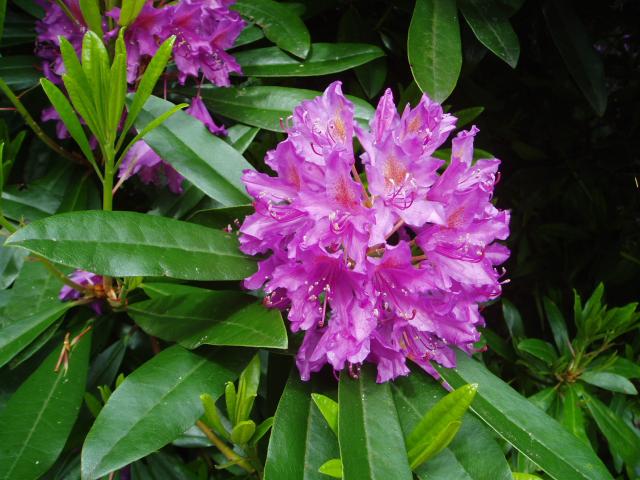 RhododendronA vast group of shrubs and trees with showy blooms in many colours
 Common rhododendronA dense evergreen shrub with violet-purple flowers from Europe and the Caucasus
 Rhododendron aureumA low evergreen shrub with pale yellow spring flowers from northeastern Asia
 Rhododendron molleA yellow-flowered deciduous azalea from China and Japan
 Rhododendron simsiiA shrub from East Asia with flowers in shades from white to deep red
 Chrysanthemum japonenseA white-flowered perennial daisy native to coastal Shikoku, Japan
 Rhododendron kaempferiA Japanese semi-evergreen azalea with many colourful forms
Questions people ask about Makino Botanical Garden
Where is Makino Botanical Garden located?
Makino Botanical Garden is on Godaisan hill in Kōchi city, Kōchi Prefecture, Japan.
What can visitors see at the garden?
Visitors can see collections of Japanese rhododendrons, maples, chrysanthemums, wild plants, a greenhouse, and a museum dedicated to Tomitaro Makino.
Who was Tomitaro Makino?
Tomitaro Makino (1862–1957) is known as the 'Father of Japanese Botany' and made important contributions to the study of plants in Japan.
When was the garden established?
The garden was established in 1958, shortly after Tomitaro Makino’s death.
Is there an admission fee?
Yes, an admission fee is charged to enter Makino Botanical Garden.
Good reading and sources
- Makino Botanical Garden on WikipediaEncyclopedia
- More photos on Wikimedia CommonsPhotos
- Wikidata recordOpen data
The facts on this page come from the Wikipedia article "Makino Botanical Garden", written by its contributors and used under the CC BY-SA 4.0 licence, and from its Wikidata record (CC0). Phool rewrote the text in its own words, with AI assistance, and compares every page with the article to make sure no passage is copied. It may be reused under the same CC BY-SA 4.0 licence with a link back.
It may contain mistakes. Opening times, prices and bloom dates change: check with the place before you travel. If something is wrong, tell us. Last refreshed 2026-10-03.
More of the same kind
 Place
Tropical Botanical Garden and Research Institute
A major botanical garden and research centre in Thiruvananthapuram, Kerala
Thiruvananthapuram, 🇮🇳 India · Botanical garden
Place
Tropical Botanical Garden and Research Institute
A major botanical garden and research centre in Thiruvananthapuram, Kerala
Thiruvananthapuram, 🇮🇳 India · Botanical garden
 Place
Baldha Gardenবলধা গার্ডেন
A historic botanical garden in Old Dhaka with hundreds of plant species
Dhaka, 🇧🇩 Bangladesh · Botanical garden
Place
Baldha Gardenবলধা গার্ডেন
A historic botanical garden in Old Dhaka with hundreds of plant species
Dhaka, 🇧🇩 Bangladesh · Botanical garden
 Place
Hallim Park한림공원
A large botanical park with lava caves and themed gardens on Jeju Island
Hallim, 🇰🇷 South Korea · Botanical garden
Place
Hallim Park한림공원
A large botanical park with lava caves and themed gardens on Jeju Island
Hallim, 🇰🇷 South Korea · Botanical garden
 Place
Sim's Park, Coonoor
A century-old botanical garden in the Nilgiri hills of Tamil Nadu
Coonoor, 🇮🇳 India · Botanical garden, May
Place
Sim's Park, Coonoor
A century-old botanical garden in the Nilgiri hills of Tamil Nadu
Coonoor, 🇮🇳 India · Botanical garden, May
More from Japan
All the flowers of Japan Place
Nunobiki Herb Garden布引ハーブ園
A large herb garden on Mount Rokkō above Kobe, Japan
Kobe, 🇯🇵 Japan · Botanical garden
Place
Nunobiki Herb Garden布引ハーブ園
A large herb garden on Mount Rokkō above Kobe, Japan
Kobe, 🇯🇵 Japan · Botanical garden
 Place
Shinjuku Gyoen新宿御苑
A vast public garden in central Tokyo known for cherry blossoms and mixed garden styles
Shibuya, 🇯🇵 Japan · Flower garden, Mar to Nov
Place
Shinjuku Gyoen新宿御苑
A vast public garden in central Tokyo known for cherry blossoms and mixed garden styles
Shibuya, 🇯🇵 Japan · Flower garden, Mar to Nov
 Place
Hakone Botanical Garden of Wetlands箱根湿生花園
A garden of wetland and alpine plants in Hakone, Japan
Hakone, 🇯🇵 Japan · Botanical garden
Place
Hakone Botanical Garden of Wetlands箱根湿生花園
A garden of wetland and alpine plants in Hakone, Japan
Hakone, 🇯🇵 Japan · Botanical garden
 Place
Jindai Botanical Garden神代植物公園
Tokyo’s first botanical garden, with themed plant zones and a large greenhouse
Chōfu, 🇯🇵 Japan · Botanical garden
Place
Jindai Botanical Garden神代植物公園
Tokyo’s first botanical garden, with themed plant zones and a large greenhouse
Chōfu, 🇯🇵 Japan · Botanical garden