🇰🇷 The flowers of South Korea
17 pages from South Korea: its flowers, the things made with them and the places to see them, across 19 cities and regions.
South Korea’s varied climate and terrain support over 8,000 plant species, with forests ranging from subtropical evergreens in the south to subalpine conifers in the mountains. The country is known for rare orchids, camellias, magnolias, and endemic flowers found on Jeju Island and in highland forests. Development and pollution threaten many native plants.
- Over 8,000 plant species grow in South Korea.
- Jeju Island has many endemic and rare flowers.
- Temperate forests cover most of the country.
- The DMZ protects rare plants and habitats.
- 67 km² of forest are lost each year to development.
The plant life of South Korea
South Korea’s plant life is shaped by its mountainous landscape, peninsular setting, and a climate that ranges from warm-temperate in the south to subalpine in the highlands. Most of the land is covered by temperate forests, but evergreen broad-leaved trees grow along the southern coast and on islands like Jeju. The country is home to more than 8,000 species of plants, including both vascular and non-vascular types. Native species such as Pentactina and a range of wildflowers and trees thrive here, though ongoing land development puts many habitats at risk.
From region to region in South Korea
Plant communities change with geography. Southern coastal areas and islands like Jeju and Ulleungdo have warm-temperate forests with evergreens, camellias, and magnolias. Inland and northern regions are dominated by temperate forests of oaks and hornbeams. High mountains, such as Hallasan and Seoraksan, support subalpine forests with firs, pines, and unique alpine plants. The Demilitarized Zone, largely untouched by people, preserves a mix of riverine and forest habitats.
Flowers to know in South Korea
South Korea is home to rare and endemic flowers, especially orchids like Cypripedium japonicum and Aerides japonicum. Jeju Island hosts unique species such as Mankyua chejuense and Diapensia lapponica. Camellia japonica and magnolias are common in the south. Endangered plants include Malus komarovii (a mountain apple), several violets, lilies, and aquatic flowers like Euryale ferox. Some, like Iris odaesanensis and Viola websteri, grow only in Korea’s mountains.
Threats and protection in South Korea
Rapid land development causes the loss of about 67 km² of forest each year. Pollution and habitat destruction threaten aquatic and wetland plants, such as Euryale ferox. Many species are now endangered, with some already extinct in Korea. The Demilitarized Zone serves as a refuge for rare plants due to minimal human disturbance. Conservation efforts focus on protecting these habitats and monitoring endangered species.
The facts in this overview come from the Wikipedia article "Wildlife of South Korea", written by its contributors and used under the CC BY-SA 4.0 licence. Phool rewrote the text in its own words, with AI assistance, and compares every page with the article to make sure no passage is copied. It may be reused under the same CC BY-SA 4.0 licence with a link back.
Flower experiences in South Korea
 🇰🇷 Seoul · All yearYangjae flower marketSeoul's main flower market: a wholesale cut-flower hall and long greenhouses of pot plants.
🇰🇷 Changwon · Mar to AprJinhae cherry blossom festivalSouth Korea's largest cherry blossom festival, in a naval port town on the south coast.
🇰🇷 Seoul · All yearYangjae flower marketSeoul's main flower market: a wholesale cut-flower hall and long greenhouses of pot plants.
🇰🇷 Changwon · Mar to AprJinhae cherry blossom festivalSouth Korea's largest cherry blossom festival, in a naval port town on the south coast. 🇰🇷 Seoul · AprilYeouido cherry blossom walkA road of old cherry trees behind the National Assembly, closed to cars at blossom time.
 Decoration
Bonsai盆栽
The Japanese art of shaping miniature trees in shallow pots
🇯🇵 Japan and 7 more · Art or design
Decoration
Bonsai盆栽
The Japanese art of shaping miniature trees in shallow pots
🇯🇵 Japan and 7 more · Art or design
 Decoration
Buddha's Birthday佛诞
A festival marking the birth of Gautama Buddha, celebrated across Asia in spring
🇮🇳 India and 3 more · Custom, Apr to May
Decoration
Buddha's Birthday佛诞
A festival marking the birth of Gautama Buddha, celebrated across Asia in spring
🇮🇳 India and 3 more · Custom, Apr to May
 Decoration
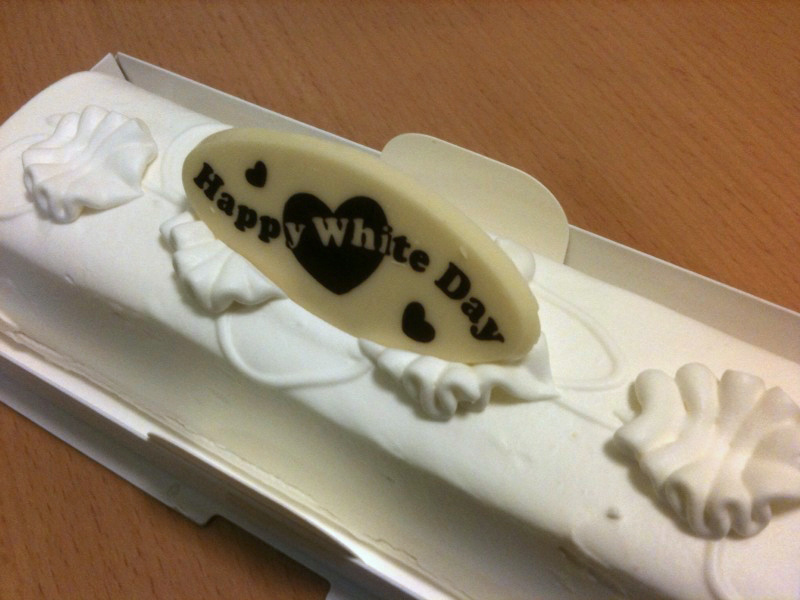
White Dayホワイトデー
March 14 gift-giving day in Japan and East Asia, one month after Valentine's Day
🇯🇵 Japan and 4 more · Custom, March
Decoration
White Dayホワイトデー
March 14 gift-giving day in Japan and East Asia, one month after Valentine's Day
🇯🇵 Japan and 4 more · Custom, March
 Decoration
Double Ninth Festival重陽節
A day for mountain walks, chrysanthemums, and honoring ancestors in East Asia
🇨🇳 China and 5 more · Custom, Sep to Oct
Decoration
Double Ninth Festival重陽節
A day for mountain walks, chrysanthemums, and honoring ancestors in East Asia
🇨🇳 China and 5 more · Custom, Sep to Oct
 Decoration
Jinhae Gunhangje Festival진해군항제
South Korea’s largest cherry blossom festival in Changwon’s Jinhae District
🇰🇷 South Korea · Parade or display, April
Decoration
Jinhae Gunhangje Festival진해군항제
South Korea’s largest cherry blossom festival in Changwon’s Jinhae District
🇰🇷 South Korea · Parade or display, April
 Decoration
Lotus Lantern Festival연등회
Korea’s lantern festival held for Buddha’s Birthday
🇰🇷 South Korea · Parade or display, Apr to May
Decoration
Lotus Lantern Festival연등회
Korea’s lantern festival held for Buddha’s Birthday
🇰🇷 South Korea · Parade or display, Apr to May
Photo credits on this page
The small pictures above come from Wikimedia Commons under free licences. Some are cropped to fit.
- Bonsai: Ragesoss, CC BY-SA 3.0, source
- Buddha's Birthday: User: (WT-shared) Manoj nav at wts wikivoyage, Public domain, source
- White Day: Flickr user mersy ( Masashi Yanagiya), CC BY-SA 2.0, source
- Double Ninth Festival: Sgerbic, CC BY-SA 4.0, source
- Jinhae Gunhangje Festival: hyolee2, CC BY-SA 4.0, source
- Lotus Lantern Festival: Korea.net / Korean Culture and Information Service (Jeon Han), CC BY-SA 2.0, source
- Yeouido Cherry Blossom Seoul: Kimhs5400, CC BY 4.0, source
- Yangjae Flower Market Seoul: Izolight, CC BY-SA 3.0, source