
Christmas decoration
Ornaments, wreaths, and festive displays for the Christmas season
Christmas decorations are ornaments and displays used to mark the Christmas season, including items like wreaths, nativity scenes, and Christmas trees. These decorations appear in homes, churches, and public spaces, often featuring traditional colors such as red, green, and gold, and may include lights, plants, and symbolic figures.
- Wreaths and garlands are made from evergreen branches and holly
- Glass ornaments originated in Germany in the 19th century
- Nativity scenes vary from simple to elaborate across countries
- Red, green, and gold are the main colors used in decorations
- Christmas trees are often topped with a star or angel
What is Christmas decoration?
Christmas decorations include a wide range of items such as wreaths made from evergreen branches, glass ornaments, nativity scenes, and Christmas trees adorned with lights and symbolic figures. Common motifs are stars, angels, and scenes from the Nativity. Colors like red, green, gold, and white are most often used, and decorations can be found both indoors and outdoors. Some are handmade, while others are commercially produced, and they may be simple or elaborate depending on local custom.
Where does Christmas decoration come from?
The tradition of decorating for Christmas has roots in early Christian celebrations of the Nativity. Over time, different countries developed their own customs, such as nativity scenes in Italy and Poland, and glass ornaments from Germany. The Christmas tree custom spread from Germany to other parts of Europe and North America, often through royal influence and migration. Many decorations carry Christian symbolism, with colors and shapes representing aspects of the faith.
How Christmas decoration is made
Decorations are created in many ways. Wreaths are woven from evergreen branches and decorated with bows, berries, and sometimes candles. Glass ornaments are shaped by blowing heated glass into molds, then painted or trimmed. Cotton batting figures are formed around wire, dressed, and sometimes dusted with mica. Paper ornaments, known as Dresdens, are pressed into shape, painted, and sometimes filled with small gifts. Plants like holly and mistletoe are gathered or purchased and arranged in homes.


When and where Christmas decoration is used
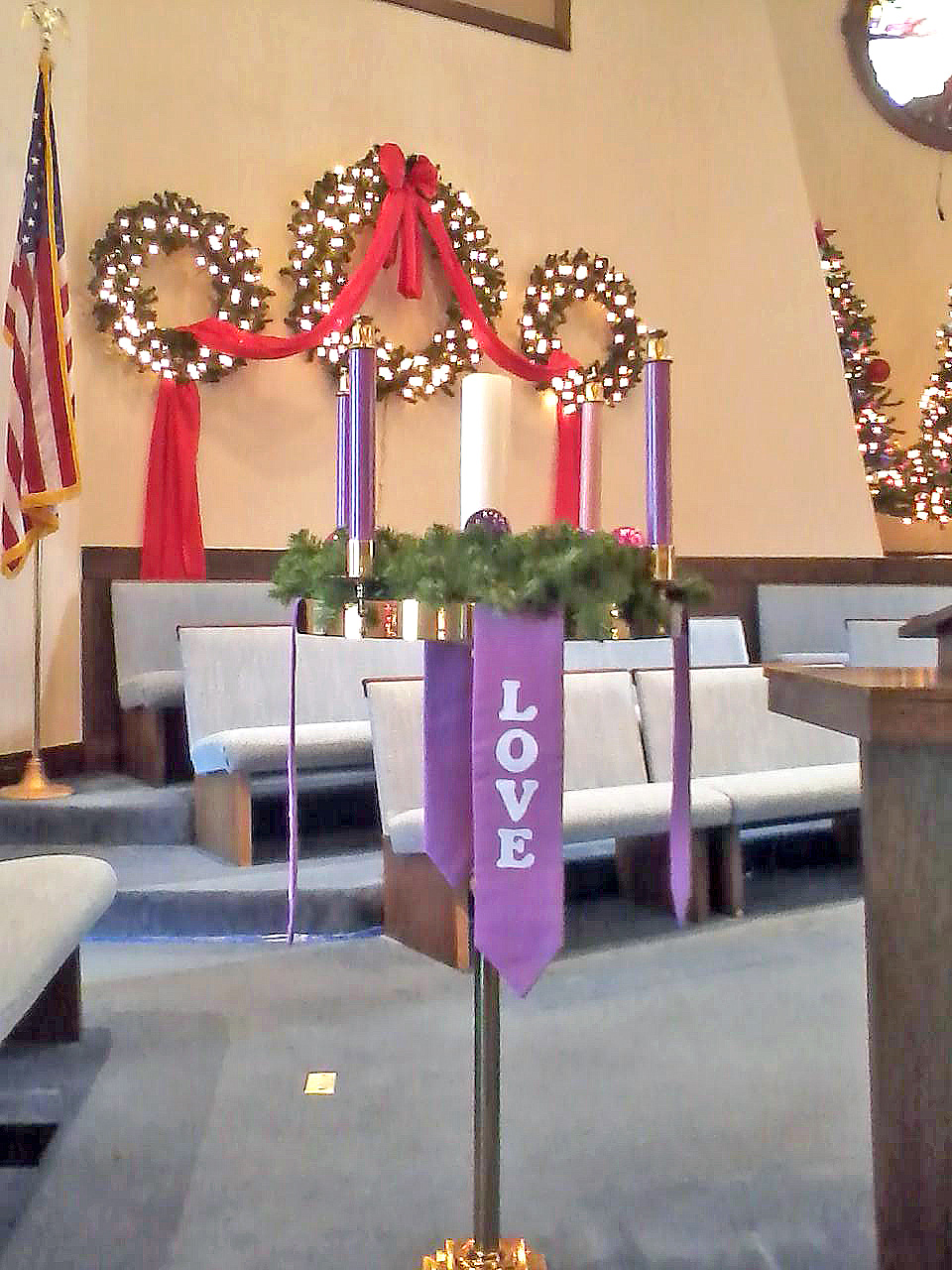
People begin putting up Christmas decorations at the start of Advent, with displays in homes, churches, and public spaces. Decorations remain up through the Christmas season, often until Twelfth Night or Candlemas. Nativity scenes are displayed in many countries, sometimes as elaborate sets or living tableaux. Wreaths and garlands are hung on doors and windows, while Christmas trees are decorated with ornaments and lights. The removal of decorations is also marked by tradition.
Forms of Christmas decoration
Different regions have their own forms of Christmas decoration. In Poland, the Kraków szopka features nativity scenes set in miniature buildings. Italy is known for detailed presepi, while France has Provençal crèches with painted terracotta figures. In Germany, glass ornaments and paper Dresdens are traditional. The United States popularized new forms, such as ornaments shaped like comic characters. Some families pass down decorations as heirlooms.
What Christmas decoration means
Christmas decorations are closely tied to Christian beliefs and the celebration of Jesus' birth. The colors and symbols used often have specific meanings, such as red for sacrifice and green for eternal life. The Christmas tree and nativity scene are central to many customs. Decorating is a communal activity, and competitions or displays are common in some places. The timing of putting up and taking down decorations is guided by tradition and local superstition.
The flowers of Christmas decoration


Questions people ask about Christmas decoration
Where did Christmas decorations originate?
Christmas decorations have roots in early Christian celebrations and developed over centuries in places like Germany, Italy, and Poland. Traditions such as the Christmas tree and nativity scene spread through Europe and North America.
What do the colors red, green, and gold mean in Christmas decorations?
Red is said to represent the blood of Jesus, green stands for eternal life and the evergreen tree, and gold is linked to royalty and the gifts of the Magi.
What are some common types of Christmas decorations?
Typical decorations include wreaths, garlands, glass ornaments, nativity scenes, Christmas trees, and displays made from holly, mistletoe, and other evergreens.
When are Christmas decorations usually put up and taken down?
In many countries, decorations go up at the start of Advent and are taken down after Twelfth Night or Candlemas, following local customs and beliefs.
Are there regional differences in Christmas decorations?
Yes, each country and region has its own styles. For example, Poland has Kraków szopka nativity scenes, Italy is known for presepi, and Germany for glass ornaments and paper Dresdens.
Good reading and sources
- Good luck or bad? How Christmas decorating traditions vary in EnglandThe Guardian, Article
- The Star of Bethlehem Is Moravian Church TraditionLos Angeles Times, Article
- BBC - ReligionsBBC, Article
- Christmas decoration on WikipediaEncyclopedia
- More photos on Wikimedia CommonsPhotos
- Wikidata recordOpen data
The facts on this page come from the Wikipedia article "Christmas decoration", written by its contributors and used under the CC BY-SA 4.0 licence, and from its Wikidata record (CC0). Phool rewrote the text in its own words, with AI assistance, and compares every page with the article to make sure no passage is copied. It may be reused under the same CC BY-SA 4.0 licence with a link back.
It may contain mistakes. If something is wrong, tell us. Last refreshed 2026-10-03.
More of the same kind
 Decoration
Nageirebana抛入花
A free-form ikebana style using tall vases and no flower holders
Arrangement
Decoration
Nageirebana抛入花
A free-form ikebana style using tall vases and no flower holders
Arrangement
 Decoration
Tokonoma床の間
A Japanese alcove for displaying scrolls and flower arrangements
🇯🇵 Japan · Arrangement
Decoration
Tokonoma床の間
A Japanese alcove for displaying scrolls and flower arrangements
🇯🇵 Japan · Arrangement
 Decoration
Bouquet
A creative arrangement of flowers, given or displayed for many occasions
🇨🇳 China and 1 more · Arrangement
Decoration
Bouquet
A creative arrangement of flowers, given or displayed for many occasions
🇨🇳 China and 1 more · Arrangement
 Decoration
Sōgetsu草月流
A modern school of Japanese ikebana open to all materials and styles
🇯🇵 Japan · Arrangement
Decoration
Sōgetsu草月流
A modern school of Japanese ikebana open to all materials and styles
🇯🇵 Japan · Arrangement
More from Germany
All the flowers of Germany Decoration
Bonsai盆栽
The Japanese art of shaping miniature trees in shallow pots
🇯🇵 Japan and 7 more · Art or design
Decoration
Bonsai盆栽
The Japanese art of shaping miniature trees in shallow pots
🇯🇵 Japan and 7 more · Art or design
 Decoration
Herbarium
A scientific collection of preserved plant specimens for study and reference
🇩🇪 Germany and 1 more · Parade or display
Decoration
Herbarium
A scientific collection of preserved plant specimens for study and reference
🇩🇪 Germany and 1 more · Parade or display
 Decoration
May Day Festival
A spring festival with flowers, greenery, maypoles and bonfires on the first of May
🇮🇪 Ireland and 5 more · Custom, May
Decoration
May Day Festival
A spring festival with flowers, greenery, maypoles and bonfires on the first of May
🇮🇪 Ireland and 5 more · Custom, May
 Decoration
Wreath
A ring-shaped decoration made from flowers, leaves, or other materials
🇬🇷 Greece and 7 more · Arrangement
Decoration
Wreath
A ring-shaped decoration made from flowers, leaves, or other materials
🇬🇷 Greece and 7 more · Arrangement