
Multi-flowered Aerides
Aerides multiflora, family Orchidaceae
A fragrant orchid with many waxy flowers hanging in long sprays
Multi-flowered Aerides is a small to medium orchid native to Southeast Asia and the Indian subcontinent. It grows as an epiphyte in warm, dry tropical and subtropical forests, producing long, hanging sprays with up to 50 fragrant, waxy flowers in late spring and early summer.
- Produces up to 50 waxy, fragrant flowers per spray
- Native to Southeast Asia and the Indian subcontinent
- Grows as an epiphyte in dry tropical and subtropical forests
- Blooms from May to July in its native range
What does Multi-flowered Aerides look like?
Aerides multiflora is an orchid that grows on trees rather than in soil, with arching stems and many curved, strap-shaped leaves ending in a split tip. Its flowers are waxy, white, and strongly scented, clustered in long, hanging sprays that can reach 30 cm and hold up to 50 blooms. Each flower measures about 1.8 to 2.5 cm across.
Where does Multi-flowered Aerides come from?
This orchid is native to dry tropical and subtropical forests from Bangladesh and the Coromandel Coast of India across Southeast Asia, including Nepal, Thailand, Laos, Cambodia, Vietnam, Myanmar, and the Andaman Islands. It grows from sea level up to 1100 meters, usually as an epiphyte on trees. The species was first described by William Roxburgh in 1820.
When and how Multi-flowered Aerides blooms
Aerides multiflora blooms in late spring and early summer, especially in May, June, or July. It thrives in hot to cool climates and is often grown in hanging baskets with well-drained media like tree fern fiber, bark, or moss. The roots need frequent watering and plenty of sun. The plant prefers to hang, mimicking its natural epiphytic habit.
How Multi-flowered Aerides is used
People mainly grow Multi-flowered Aerides for its fragrant flowers, which are valued in home gardens and orchid collections. Its long sprays and strong scent make it a favorite among orchid enthusiasts. There is no mention of ceremonial or medicinal use in the sources.
Kinds of Multi-flowered Aerides
Several synonyms and varieties have been published for this species, including Aerides affine, Aerides lobbii, Aerides veitchii, and Epidendrum geniculatum. Some forms are recognized by slight differences in flower shape or size, but all share the many-flowered, hanging spray characteristic.
What Multi-flowered Aerides means
The name Aerides means 'air-resembling', referring to its habit of growing in the air on trees. The Latin 'multiflora' means 'with many flowers'. This orchid is known for its fragrance and is appreciated by collectors, but the sources do not mention it as a national emblem or in religious practice.
Questions people ask about Multi-flowered Aerides
Where does Multi-flowered Aerides come from?
It is native to dry tropical and subtropical forests in Southeast Asia and the Indian subcontinent, including Bangladesh, India, Nepal, Thailand, Laos, Cambodia, Vietnam, Myanmar, and the Andaman Islands.
What does the flower look like?
The plant produces long, hanging sprays up to 30 cm, each with as many as 50 waxy, white, strongly scented flowers about 1.8 to 2.5 cm across.
When does it bloom?
Multi-flowered Aerides usually blooms in late spring and early summer, especially in May, June, or July in its native range.
How is this orchid used?
It is mainly grown for its fragrant flowers in home gardens and by orchid collectors. The sources do not mention ceremonial or medicinal uses.
What does its name mean?
The genus name Aerides comes from Greek for 'air-resembling', as it grows on trees. 'Multiflora' means 'with many flowers' in Latin.
Good reading and sources
- Plants of the World OnlineRoyal Botanic Gardens, Kew, Plant database
- Where it has been recordedGBIF, Plant database
- Sightings and photos by naturalistsiNaturalist, Plant database
- Aerides multiflora on WikipediaEncyclopedia
- More photos on Wikimedia CommonsPhotos
- Wikidata recordOpen data
The facts on this page come from the Wikipedia article "Aerides multiflora", written by its contributors and used under the CC BY-SA 4.0 licence, and from its Wikidata record (CC0). Phool rewrote the text in its own words, with AI assistance, and compares every page with the article to make sure no passage is copied. It may be reused under the same CC BY-SA 4.0 licence with a link back.
It may contain mistakes. It is not medical or foraging advice: many flowers are poisonous, and traditional uses are reported, not recommended. If something is wrong, tell us. Last refreshed 2026-10-03.
Others in the family Orchidaceae
The whole family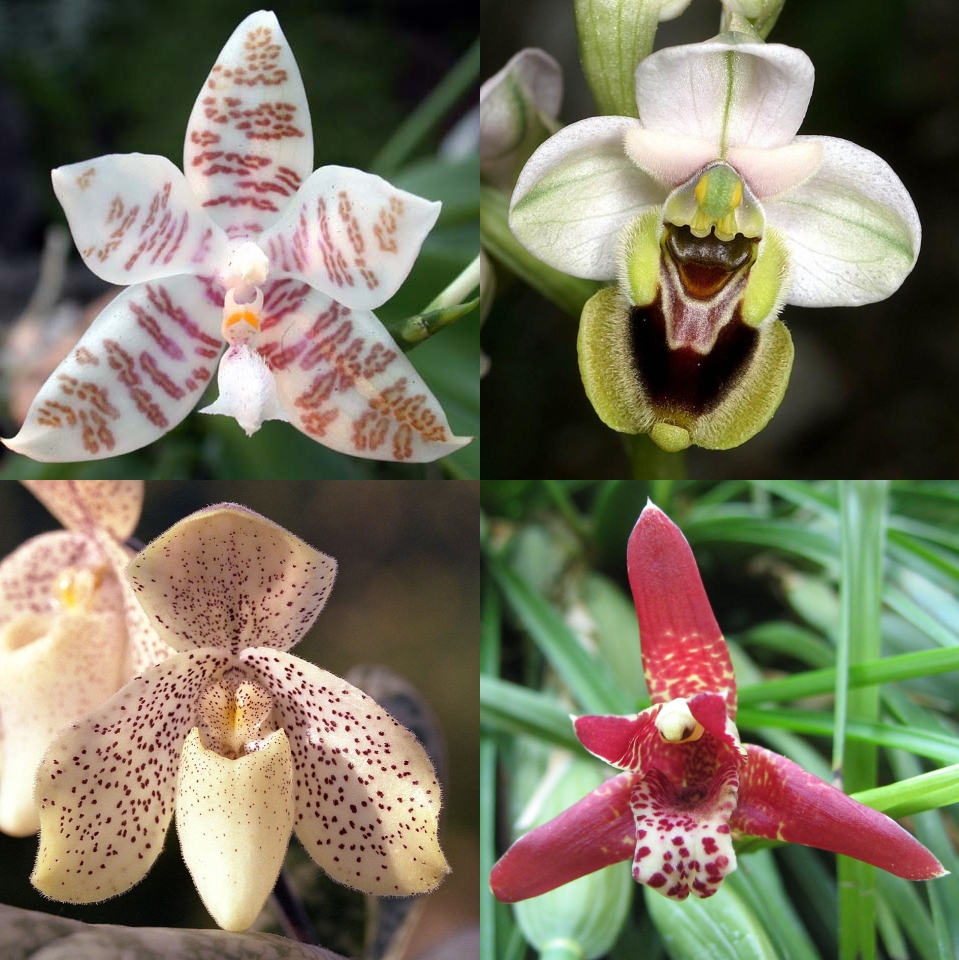 OrchidOrchidaceae
A vast family of colourful, often fragrant flowers found almost everywhere on earth
Orchidaceae · Wildflower
OrchidOrchidaceae
A vast family of colourful, often fragrant flowers found almost everywhere on earth
Orchidaceae · Wildflower
 Vanilla
Climbing orchids with pods used for the world’s most popular flavor
🇲🇽 Mexico and 7 more · Wildflower
Vanilla
Climbing orchids with pods used for the world’s most popular flavor
🇲🇽 Mexico and 7 more · Wildflower
 Orchis
A group of wild orchids with tuberous roots from Europe, North Africa and Asia
🇹🇷 Turkey and 7 more · Wildflower
Orchis
A group of wild orchids with tuberous roots from Europe, North Africa and Asia
🇹🇷 Turkey and 7 more · Wildflower
 Pansy orchidMiltoniopsis
An orchid with flowers that resemble garden pansies
🇨🇷 Costa Rica and 5 more · Orchid
Pansy orchidMiltoniopsis
An orchid with flowers that resemble garden pansies
🇨🇷 Costa Rica and 5 more · Orchid
More from Bangladesh
All the flowers of Bangladesh WaterlilyNymphaea
Floating aquatic flowers found in ponds and lakes worldwide
🇪🇬 Egypt and 7 more · Water flower
WaterlilyNymphaea
Floating aquatic flowers found in ponds and lakes worldwide
🇪🇬 Egypt and 7 more · Water flower
 MarigoldTagetes
A group of bright annual and perennial flowers known worldwide as marigolds
🇲🇽 Mexico and 7 more · Wildflower
MarigoldTagetes
A group of bright annual and perennial flowers known worldwide as marigolds
🇲🇽 Mexico and 7 more · Wildflower
 Water-lily familyNymphaeaceae
Floating aquatic plants with showy flowers and round leaves
🇧🇩 Bangladesh and 2 more · Wildflower
Water-lily familyNymphaeaceae
Floating aquatic plants with showy flowers and round leaves
🇧🇩 Bangladesh and 2 more · Wildflower
 BaelAegle marmelos
A spiny tree with fragrant yellow-green flowers and hard-shelled aromatic fruit
🇮🇳 India and 6 more · Flowering tree
BaelAegle marmelos
A spiny tree with fragrant yellow-green flowers and hard-shelled aromatic fruit
🇮🇳 India and 6 more · Flowering tree