
Agapanthus
Blue to white summer flowers from southern Africa, grown worldwide in gardens
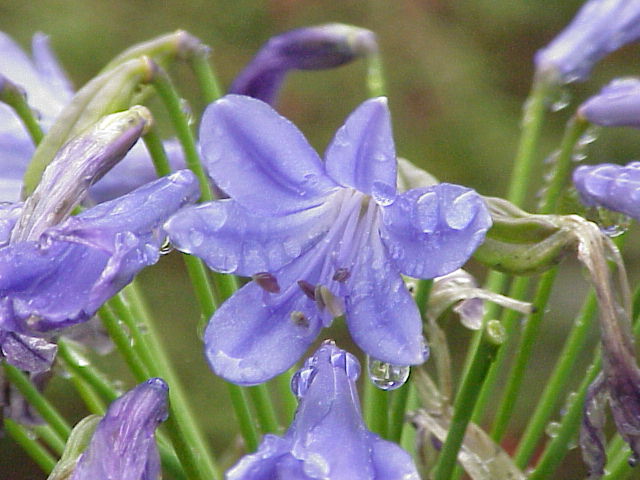
Agapanthus is a group of perennial plants from southern Africa, known for their blue, purple, or white funnel-shaped flowers held high on tall stems. Grown in gardens and landscapes around the world, they bloom mostly in summer and are valued for their showy clusters and easy care.
- Native to southern Africa, especially South Africa
- Flowers range from blue and purple to white and pink
- Grown worldwide as a summer-flowering garden plant
- Can be invasive in places like New Zealand
- Sap may cause skin irritation if touched
What does Agapanthus look like?
Agapanthus plants are herbaceous perennials with long, leathery, curved leaves up to 60 cm. Their flowers grow in large, rounded clusters at the top of tall, leafless stalks that can reach 2 meters. Each flower is funnel-shaped or tubular, in shades of blue, purple, or white. Some cultivated forms show bicolored or pink-tinged blooms. The plant grows from a rhizome, a thick underground stem.
Where does Agapanthus come from?
All species of Agapanthus come from southern Africa, including South Africa, Lesotho, Eswatini, and Mozambique. The genus was described in 1788. Over time, Agapanthus has spread to gardens worldwide, especially in warm climates. Some species have naturalized in places like Australia, New Zealand, and the UK. The name comes from Greek words for 'love' and 'flower'.
When and how Agapanthus blooms
Agapanthus blooms mostly in summer. It grows from a rhizome and can be propagated by dividing clumps or by seed. The plant prefers warm climates and is often grown in garden beds or borders. In cooler regions, rhizomes are planted deeper and mulched for winter. Hundreds of hybrids and cultivars exist, offering a range of flower colors and hardiness.



How Agapanthus is used
Agapanthus is widely grown as a garden and landscape plant for its striking flower heads. It is used in borders, mass plantings, and containers. In some regions, it is valued as a symbol or emblem. However, in places like New Zealand, it is considered invasive. The sap can irritate skin and should not be ingested.
Kinds of Agapanthus
There are between 6 and 10 recognized species, with Agapanthus africanus as the type. Many hybrids and cultivars have been developed, some with unusual colors or variegated leaves. In the UK, several cultivars have received horticultural awards, and national collections are held by specialist growers.
What Agapanthus means
Agapanthus is sometimes called 'lily of the Nile' or 'African lily', though it is not a true lily. The plant's name reflects ideas of love and beauty. It is a familiar sight in gardens and public plantings in many countries. In some areas, it is a symbol or emblem, but in others, it is seen as a weed. Its low allergy potential makes it suitable for many gardens.
Where Agapanthus is used and seen


Where to see Agapanthus
 🇿🇦 Cape Town · All yearKirstenbosch National Botanical GardenA garden of South African plants on the slopes of Table Mountain, at its best from late winter to spring.
🇵🇹 Funchal · Apr to SepLevada walks through Madeira's flowersLevel footpaths beside Madeira's old irrigation channels, through laurel forest and banks of agapanthus and hydrangea.
🇿🇦 Cape Town · All yearKirstenbosch National Botanical GardenA garden of South African plants on the slopes of Table Mountain, at its best from late winter to spring.
🇵🇹 Funchal · Apr to SepLevada walks through Madeira's flowersLevel footpaths beside Madeira's old irrigation channels, through laurel forest and banks of agapanthus and hydrangea. 🇵🇹 Ponta Delgada · Jun to AugHydrangea hedges of the AzoresCountry roads on São Miguel and Faial lined for miles with blue hydrangea hedges in the Atlantic summer.
🇨🇴 Medellín · All yearMaking a silleta with a grower family in Santa ElenaSpend half a day on a small flower farm above Medellín, hear the family's story and build a small silleta yourself.
🇵🇹 Ponta Delgada · Jun to AugHydrangea hedges of the AzoresCountry roads on São Miguel and Faial lined for miles with blue hydrangea hedges in the Atlantic summer.
🇨🇴 Medellín · All yearMaking a silleta with a grower family in Santa ElenaSpend half a day on a small flower farm above Medellín, hear the family's story and build a small silleta yourself.Questions people ask about Agapanthus
Where does Agapanthus come from?
Agapanthus is native to southern Africa, including South Africa, Lesotho, Eswatini, and Mozambique. It has been introduced and grown in gardens in many other parts of the world.
What does Agapanthus look like?
It has long, curved leaves and tall stalks topped with rounded clusters of funnel-shaped flowers. The blooms are usually blue, purple, or white, with some hybrids showing pink or bicolored flowers.
Is Agapanthus poisonous?
The sap of Agapanthus can cause skin irritation or a burning sensation if touched. If ingested, it can be harmful and medical advice should be sought immediately.
Why is Agapanthus sometimes called 'lily of the Nile'?
Although often called 'lily of the Nile' or 'African lily', Agapanthus is not a true lily. The name reflects its African origin and showy flowers.
Is Agapanthus used for anything special?
Agapanthus is mainly grown for its decorative value in gardens and landscapes. In some places, it is used as a symbol or emblem, but it is not widely used in ceremonies or as a food or medicine.
Good reading and sources
- Agapanthus 'Blue Ice'Royal Horticultural Society, Article
- USDA Plants DatabaseUS Department of Agriculture, Article
- Plants of the World OnlineRoyal Botanic Gardens, Kew, Plant database
- Where it has been recordedGBIF, Plant database
- Sightings and photos by naturalistsiNaturalist, Plant database
The facts on this page come from the Wikipedia article "Agapanthus", written by its contributors and used under the CC BY-SA 4.0 licence, and from its Wikidata record (CC0). Phool rewrote the text in its own words, with AI assistance, and compares every page with the article to make sure no passage is copied. It may be reused under the same CC BY-SA 4.0 licence with a link back.
It may contain mistakes. It is not medical or foraging advice: many flowers are poisonous, and traditional uses are reported, not recommended. If something is wrong, tell us. Last refreshed 2026-10-03.
Others in the family Amaryllidaceae
The whole family Narcissus
Spring-flowering bulbs with trumpet-shaped blooms in white, yellow, and orange
🇬🇧 United Kingdom and 7 more · Wildflower
Narcissus
Spring-flowering bulbs with trumpet-shaped blooms in white, yellow, and orange
🇬🇧 United Kingdom and 7 more · Wildflower
 Allium
The genus of onions, garlic, leeks, chives and their wild relatives
Allium · Wildflower
Allium
The genus of onions, garlic, leeks, chives and their wild relatives
Allium · Wildflower
 Wild GarlicAllium ursinum
A wild woodland plant with star-shaped white flowers and edible leaves
🇮🇪 Ireland · Wildflower
Wild GarlicAllium ursinum
A wild woodland plant with star-shaped white flowers and edible leaves
🇮🇪 Ireland · Wildflower
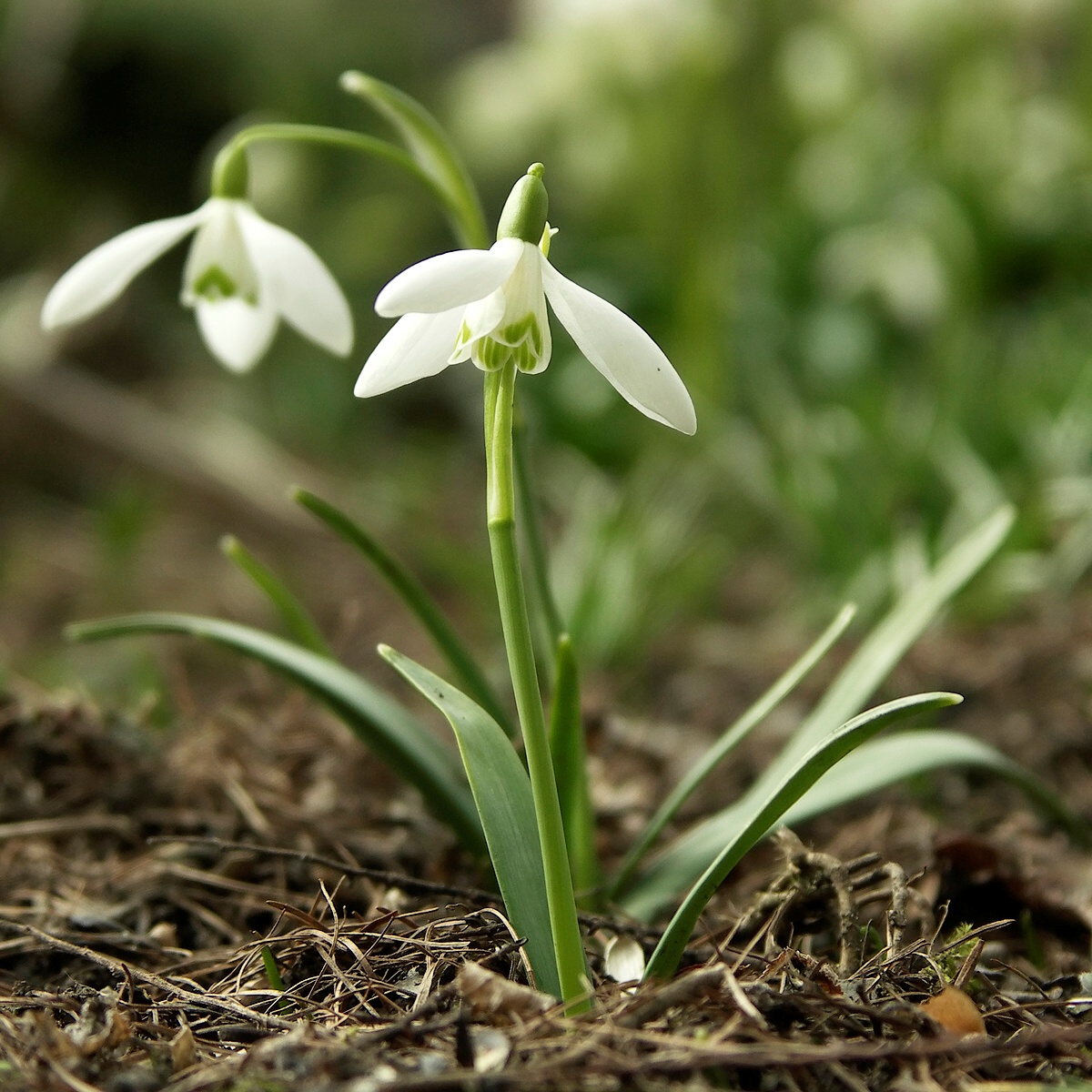 SnowdropGalanthus
White bell-shaped flowers that bloom at the end of winter
🇹🇷 Turkey and 7 more · Wildflower
SnowdropGalanthus
White bell-shaped flowers that bloom at the end of winter
🇹🇷 Turkey and 7 more · Wildflower
More from South Africa
All the flowers of South Africa Eucalyptus
The tall, aromatic trees and shrubs known as gum trees or eucalypts
🇦🇺 Australia and 7 more · Flowering tree
Eucalyptus
The tall, aromatic trees and shrubs known as gum trees or eucalypts
🇦🇺 Australia and 7 more · Flowering tree
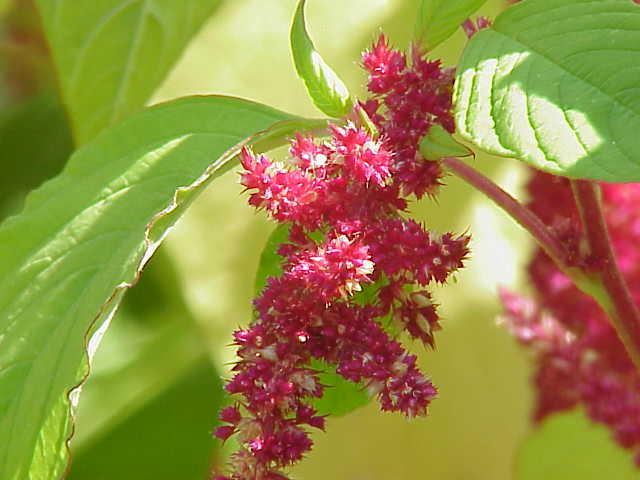 AmaranthAmaranthus
A tall, colourful plant grown for its flowers, leaves and edible seeds
🇲🇽 Mexico and 7 more · Wildflower
AmaranthAmaranthus
A tall, colourful plant grown for its flowers, leaves and edible seeds
🇲🇽 Mexico and 7 more · Wildflower
 Acacia
Shrubs and trees with golden or cream puffball flowers, native mostly to Australia
🇦🇺 Australia and 6 more · Wildflower
Acacia
Shrubs and trees with golden or cream puffball flowers, native mostly to Australia
🇦🇺 Australia and 6 more · Wildflower
 Sensitive PlantMimosa pudica
A touch-sensitive plant whose leaves fold up when disturbed
🇧🇷 Brazil and 8 more · Wildflower
Sensitive PlantMimosa pudica
A touch-sensitive plant whose leaves fold up when disturbed
🇧🇷 Brazil and 8 more · Wildflower