
Aristea
African evergreen perennials with short-lived blue morning flowers
Aristea is a genus of evergreen perennial plants in the iris family, growing from rhizomes or corm-like bases. Native across tropical and southern Africa and Madagascar, its upright stems bear clusters of star-shaped, mostly blue flowers that open at dawn and fade by midday.
- Each flower opens at dawn and fades before noon
- All 58 species are native only to Africa and Madagascar
- Most offer pollen but no nectar to pollinators
- Several species bloom mainly after wildfires
- Madagascar hosts eight species, six found nowhere else
What does Aristea look like?
Aristea plants are evergreen perennials with upright or slightly spreading stems rising from woody rhizomes or corm-like bases. Their leaves grow in two rows near the stem base, flattened or cylindrical. The flowers are star-symmetrical, usually deep blue but sometimes pink, white or purplish, with six spreading tepals. Each bloom lasts less than a day, opening at sunrise and wilting by noon. The spent flowers twist into a spiral but stay attached.
Where does Aristea come from?
The genus Aristea was formally named in 1789 in Hortus Kewensis, replacing earlier names like Ixia and Moraea used by Linnaeus and others for these plants. It belongs to the Iridaceae family and includes 58 recognized species as of 2026. All are native to Africa, with a strong presence in southern and tropical regions and on Madagascar, where several species occur nowhere else.
When and how Aristea blooms
These plants grow from underground rhizomes or short rootstocks. Many species flower after seasonal fires, especially in South Africa’s fynbos, where fire clears competing vegetation and triggers germination through heat and smoke chemicals. Individual blooms open only in the morning, but clusters produce new flowers over several weeks. Most species do not make nectar and rely on pollen-collecting bees for pollination.


Kinds of Aristea
Some species belong to the subgenus Pseudoaristea, such as Aristea spiralis and A. simplex. Their flowers may be white or pink, often with dark-spotted or blackish outer tepals, and attract monkey beetles. Aristea simplex uniquely produces nectar and draws long-tongued flies. In Madagascar, six of the eight Aristea species are found nowhere else, including the vulnerable A. angustifolia.
What Aristea means
In South Africa, many Aristea species are part of the fire-adapted fynbos ecosystem. After summer burns, they respond with abundant flowering. Of the 48 taxa there, 27 are of least conservation concern, while two, A. rupicola and A. singularis, are considered rare. The genus name comes from the Greek 'arista', meaning 'awn', though the plants themselves lack prominent awns.
Questions people ask about Aristea
Where does Aristea come from?
All Aristea species are native to Africa, especially southern and tropical regions, and Madagascar. None occur naturally outside this range.
How long do the flowers last?
Individual flowers typically open at sunrise and wither by midday, lasting less than one day, though clusters bloom over several weeks.
Do Aristea flowers have a scent?
No, the flowers are scentless. Most also produce no nectar, offering only pollen to visiting bees.
Is Aristea used in gardens or ceremonies?
The sources do not mention any traditional, ceremonial or horticultural uses of Aristea by people.
Are any Aristea species endangered?
In Madagascar, Aristea angustifolia is listed as vulnerable. In South Africa, most species are of least concern, but A. rupicola and A. singularis are considered rare.
Good reading and sources
- USDA Plants DatabaseUS Department of Agriculture, Article
- Plants of the World OnlineRoyal Botanic Gardens, Kew, Plant database
- Where it has been recordedGBIF, Plant database
- Sightings and photos by naturalistsiNaturalist, Plant database
The facts on this page come from the Wikipedia article "Aristea", written by its contributors and used under the CC BY-SA 4.0 licence, and from its Wikidata record (CC0). Phool rewrote the text in its own words, with AI assistance, and compares every page with the article to make sure no passage is copied. It may be reused under the same CC BY-SA 4.0 licence with a link back.
It may contain mistakes. It is not medical or foraging advice: many flowers are poisonous, and traditional uses are reported, not recommended. If something is wrong, tell us. Last refreshed 2026-10-03.
Others in the family Iridaceae
The whole family Gladiolus
Tall, showy flower spikes grown from corms, known as sword lilies
Gladiolus · Garden flower
Gladiolus
Tall, showy flower spikes grown from corms, known as sword lilies
Gladiolus · Garden flower
 Iris
A large group of perennial flowers with striking, six-lobed blooms
Iris · Wildflower
Iris
A large group of perennial flowers with striking, six-lobed blooms
Iris · Wildflower
 Crocus
Small corm-grown flowers in white, yellow, orange or purple
🇹🇷 Turkey and 7 more · Wildflower
Crocus
Small corm-grown flowers in white, yellow, orange or purple
🇹🇷 Turkey and 7 more · Wildflower
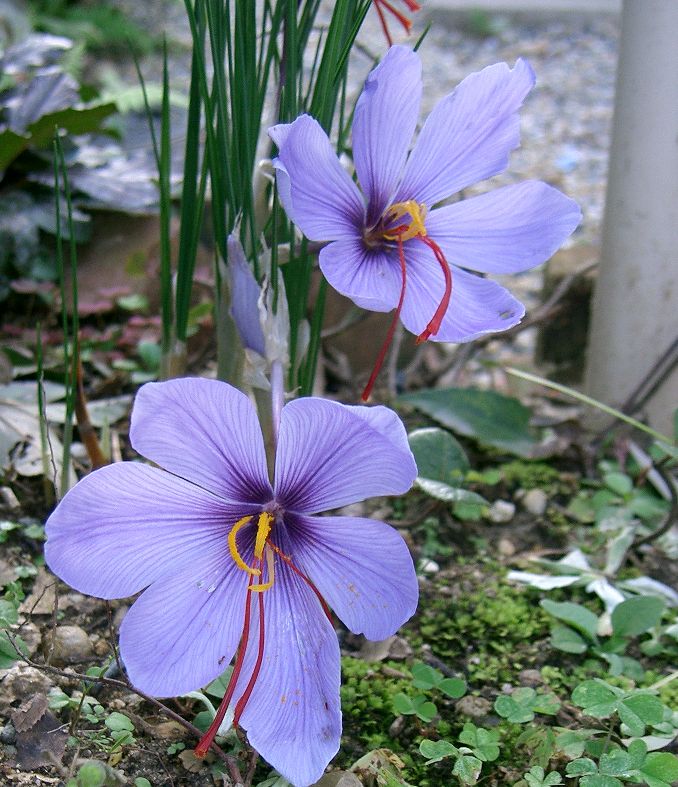 Saffron crocusCrocus sativus
The purple autumn flower whose red stigmas yield the spice saffron
🇨🇳 China and 1 more · Garden flower
Saffron crocusCrocus sativus
The purple autumn flower whose red stigmas yield the spice saffron
🇨🇳 China and 1 more · Garden flower
More from South Africa
All the flowers of South Africa Eucalyptus
The tall, aromatic trees and shrubs known as gum trees or eucalypts
🇦🇺 Australia and 7 more · Flowering tree
Eucalyptus
The tall, aromatic trees and shrubs known as gum trees or eucalypts
🇦🇺 Australia and 7 more · Flowering tree
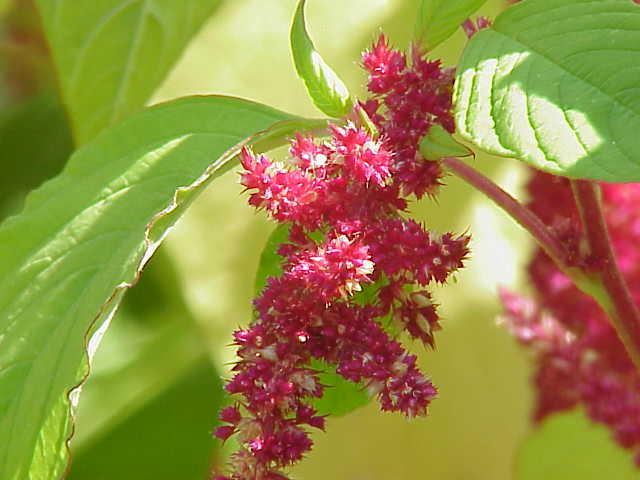 AmaranthAmaranthus
A tall, colourful plant grown for its flowers, leaves and edible seeds
🇲🇽 Mexico and 7 more · Wildflower
AmaranthAmaranthus
A tall, colourful plant grown for its flowers, leaves and edible seeds
🇲🇽 Mexico and 7 more · Wildflower
 Acacia
Shrubs and trees with golden or cream puffball flowers, native mostly to Australia
🇦🇺 Australia and 6 more · Wildflower
Acacia
Shrubs and trees with golden or cream puffball flowers, native mostly to Australia
🇦🇺 Australia and 6 more · Wildflower
 Sensitive PlantMimosa pudica
A touch-sensitive plant whose leaves fold up when disturbed
🇧🇷 Brazil and 8 more · Wildflower
Sensitive PlantMimosa pudica
A touch-sensitive plant whose leaves fold up when disturbed
🇧🇷 Brazil and 8 more · Wildflower