
Barclaya
Aquatic perennial plants from tropical Asia with submerged or emerged flowers
Barclaya is a genus of eight aquatic flowering plants found in tropical Asia, especially near streams in rainforests. These perennials have slender, creeping rhizomes and mostly submerged leaves, with solitary flowers that can bloom above or below water. Barclaya longifolia is grown in aquariums and its leaves are eaten in Laos.
- Barclaya is native to tropical Asian rainforests near streams.
- Barclaya longifolia is eaten in Laos and grown in aquariums.
- Flowers can bloom underwater or above the surface.
- Deforestation threatens Barclaya habitats in Southeast Asia.
What does Barclaya look like?
Barclaya plants are perennial aquatic herbs with slender, creeping or tuberous rhizomes covered in fine hairs. Their leaves are attached to long stalks and usually remain submerged, shaped from linear to round with a heart-shaped base and smooth edges. The flowers are solitary, can be found either underwater or above the surface, and have many tepals fused into a tube. Fruits are round and about 1–2 cm wide, containing spiny seeds.
Where does Barclaya come from?
Barclaya grows wild in the rainforests of tropical Asia, especially along the edges of streams. The genus was named after Robert Barclay and first described in 1827 by Nathaniel Wallich. Though once placed in its own family and even order, further studies confirmed Barclaya belongs in the waterlily family, Nymphaeaceae. Deforestation in Southeast Asia threatens its natural habitats.
When and how Barclaya blooms
Barclaya species grow in the shallow waters of rainforest streams, rooting in soft, muddy soil. Their leaves remain mostly underwater, and flowers can bloom both submerged and emerged. Barclaya longifolia is cultivated as an aquarium plant, where it produces green foliage in bright light and brownish leaves in lower light. The plant can set seed easily if pollen reaches the stigma.

How Barclaya is used
In Laos, the leaves of Barclaya longifolia are eaten. The plant is also valued in aquariums for its attractive foliage and adaptability to different light conditions. Barclaya is not widely used in ceremonies or as a cut flower, but its presence in home aquariums makes it popular among aquatic plant enthusiasts.
Kinds of Barclaya
The genus Barclaya contains eight species. Barclaya longifolia is the best known and commonly grown in aquariums. Barclaya motleyi is another species, but its conservation status is uncertain. Some species have been considered for separate classification, but all are now placed in the Nymphaeaceae family.
What Barclaya means
Barclaya does not have strong symbolic or religious associations in the sources. Its main cultural use is as an edible plant in Laos and as a decorative plant in aquariums. Conservation concerns are rising due to habitat loss from deforestation in Southeast Asia. Barclaya longifolia is not currently threatened, but other species may be at risk.
Questions people ask about Barclaya
Where does Barclaya come from?
Barclaya is native to tropical Asia, where it grows along streams in rainforest regions.
What does Barclaya look like?
Barclaya plants have slender, creeping rhizomes and mostly submerged leaves. Their solitary flowers can appear above or below water, and the foliage is green or brown depending on light.
How is Barclaya used?
In Laos, the leaves of Barclaya longifolia are eaten. The plant is also popular in aquariums for its attractive foliage.
Is Barclaya endangered?
Barclaya longifolia is listed as least concern, but habitat loss from deforestation threatens some species.
What family does Barclaya belong to?
Barclaya is part of the Nymphaeaceae family, which also includes waterlilies.
Good reading and sources
- Encyclopaedia BritannicaArticle
- IUCN Red List of Threatened SpeciesIUCN Red List, Article
- Plants of the World OnlineRoyal Botanic Gardens, Kew, Plant database
- Where it has been recordedGBIF, Plant database
- Sightings and photos by naturalistsiNaturalist, Plant database
The facts on this page come from the Wikipedia article "Barclaya", written by its contributors and used under the CC BY-SA 4.0 licence, and from its Wikidata record (CC0). Phool rewrote the text in its own words, with AI assistance, and compares every page with the article to make sure no passage is copied. It may be reused under the same CC BY-SA 4.0 licence with a link back.
It may contain mistakes. It is not medical or foraging advice: many flowers are poisonous, and traditional uses are reported, not recommended. If something is wrong, tell us. Last refreshed 2026-10-03.
Others in the family Nymphaeaceae
The whole family WaterlilyNymphaea
Floating aquatic flowers found in ponds and lakes worldwide
🇪🇬 Egypt and 7 more · Water flower
WaterlilyNymphaea
Floating aquatic flowers found in ponds and lakes worldwide
🇪🇬 Egypt and 7 more · Water flower
 Water-lily familyNymphaeaceae
Floating aquatic plants with showy flowers and round leaves
🇧🇩 Bangladesh and 2 more · Wildflower
Water-lily familyNymphaeaceae
Floating aquatic plants with showy flowers and round leaves
🇧🇩 Bangladesh and 2 more · Wildflower
 White Water-lilyNymphaea alba
A floating white flower of ponds and lakes across Europe and Asia
🇸🇪 Sweden and 5 more · Wildflower
White Water-lilyNymphaea alba
A floating white flower of ponds and lakes across Europe and Asia
🇸🇪 Sweden and 5 more · Wildflower
 Amazon waterlilyNymphaea amazonum
A night-blooming waterlily from Mexico to tropical South America
🇧🇷 Brazil and 4 more · Wildflower
Amazon waterlilyNymphaea amazonum
A night-blooming waterlily from Mexico to tropical South America
🇧🇷 Brazil and 4 more · Wildflower
More from Laos
All the flowers of Laos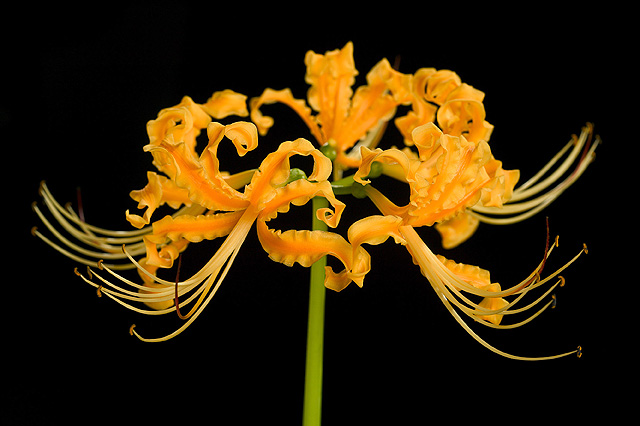 Lycoris
Bulb flowers of Asia, known for their bright blooms and leafless stems
🇨🇳 China and 6 more · Wildflower
Lycoris
Bulb flowers of Asia, known for their bright blooms and leafless stems
🇨🇳 China and 6 more · Wildflower
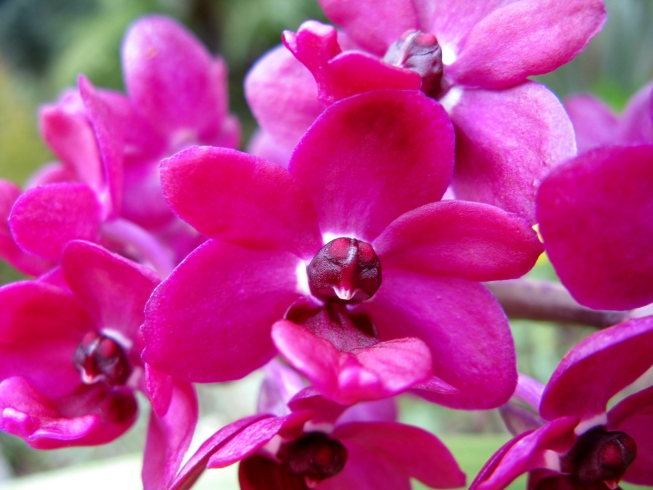 Rhynchostylis giganteaকপৌফুল
A fragrant orchid with dense, foxtail-like flower spikes from Southeast Asia
🇵🇭 Philippines and 7 more · Wildflower
Rhynchostylis giganteaকপৌফুল
A fragrant orchid with dense, foxtail-like flower spikes from Southeast Asia
🇵🇭 Philippines and 7 more · Wildflower
 Sphaerocoryne lefevreiរំដួល
A fragrant Southeast Asian tree with cream to yellow blossoms
🇰🇭 Cambodia and 3 more · Wildflower
Sphaerocoryne lefevreiរំដួល
A fragrant Southeast Asian tree with cream to yellow blossoms
🇰🇭 Cambodia and 3 more · Wildflower
 Freshwater mangroveBarringtonia acutangula
A riverside tree with long drooping white flower clusters
🇦🇫 Afghanistan and 8 more · Flowering tree
Freshwater mangroveBarringtonia acutangula
A riverside tree with long drooping white flower clusters
🇦🇫 Afghanistan and 8 more · Flowering tree