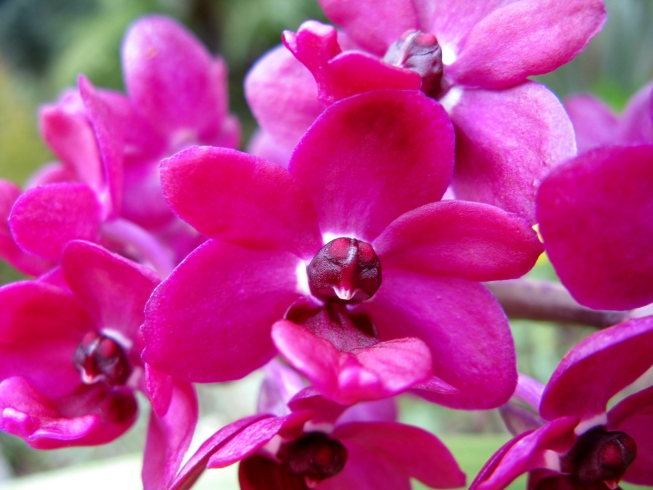
Rhynchostylis gigantea
In its own language: কপৌফুল
A fragrant orchid with dense, foxtail-like flower spikes from Southeast Asia
Rhynchostylis gigantea is an orchid native to Southeast Asia and parts of China and India. It grows on trees and produces long, crowded spikes of sweet-smelling flowers in shades from white to dark red, sometimes with spots. In Assam, it is the state flower and called kopouful.
- Native to Southeast Asia and Hainan, China
- Produces long, fragrant flower spikes in autumn and winter
- Flowers range from white to dark red, sometimes spotted
- State flower of Assam, India, known as kopouful
- Grows on trees as an epiphyte
What does Rhynchostylis gigantea look like?
Rhynchostylis gigantea is an epiphytic orchid, meaning it grows on trees rather than in soil. The plant has thick, fleshy roots and strap-shaped leaves. Its most striking feature is the flower spike, which can reach up to 37 cm long and is densely packed with small, sweetly fragrant blooms. The flowers may be white, dark red, or maroon, and some have spots. The spikes resemble a fox’s tail, which gives the plant its common name.
Where does Rhynchostylis gigantea come from?
This orchid is native to a wide area across Southeast Asia, including Borneo, Myanmar, Thailand, Peninsular Malaysia, Laos, Cambodia, Vietnam, Hainan in China, and the Philippines. It was first described in 1896 by John Lindley. The plant is found growing on trees in warm, humid forests. In Assam, India, it is locally called kopouful and holds special cultural significance as the state flower.
When and how Rhynchostylis gigantea blooms
Rhynchostylis gigantea blooms in autumn and winter, producing its flower spikes during these seasons. It prefers indirect light and warm to hot conditions. In cultivation, it is often grown in wooden baskets with little or no potting material, allowing its roots to spread freely and absorb moisture and nutrients. Regular watering and feeding help it thrive.

How Rhynchostylis gigantea is used
People grow Rhynchostylis gigantea mainly for its attractive and fragrant flowers, which are used to decorate homes and gardens. In Assam, the kopouful is especially valued and is a symbol of the region. The orchid is not known for use in religious or medicinal traditions, but its beauty and scent make it a favorite among orchid enthusiasts.
Kinds of Rhynchostylis gigantea
There are two main subspecies: Rhynchostylis gigantea subsp. gigantea, found throughout its range except the Philippines, and Rhynchostylis gigantea subsp. violacea, which is native to the Philippines. Flower color and shape can vary among different plants, with some showing spots and others being solid-colored.
What Rhynchostylis gigantea means
In Assam, Rhynchostylis gigantea is the state flower and is called kopouful in Assamese. It is a symbol of local pride and is often associated with cultural events and celebrations. The orchid’s long, fragrant flower spikes have made it popular in horticulture across its native regions.
Questions people ask about Rhynchostylis gigantea
Where does Rhynchostylis gigantea come from?
It is native to Southeast Asia, including Borneo, Myanmar, Thailand, Malaysia, Laos, Cambodia, Vietnam, Hainan in China, and the Philippines.
What does the foxtail orchid look like?
It has long, dense spikes of small, sweetly fragrant flowers that can be white, dark red, or maroon, sometimes with spots. The spikes resemble a fox’s tail.
When does Rhynchostylis gigantea bloom?
It blooms in autumn and winter, producing its distinctive flower spikes during these seasons.
What is the cultural significance of this orchid?
In Assam, India, it is called kopouful and is the state flower, symbolizing regional pride and used in local celebrations.
How is Rhynchostylis gigantea grown?
It is often grown in wooden baskets with little or no potting material, prefers indirect light, and thrives in warm, humid conditions.
Good reading and sources
- Plants of the World OnlineRoyal Botanic Gardens, Kew, Plant database
- Where it has been recordedGBIF, Plant database
- Sightings and photos by naturalistsiNaturalist, Plant database
- Rhynchostylis gigantea on WikipediaEncyclopedia
- More photos on Wikimedia CommonsPhotos
- Wikidata recordOpen data
The facts on this page come from the Wikipedia article "Rhynchostylis gigantea", written by its contributors and used under the CC BY-SA 4.0 licence, and from its Wikidata record (CC0). Phool rewrote the text in its own words, with AI assistance, and compares every page with the article to make sure no passage is copied. It may be reused under the same CC BY-SA 4.0 licence with a link back.
It may contain mistakes. It is not medical or foraging advice: many flowers are poisonous, and traditional uses are reported, not recommended. If something is wrong, tell us. Last refreshed 2026-10-03.
Others in the family Orchidaceae
The whole family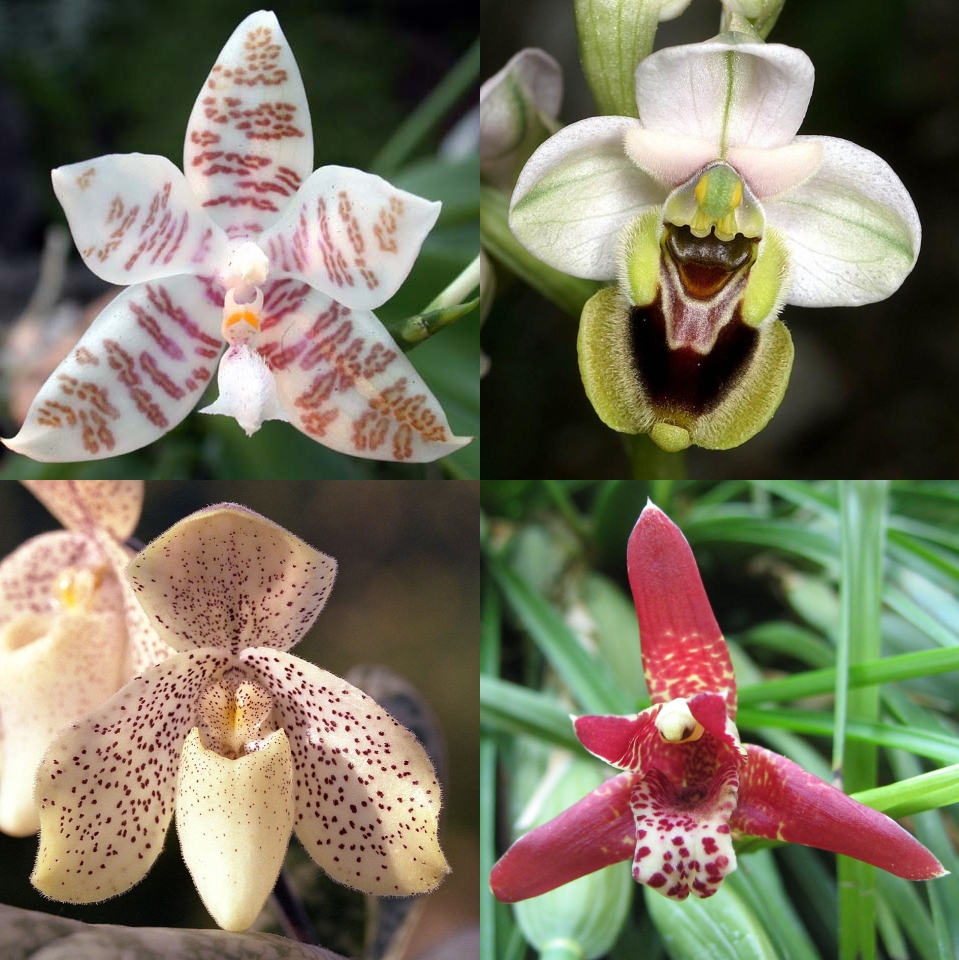 OrchidOrchidaceae
A vast family of colourful, often fragrant flowers found almost everywhere on earth
Orchidaceae · Wildflower
OrchidOrchidaceae
A vast family of colourful, often fragrant flowers found almost everywhere on earth
Orchidaceae · Wildflower
 Vanilla
Climbing orchids with pods used for the world’s most popular flavor
🇲🇽 Mexico and 7 more · Wildflower
Vanilla
Climbing orchids with pods used for the world’s most popular flavor
🇲🇽 Mexico and 7 more · Wildflower
 Orchis
A group of wild orchids with tuberous roots from Europe, North Africa and Asia
🇹🇷 Turkey and 7 more · Wildflower
Orchis
A group of wild orchids with tuberous roots from Europe, North Africa and Asia
🇹🇷 Turkey and 7 more · Wildflower
 Waling-walingVanda sanderiana
A rare orchid known as the 'Queen of Philippine flowers'
🇵🇭 Philippines · Orchid
Waling-walingVanda sanderiana
A rare orchid known as the 'Queen of Philippine flowers'
🇵🇭 Philippines · Orchid
More from the Philippines
All the flowers of the Philippines JasmineJasminum
A group of fragrant shrubs and vines with white or yellow star-shaped flowers
🇵🇰 Pakistan and 7 more · Wildflower
JasmineJasminum
A group of fragrant shrubs and vines with white or yellow star-shaped flowers
🇵🇰 Pakistan and 7 more · Wildflower
 WaterlilyNymphaea
Floating aquatic flowers found in ponds and lakes worldwide
🇪🇬 Egypt and 7 more · Water flower
WaterlilyNymphaea
Floating aquatic flowers found in ponds and lakes worldwide
🇪🇬 Egypt and 7 more · Water flower
 Plumeria
Fragrant tropical tree with waxy, five-petaled flowers in many colours
🇲🇽 Mexico and 6 more · Flowering tree
Plumeria
Fragrant tropical tree with waxy, five-petaled flowers in many colours
🇲🇽 Mexico and 6 more · Flowering tree
 AchioteBixa orellana
Shrub with spiky red pods, source of the natural dye annatto
🇧🇷 Brazil and 9 more · Flowering shrub
AchioteBixa orellana
Shrub with spiky red pods, source of the natural dye annatto
🇧🇷 Brazil and 9 more · Flowering shrub