
Paperflower
Bougainvillea glabra, family Nyctaginaceae
A climbing shrub with purple papery bracts from Brazil
Paperflower (Bougainvillea glabra) is a woody, evergreen vine from Brazil, known for its purple, paper-like bracts that surround small white flowers. It is widely grown in warm climates for its vivid display and is popular in bonsai and ornamental gardens.
- Native to Brazil and grown in many warm regions
- Purple papery bracts surround small white flowers
- Popular for bonsai and ornamental gardens
- Tolerates drought but is sensitive to frost
- Infusions from leaves and bracts used in traditional remedies
What does Paperflower look like?
Bougainvillea glabra is a climbing shrub that can reach 3 to 3.5 meters tall, sometimes growing even higher. Its stems are thick and armed with thorns, and the branches hang down. The leaves are dark green, pointed, and smooth on top, with a slightly hairy underside. The most eye-catching feature is its large, purple, papery bracts that look like petals and surround clusters of tiny, white flowers. The bracts are oblong or elliptical and can be up to 9 centimeters long.
Where does Paperflower come from?
This plant is native to Brazil, where it grows in regions such as Rio de Janeiro, São Paulo, Espírito Santo, Santa Catarina, and Rio Grande do Sul. It is also found in the Caatinga and Atlantic Forest. The name 'glabra' comes from Latin, meaning 'bald', referring to the smooth texture of some plant parts. Over time, Bougainvillea glabra has been introduced to other warm regions, including China, and is now grown widely as an ornamental plant.
When and how Paperflower blooms
Bougainvillea glabra thrives in full sunlight and needs warm temperatures and well-drained soil. It is sensitive to frost but can handle heat and dry conditions. The plant is usually propagated from cuttings. In colder places, it is often grown in greenhouses, while in warmer climates it is planted outdoors. The flowers appear in clusters, each surrounded by colorful bracts.


How Paperflower is used
People often grow Bougainvillea glabra for its vivid bracts, which make it a favorite in gardens and for bonsai. In some traditions, infusions made from its leaves and bracts are taken for stomach and breathing problems. The plant contains raphides, which are needle-like crystals, so care is needed when handling. It is mainly valued for its decorative use.
Kinds of Paperflower
Bougainvillea glabra is one of several species in its genus. It is sometimes confused with Bougainvillea spectabilis, which has a velvety underside to its leaves, while B. glabra's leaves are smoother. B. glabra is especially popular for bonsai and ornamental planting.
What Paperflower means
Bougainvillea glabra is grown widely for its striking appearance and is a common sight in gardens and parks in warm climates. Its papery bracts give rise to the name 'paperflower.' While it is not tied to a particular festival or religious use in the sources, it is a familiar ornamental plant and valued for its ability to thrive in tough conditions.
Where Paperflower is used and seen


Questions people ask about Paperflower
Where does Bougainvillea glabra come from?
Bougainvillea glabra is native to Brazil, where it grows in several regions including Rio de Janeiro and São Paulo. It has also been introduced to other warm areas such as China.
What does the paperflower look like?
This plant is a climbing shrub with thorny stems and dark green, pointed leaves. Its most noticeable feature is the large, purple, papery bracts that surround small, white flowers.
How is Bougainvillea glabra used?
It is mainly grown for decoration in gardens and as bonsai. In some places, infusions from its leaves and bracts are used for stomach and respiratory issues.
Is Bougainvillea glabra easy to grow?
It does well in full sun, warm weather, and well-drained soil. The plant is drought-tolerant but does not handle frost. It is usually grown from cuttings.
Does Bougainvillea glabra have any special meaning?
The sources do not mention any particular symbolism or festival use for Bougainvillea glabra. It is mainly valued for its ornamental qualities.
Good reading and sources
- Encyclopaedia BritannicaArticle
- IUCN Red List of Threatened SpeciesIUCN Red List, Article
- USDA Plants DatabaseUS Department of Agriculture, Article
- Bougainvillea glabraRoyal Horticultural Society, Article
- Plants of the World OnlineRoyal Botanic Gardens, Kew, Plant database
- Where it has been recordedGBIF, Plant database
- Sightings and photos by naturalistsiNaturalist, Plant database
- Bougainvillea glabra on WikipediaEncyclopedia
- More photos on Wikimedia CommonsPhotos
- Wikidata recordOpen data
The facts on this page come from the Wikipedia article "Bougainvillea glabra", written by its contributors and used under the CC BY-SA 4.0 licence, and from its Wikidata record (CC0). Phool rewrote the text in its own words, with AI assistance, and compares every page with the article to make sure no passage is copied. It may be reused under the same CC BY-SA 4.0 licence with a link back.
It may contain mistakes. It is not medical or foraging advice: many flowers are poisonous, and traditional uses are reported, not recommended. If something is wrong, tell us. Last refreshed 2026-10-03.
Others in the family Nyctaginaceae
The whole family Marvel of PeruMirabilis jalapa
Evening-blooming garden flower with many colours on one plant
🇲🇽 Mexico and 6 more · Garden flower
Marvel of PeruMirabilis jalapa
Evening-blooming garden flower with many colours on one plant
🇲🇽 Mexico and 6 more · Garden flower
 Great bougainvilleaBougainvillea spectabilis
A climbing plant with vivid bracts, native to South America
🇧🇷 Brazil and 7 more · Wildflower
Great bougainvilleaBougainvillea spectabilis
A climbing plant with vivid bracts, native to South America
🇧🇷 Brazil and 7 more · Wildflower
 Desert sand-verbenaAbronia villosa
A low-growing wildflower with sweet-scented magenta blooms in sandy desert places
🇺🇸 United States and 1 more · Wildflower
Desert sand-verbenaAbronia villosa
A low-growing wildflower with sweet-scented magenta blooms in sandy desert places
🇺🇸 United States and 1 more · Wildflower
More from Brazil
All the flowers of Brazil CactusCactaceae
Succulent plants with spines, native to the Americas
🇲🇽 Mexico and 7 more · Wildflower
CactusCactaceae
Succulent plants with spines, native to the Americas
🇲🇽 Mexico and 7 more · Wildflower
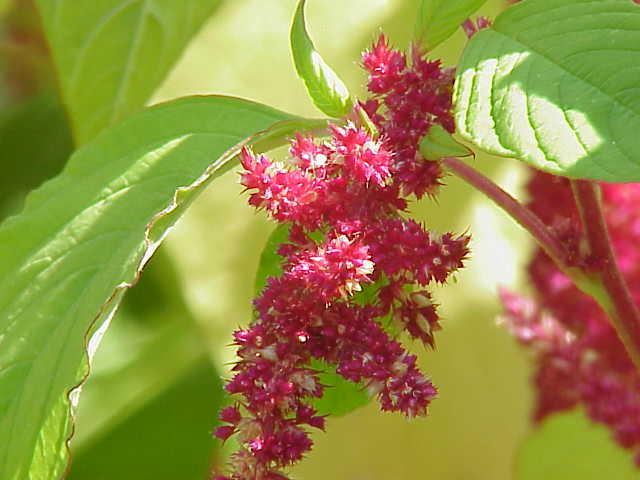 AmaranthAmaranthus
A tall, colourful plant grown for its flowers, leaves and edible seeds
🇲🇽 Mexico and 7 more · Wildflower
AmaranthAmaranthus
A tall, colourful plant grown for its flowers, leaves and edible seeds
🇲🇽 Mexico and 7 more · Wildflower
 Sensitive PlantMimosa pudica
A touch-sensitive plant whose leaves fold up when disturbed
🇧🇷 Brazil and 8 more · Wildflower
Sensitive PlantMimosa pudica
A touch-sensitive plant whose leaves fold up when disturbed
🇧🇷 Brazil and 8 more · Wildflower
 Passion fruitPassiflora edulis
A tropical vine grown for its sweet-sour, aromatic fruit
🇧🇷 Brazil and 6 more · Climber
Passion fruitPassiflora edulis
A tropical vine grown for its sweet-sour, aromatic fruit
🇧🇷 Brazil and 6 more · Climber