
Great bougainvillea
Bougainvillea spectabilis, family Nyctaginaceae
A climbing plant with vivid bracts, native to South America
Great bougainvillea is a woody vine or shrub from Brazil, Bolivia, Peru, and Argentina. Its small white flowers are surrounded by bright bracts in shades of red, purple, orange, or white, making it a popular ornamental plant in warm regions.
- Native to Brazil, Bolivia, Peru, and Argentina
- Grows as a woody vine up to 12 meters tall
- Brightly colored bracts surround small white flowers
- Prefers full sun and dry, fertile soil
- Used in traditional medicine by the Yanadi tribe in India
What does Great bougainvillea look like?
Great bougainvillea is a large, woody vine or shrub that can grow from 4.6 to 12.2 meters tall. Its stems are thorny and covered with fine hairs, and its leaves are heart-shaped. The true flowers are small and white, but what stands out are the colorful bracts—modified leaves—that surround them. These bracts come in a range of colors, including red, purple-red, orange, white, and mauve. The plant also produces a small, dry, elongated fruit called an achene.
Where does Great bougainvillea come from?
This species is native to South America, specifically Brazil, Bolivia, Peru, and the Chubut Province of Argentina. It grows wild in these regions and has been introduced to many other parts of the world as an ornamental plant. The plant is part of the Bougainvillea genus, which is known for its showy bracts. Over time, it has become popular in gardens and landscapes in warm climates far beyond its native range.
When and how Great bougainvillea blooms
Bougainvillea spectabilis thrives in full sun and prefers dry, fertile soil. It is suited to hardiness zones 10 to 11, meaning it grows best in warm climates. The plant can be propagated using stem or root cuttings. It is usually grown as a climbing vine or trained as a shrub, and regular pruning helps maintain its shape and encourage flowering.


How Great bougainvillea is used
People mainly grow great bougainvillea for its colorful bracts, which add bright splashes to gardens and walls. In India, the Yanadi tribe of Andhra Pradesh once used the leaves in traditional medicine for diabetes. Its main use, however, is ornamental, as a decorative plant in gardens and landscapes.
Kinds of Great bougainvillea
Bougainvillea spectabilis is one of several species in the Bougainvillea genus. The color of its bracts can vary widely, with selections showing white, red, purple, orange, or mauve tones. Gardeners often choose varieties based on the bract color they prefer for their gardens.
What Great bougainvillea means
Great bougainvillea is widely grown as an ornamental plant in warm regions around the world. While it is not tied to specific festivals or religious practices in the sources, it is valued for its ability to cover walls, fences, and trellises with bright color. In some regions, it is also part of local traditional medicine.
Where Great bougainvillea is used and seen


Questions people ask about Great bougainvillea
Where does great bougainvillea come from?
Great bougainvillea is native to Brazil, Bolivia, Peru, and the Chubut Province of Argentina. It grows wild in these South American regions.
What does the flower look like?
The true flowers are small and white, but they are surrounded by large, colorful bracts that can be red, purple, orange, or white. These bracts are what make the plant stand out.
How is great bougainvillea used?
It is mainly grown as an ornamental plant for gardens and landscapes. In India, the Yanadi tribe once used its leaves in traditional medicine for diabetes.
What kind of climate does it need?
Great bougainvillea prefers warm climates, full sun, and dry, fertile soil. It grows best in hardiness zones 10 to 11.
Does it have any special cultural meaning?
The sources do not mention specific symbolism or cultural meanings, but it is widely grown for its decorative value.
Good reading and sources
- Encyclopaedia BritannicaArticle
- USDA Plants DatabaseUS Department of Agriculture, Article
- Plants of the World OnlineRoyal Botanic Gardens, Kew, Plant database
- Where it has been recordedGBIF, Plant database
- Sightings and photos by naturalistsiNaturalist, Plant database
- Bougainvillea spectabilis on WikipediaEncyclopedia
- More photos on Wikimedia CommonsPhotos
- Wikidata recordOpen data
The facts on this page come from the Wikipedia article "Bougainvillea spectabilis", written by its contributors and used under the CC BY-SA 4.0 licence, and from its Wikidata record (CC0). Phool rewrote the text in its own words, with AI assistance, and compares every page with the article to make sure no passage is copied. It may be reused under the same CC BY-SA 4.0 licence with a link back.
It may contain mistakes. It is not medical or foraging advice: many flowers are poisonous, and traditional uses are reported, not recommended. If something is wrong, tell us. Last refreshed 2026-10-03.
Others in the family Nyctaginaceae
The whole family Marvel of PeruMirabilis jalapa
Evening-blooming garden flower with many colours on one plant
🇲🇽 Mexico and 6 more · Garden flower
Marvel of PeruMirabilis jalapa
Evening-blooming garden flower with many colours on one plant
🇲🇽 Mexico and 6 more · Garden flower
 Desert sand-verbenaAbronia villosa
A low-growing wildflower with sweet-scented magenta blooms in sandy desert places
🇺🇸 United States and 1 more · Wildflower
Desert sand-verbenaAbronia villosa
A low-growing wildflower with sweet-scented magenta blooms in sandy desert places
🇺🇸 United States and 1 more · Wildflower
 PaperflowerBougainvillea glabra
A climbing shrub with purple papery bracts from Brazil
🇧🇷 Brazil and 1 more · Climber
PaperflowerBougainvillea glabra
A climbing shrub with purple papery bracts from Brazil
🇧🇷 Brazil and 1 more · Climber
More from Brazil
All the flowers of Brazil CactusCactaceae
Succulent plants with spines, native to the Americas
🇲🇽 Mexico and 7 more · Wildflower
CactusCactaceae
Succulent plants with spines, native to the Americas
🇲🇽 Mexico and 7 more · Wildflower
 Eucalyptus
The tall, aromatic trees and shrubs known as gum trees or eucalypts
🇦🇺 Australia and 7 more · Flowering tree
Eucalyptus
The tall, aromatic trees and shrubs known as gum trees or eucalypts
🇦🇺 Australia and 7 more · Flowering tree
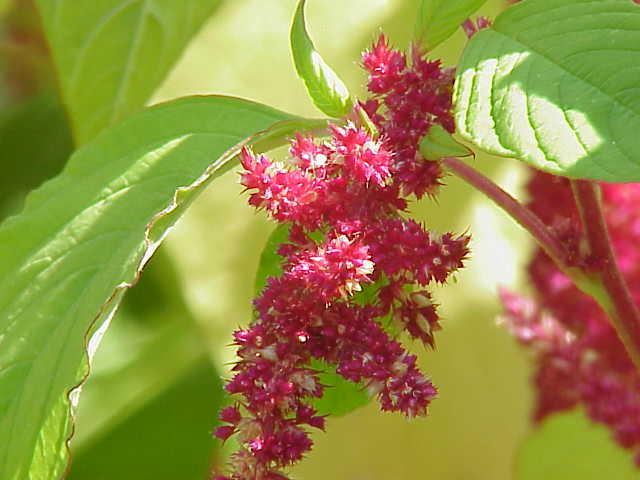 AmaranthAmaranthus
A tall, colourful plant grown for its flowers, leaves and edible seeds
🇲🇽 Mexico and 7 more · Wildflower
AmaranthAmaranthus
A tall, colourful plant grown for its flowers, leaves and edible seeds
🇲🇽 Mexico and 7 more · Wildflower
 Sensitive PlantMimosa pudica
A touch-sensitive plant whose leaves fold up when disturbed
🇧🇷 Brazil and 8 more · Wildflower
Sensitive PlantMimosa pudica
A touch-sensitive plant whose leaves fold up when disturbed
🇧🇷 Brazil and 8 more · Wildflower