
Cattleya warscewiczii
The Colombian orchid with the largest flowers in its genus
A large orchid from Colombia, first collected there in the 1840s. It carries the biggest flowers of any Cattleya, up to about 27 cm across, fragrant and showy, and breeders have used it widely to make large-flowered hybrids.
- First collected in Colombia by Józef Warszewicz in 1848 and 1849
- Formally described in 1855 by Heinrich Gustav Reichenbach
- Flowers reach 17.5 to 27.5 cm across, the largest in the genus
- Pseudobulbs are 20 to 40 cm long and carry a single leaf
- Crosses naturally with C. aurea or C. dowiana as C. x hardyana
What does Cattleya warscewiczii look like?
Cattleya warscewiczii is an orchid that grows in the way most Cattleyas do. It creeps along, sending up swollen storage stems called pseudobulbs, one after another. Each pseudobulb is grooved, cigar-shaped and 20 to 40 cm long, and carries a single leaf, a habit growers call unifoliate. The flowers open at 17.5 to 27.5 cm across, wider than those of any other species in the genus, and they are showy and fragrant. The species belongs among the labiate Cattleyas, the ones with a distinct lip.
Where does Cattleya warscewiczii come from?
Józef Warszewicz, a plant collector, found this orchid in Colombia in 1848 and 1849. That gathering is the first recorded. Heinrich Gustav Reichenbach described the species formally in 1855, and the second half of its scientific name, warscewiczii, honours the man who gathered it. The sources name Colombia and no other part of its wild range. Within the genus Cattleya it sits among the labiate species, those with a pronounced lip on the flower.
When and how Cattleya warscewiczii blooms
The plant has what is called a sympodial habit: new growths rise in turn from a creeping stem rather than from a single upright trunk. In cultivation it flowers in summer, on the growth that was made that spring. The sources say it needs strong light and good air movement. Nothing more is recorded of its soil or its rest period. Its chromosomes have been counted: 2n = 40 in the paired state, n = 20 in the single state.
How Cattleya warscewiczii is used
People grow this orchid for its flowers, and breeders have leaned on it heavily. Crossed with other Cattleyas, it has helped produce the large-flowered hybrid Cattleyas. It also crosses in the wild: where it meets Cattleya aurea or Cattleya dowiana, the offspring is Cattleya x hardyana. Beyond growing and breeding, the sources record no other use, whether in food, medicine or scent.
Kinds of Cattleya warscewiczii
The species itself has the largest flowers in its genus. The variation the sources describe is mostly hybrid: the natural cross with Cattleya aurea or Cattleya dowiana, known as Cattleya x hardyana, and the many garden hybrids raised from it. No named varieties or cultivars are singled out in the material.
What Cattleya warscewiczii means
This orchid entered collections through a Colombian expedition in the middle of the nineteenth century, and its formal name has stood since 1855. Its lasting mark is as a parent, since large-flowered Cattleya hybrids owe much to it. The sources say nothing of its symbolism, its condition in the wild, or any conservation listing.
Questions people ask about Cattleya warscewiczii
Where does Cattleya warscewiczii come from?
It comes from Colombia, where Józef Warszewicz first collected it in 1848 and 1849. The sources name no other part of its wild range, so Colombia is the only home recorded for it.
How large are its flowers?
The flowers measure 17.5 to 27.5 cm across, the largest of any species in the genus Cattleya. They are described as showy and fragrant, and they appear on growth made earlier that year.
When does it flower?
In cultivation it flowers in summer, on the spring growth of the same year. The source gives summer only, and adds that the plant needs strong light and good air movement.
Who named it?
Heinrich Gustav Reichenbach described it formally in 1855. Its name remembers Józef Warszewicz, the collector who gathered the first specimens in Colombia in 1848 and 1849.
What is the orchid used for?
It is grown for its flowers and used widely in breeding, helping to create large-flowered hybrid Cattleyas. It also crosses naturally with Cattleya aurea or Cattleya dowiana, producing Cattleya x hardyana.
Good reading and sources
- Plants of the World OnlineRoyal Botanic Gardens, Kew, Plant database
- Where it has been recordedGBIF, Plant database
- Sightings and photos by naturalistsiNaturalist, Plant database
- Cattleya warscewiczii on WikipediaEncyclopedia
- More photos on Wikimedia CommonsPhotos
- Wikidata recordOpen data
The facts on this page come from the Wikipedia article "Cattleya warscewiczii", written by its contributors and used under the CC BY-SA 4.0 licence, and from its Wikidata record (CC0). Phool rewrote the text in its own words, with AI assistance, and compares every page with the article to make sure no passage is copied. It may be reused under the same CC BY-SA 4.0 licence with a link back.
It may contain mistakes. It is not medical or foraging advice: many flowers are poisonous, and traditional uses are reported, not recommended. If something is wrong, tell us. Last refreshed 2026-10-03.
Others in the family Orchidaceae
The whole family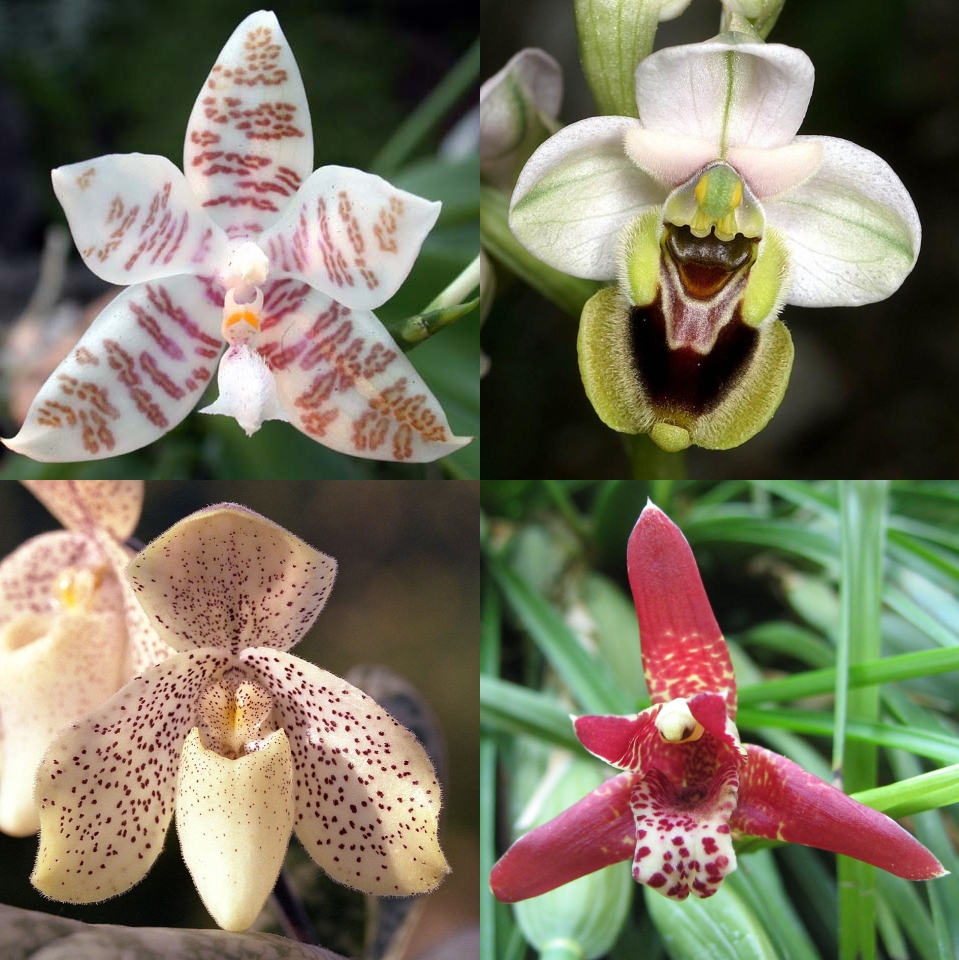 OrchidOrchidaceae
A vast family of colourful, often fragrant flowers found almost everywhere on earth
Orchidaceae · Wildflower
OrchidOrchidaceae
A vast family of colourful, often fragrant flowers found almost everywhere on earth
Orchidaceae · Wildflower
 Vanilla
Climbing orchids with pods used for the world’s most popular flavor
🇲🇽 Mexico and 7 more · Wildflower
Vanilla
Climbing orchids with pods used for the world’s most popular flavor
🇲🇽 Mexico and 7 more · Wildflower
 Orchis
A group of wild orchids with tuberous roots from Europe, North Africa and Asia
🇹🇷 Turkey and 7 more · Wildflower
Orchis
A group of wild orchids with tuberous roots from Europe, North Africa and Asia
🇹🇷 Turkey and 7 more · Wildflower
 Pansy orchidMiltoniopsis
An orchid with flowers that resemble garden pansies
🇨🇷 Costa Rica and 5 more · Orchid
Pansy orchidMiltoniopsis
An orchid with flowers that resemble garden pansies
🇨🇷 Costa Rica and 5 more · Orchid
More from Colombia
All the flowers of Colombia Dracula
A genus of orchids with strange, long-tailed flowers from Central and South America
🇲🇽 Mexico and 6 more · Wildflower
Dracula
A genus of orchids with strange, long-tailed flowers from Central and South America
🇲🇽 Mexico and 6 more · Wildflower
 Masdevallia
A large group of cool-growing orchids from the high Andes
🇲🇽 Mexico and 5 more · Wildflower
Masdevallia
A large group of cool-growing orchids from the high Andes
🇲🇽 Mexico and 5 more · Wildflower
 Cockleshell orchidProsthechea cochleata
An orchid with shell-like flowers and a hooded lip
🇭🇳 Honduras and 3 more · Wildflower
Cattleya trianae
The national orchid of Colombia with petals in the flag’s colours
🇨🇴 Colombia · Wildflower
Cockleshell orchidProsthechea cochleata
An orchid with shell-like flowers and a hooded lip
🇭🇳 Honduras and 3 more · Wildflower
Cattleya trianae
The national orchid of Colombia with petals in the flag’s colours
🇨🇴 Colombia · Wildflower