
Cockleshell orchid
Prosthechea cochleata, family Orchidaceae
An orchid with shell-like flowers and a hooded lip
The cockleshell orchid is an epiphytic orchid found in Central America, the Caribbean, parts of South America, and southern Florida. Its flowers, which last a long time and grow in succession, are known for their unusual shape with a hooded lip. In Belize, it is celebrated as the national flower.
- National flower of Belize, known there as the black orchid
- Grows on trees in forests from Central America to Florida
- Flowers have a hooded lip and appear upside down
- A rare Florida variety can self-pollinate
- Popular in cultivation for its long-lasting blooms
What does Cockleshell orchid look like?
This orchid grows on trees rather than in soil, with each thickened stem (pseudobulb) carrying one or two narrow, non-fleshy leaves. The flowers are distinctive: instead of the lip (labellum) sitting below the central column as in most orchids, it forms a hood over the column, making the bloom appear upside down. The flowers are long-lasting and produced one after another on a lengthening stem.
Where does Cockleshell orchid come from?
The cockleshell orchid is native to forests in Central America, the Caribbean islands, Colombia, Venezuela, and southern Florida. It has adapted to grow on trees in these regions. Over time, it has become popular with orchid growers, and several hybrids have been developed. In Belize, it is especially significant as the country's national flower, where it is also called the black orchid.
When and how Cockleshell orchid blooms
The plant produces flowers throughout the year, with new blooms appearing in succession on a growing flower stalk. It is usually grown as an epiphyte, attached to bark or tree branches, and prefers humid, warm environments. The species can be cultivated in homes and greenhouses, where it is valued for its unusual appearance and the longevity of its flowers.
How Cockleshell orchid is used
People often grow this orchid for its unique and attractive flowers, both in private collections and botanical gardens. In Belize, it holds special status as a national symbol. The plant is also used in hybridization, producing new varieties for orchid enthusiasts. Its flowers are not typically used for cut arrangements, but the plant itself is common in cultivation.
Kinds of Cockleshell orchid
There is a rare variety called Prosthechea cochleata var. triandra, which differs by having three anthers instead of one. This form is able to self-pollinate and is found in Florida, where natural pollinators are absent. Several hybrids, such as Prosthechea Green Hornet, have been bred from this species.
What Cockleshell orchid means
In Belize, the cockleshell orchid is a national emblem and is sometimes called the black orchid. Its unusual flower shape makes it popular among orchid collectors and growers. The endangered variety in Florida highlights the plant's adaptability and the importance of conservation for unique forms.
Questions people ask about Cockleshell orchid
Where does the cockleshell orchid come from?
It grows naturally in Central America, the Caribbean, Colombia, Venezuela, and southern Florida, often found on trees in forests.
Why is it called the cockleshell orchid?
The flower's lip forms a hood over the column, giving it a shape that resembles a cockleshell or clam shell.
What is special about its flowers?
Unlike most orchids, the lip is above the column, making the flower look upside down. The blooms last a long time and appear one after another.
Is the cockleshell orchid important in any country?
Yes, it is the national flower of Belize, where it is also known as the black orchid.
Are there different types of this orchid?
There is a rare variety in Florida that can self-pollinate, and several hybrids have been developed for cultivation.
Good reading and sources
- USDA Plants DatabaseUS Department of Agriculture, Article
- Plants of the World OnlineRoyal Botanic Gardens, Kew, Plant database
- Where it has been recordedGBIF, Plant database
- Sightings and photos by naturalistsiNaturalist, Plant database
- Prosthechea cochleata on WikipediaEncyclopedia
- More photos on Wikimedia CommonsPhotos
- Wikidata recordOpen data
The facts on this page come from the Wikipedia article "Prosthechea cochleata", written by its contributors and used under the CC BY-SA 4.0 licence, and from its Wikidata record (CC0). Phool rewrote the text in its own words, with AI assistance, and compares every page with the article to make sure no passage is copied. It may be reused under the same CC BY-SA 4.0 licence with a link back.
It may contain mistakes. It is not medical or foraging advice: many flowers are poisonous, and traditional uses are reported, not recommended. If something is wrong, tell us. Last refreshed 2026-10-03.
Others in the family Orchidaceae
The whole family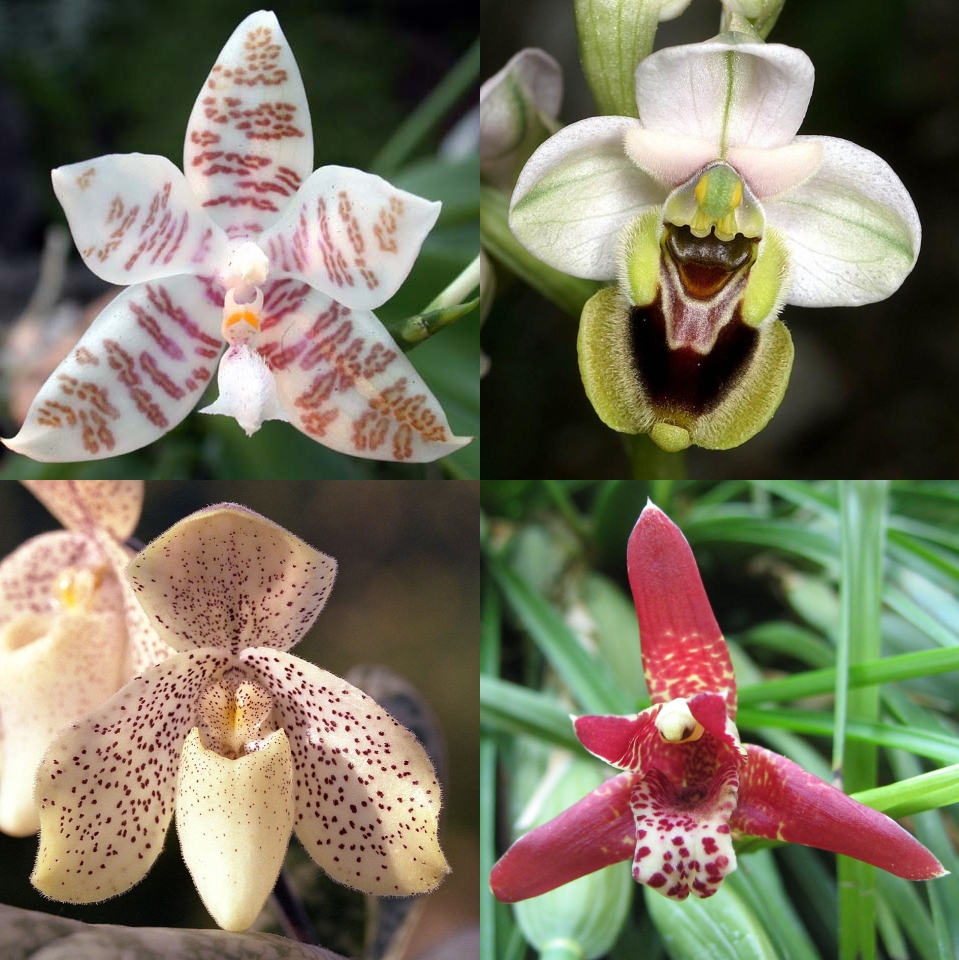 OrchidOrchidaceae
A vast family of colourful, often fragrant flowers found almost everywhere on earth
Orchidaceae · Wildflower
OrchidOrchidaceae
A vast family of colourful, often fragrant flowers found almost everywhere on earth
Orchidaceae · Wildflower
 Vanilla
Climbing orchids with pods used for the world’s most popular flavor
🇲🇽 Mexico and 7 more · Wildflower
Vanilla
Climbing orchids with pods used for the world’s most popular flavor
🇲🇽 Mexico and 7 more · Wildflower
 Orchis
A group of wild orchids with tuberous roots from Europe, North Africa and Asia
🇹🇷 Turkey and 7 more · Wildflower
Orchis
A group of wild orchids with tuberous roots from Europe, North Africa and Asia
🇹🇷 Turkey and 7 more · Wildflower
 Pansy orchidMiltoniopsis
An orchid with flowers that resemble garden pansies
🇨🇷 Costa Rica and 5 more · Orchid
Pansy orchidMiltoniopsis
An orchid with flowers that resemble garden pansies
🇨🇷 Costa Rica and 5 more · Orchid
More from Honduras
All the flowers of Honduras LotusNelumbo
Aquatic plants with large, round leaves and striking flowers called lotus
🇮🇳 India and 7 more · Water flower
LotusNelumbo
Aquatic plants with large, round leaves and striking flowers called lotus
🇮🇳 India and 7 more · Water flower
 Tree dahliaDahlia imperialis
A towering dahlia with lavender-pink flowers from the mountains of Central America
🇲🇽 Mexico and 7 more · Wildflower
Tree dahliaDahlia imperialis
A towering dahlia with lavender-pink flowers from the mountains of Central America
🇲🇽 Mexico and 7 more · Wildflower
 FirecrackerbushBouvardia ternifolia
A red-flowered shrub grown for its clusters of tubular blooms
🇲🇽 Mexico and 2 more · Flowering shrub
FirecrackerbushBouvardia ternifolia
A red-flowered shrub grown for its clusters of tubular blooms
🇲🇽 Mexico and 2 more · Flowering shrub
 Tigridia
Bulbous flowers with spotted petals, native to the Americas
🇲🇽 Mexico and 5 more · Wildflower
Tigridia
Bulbous flowers with spotted petals, native to the Americas
🇲🇽 Mexico and 5 more · Wildflower