
Celosia
Flame-like flowers grown for food and garden colour
Celosia is a genus of annual plants with vivid, flame-shaped flower heads. Native to tropical regions, it is cultivated across Africa, Asia and the Americas both as an ornamental and as a leafy green vegetable.
- Called 'soko yokoto' in Nigeria, meaning 'make husbands fat and happy'
- Official flower of the Sinulog Festival in Cebu, Philippines
- Grows well in humidity when other vegetables succumb to mildew
- One ounce of seed contains up to 43,000 seeds
- Used as both a leafy green and an ornamental plant
What does Celosia look like?
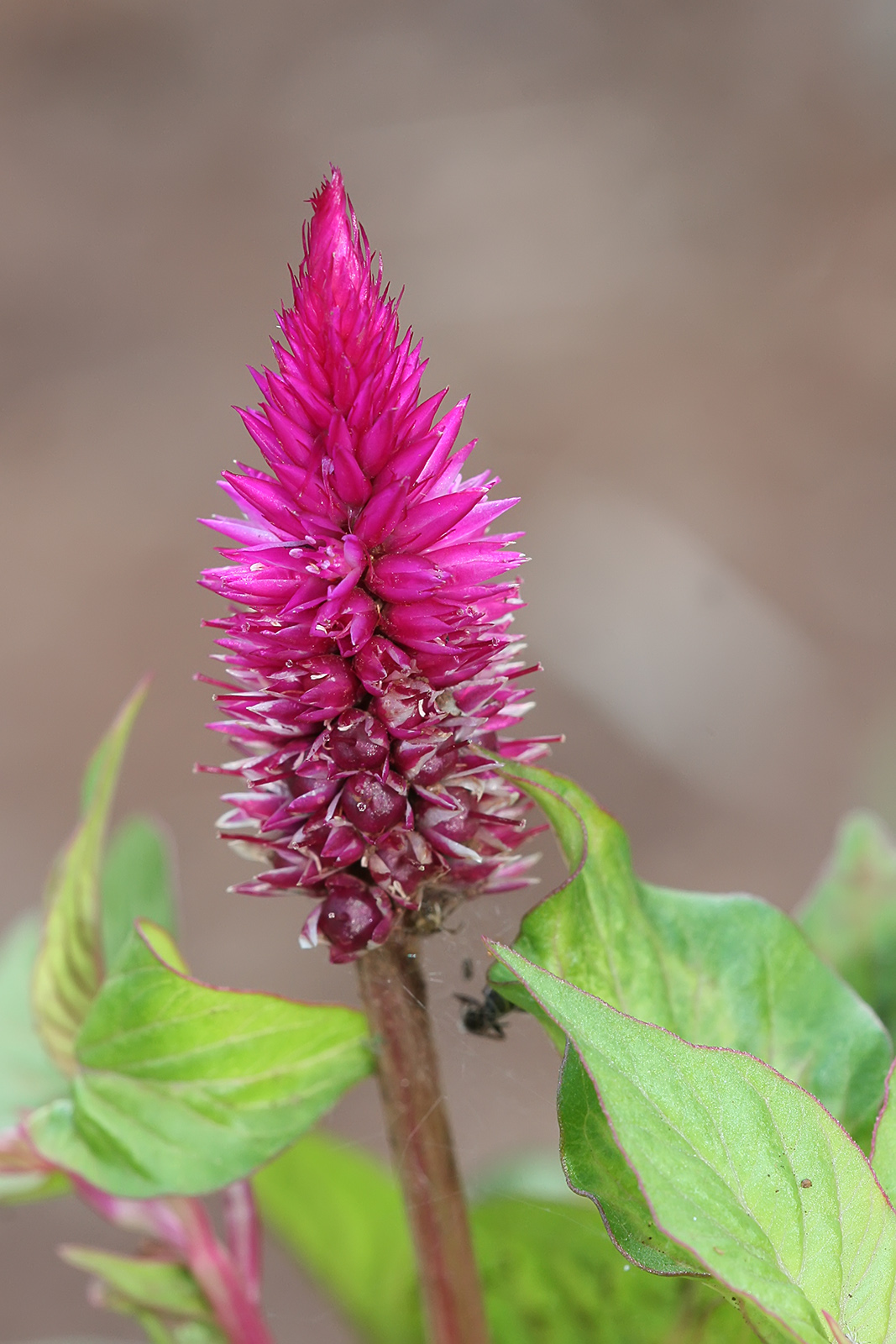
Celosia plants bear dense, brightly coloured flower heads that resemble flames or a rooster’s comb. The blooms come in red, yellow and mixed shades. Some forms are crested due to fasciation. The leaves are broad and soft, with a mild taste similar to spinach.
Where does Celosia come from?
The name Celosia comes from the Greek word for 'burning', describing its fiery flower clusters. Though often linked to Africa, its exact wild origin is uncertain. It has long been used as food in West Africa and as an ornamental in gardens worldwide.
When and how Celosia blooms
Celosia grows as an annual, thriving in warm, humid climates with moderate soil moisture. It flowers for up to ten weeks. In Nigeria, it flourishes during the wet season when other greens fail. A small amount of seed can produce a large harvest.


How Celosia is used
Its young leaves, stems and flower spikes are cooked in stews across tropical Africa and Asia. In the Philippines, red and yellow Celosia argentea is the official flower of the Sinulog Festival, honouring Santo Niño. It also appears in home gardens for its bold colour.
Kinds of Celosia
Key types include Celosia argentea and its crested form C. argentea var. cristata, once called C. cristata. Other species like C. spicata and C. trigyna are also recognised, though only a few are widely cultivated for food or ornament.
What Celosia means
In Cebu City, Celosia’s red and yellow hues match the regalia of the Infant Jesus, leading to its adoption as the Sinulog Festival’s emblem. In Nigeria, it is known as 'soko yokoto', said to please husbands. It is valued as a resilient, nutritious green in hot climates.
Where Celosia is used and seen


Traditions that use it
Where to see Celosia
 🇯🇵 Biei · Jun to SepBiei flower fields and the Patchwork RoadA cycling and driving circuit through rolling farmland and striped flower hills north of Furano.
 🇲🇽 Atlixco · OctoberCempasúchil fields around AtlixcoFields of orange Mexican marigold below the Popocatépetl volcano, grown for the Day of the Dead and cut in late October.
 🇲🇽 Mexico City · All yearMercado de Jamaica, Mexico City's flower marketA huge covered market open day and night, with more than a thousand stalls of cut flowers and finished arrangements.
 🇲🇽 Oaxaca · Oct to NovBuilding a Day of the Dead altar in OaxacaBuy marigolds at the market and help dress an ofrenda, the home altar that welcomes the dead in early November.
Questions people ask about Celosia
Where does celosia come from?
Its wild origin is unclear, but it is traditionally used across tropical Africa, Asia and the Americas as both food and ornament.
Is celosia edible?
Yes, the young leaves, stems and flower heads are cooked like spinach and are a staple green in parts of Africa and Asia.
Why is celosia important in the Philippines?
Cebu City named it the official flower of the Sinulog Festival because its red and yellow colours match the regalia of Santo Niño.
What does celosia look like?
It has dense, flame-like flower heads in red, yellow or mixed colours; some forms have crested, comb-like blooms.
How easy is celosia to grow?
It thrives in warm, humid conditions with moderate moisture and needs little care, often growing like a weed in suitable climates.
Good reading and sources
- Encyclopaedia BritannicaArticle
- USDA Plants DatabaseUS Department of Agriculture, Article
- Plants of the World OnlineRoyal Botanic Gardens, Kew, Plant database
- Where it has been recordedGBIF, Plant database
- Sightings and photos by naturalistsiNaturalist, Plant database
The facts on this page come from the Wikipedia article "Celosia", written by its contributors and used under the CC BY-SA 4.0 licence, and from its Wikidata record (CC0). Phool rewrote the text in its own words, with AI assistance, and compares every page with the article to make sure no passage is copied. It may be reused under the same CC BY-SA 4.0 licence with a link back.
It may contain mistakes. It is not medical or foraging advice: many flowers are poisonous, and traditional uses are reported, not recommended. If something is wrong, tell us. Last refreshed 2026-10-03.
Others in the family Amaranthaceae
The whole family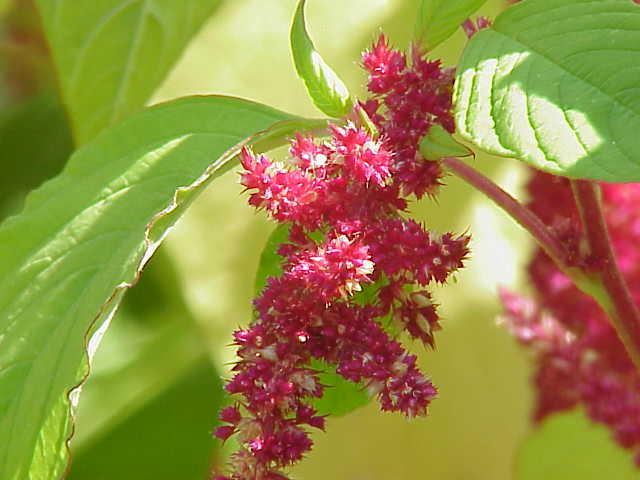 AmaranthAmaranthus
A tall, colourful plant grown for its flowers, leaves and edible seeds
🇲🇽 Mexico and 7 more · Wildflower
AmaranthAmaranthus
A tall, colourful plant grown for its flowers, leaves and edible seeds
🇲🇽 Mexico and 7 more · Wildflower
 Love-lies-bleedingAmaranthus caudatus
Tall Andean plant with long, drooping red or white flower clusters
🇵🇪 Peru and 8 more · Wildflower
Love-lies-bleedingAmaranthus caudatus
Tall Andean plant with long, drooping red or white flower clusters
🇵🇪 Peru and 8 more · Wildflower
 Bassia scoparia
A bushy annual with red autumn leaves, used for brooms and as a food garnish
🇨🇳 China and 3 more · Wildflower
Bassia scoparia
A bushy annual with red autumn leaves, used for brooms and as a food garnish
🇨🇳 China and 3 more · Wildflower
 Globe amaranthGomphrena globosa
A round-flowered annual grown for its lasting, colorful blooms
🇬🇹 Guatemala and 4 more · Wildflower
Globe amaranthGomphrena globosa
A round-flowered annual grown for its lasting, colorful blooms
🇬🇹 Guatemala and 4 more · Wildflower
More from Nigeria
All the flowers of Nigeria WaterlilyNymphaea
Floating aquatic flowers found in ponds and lakes worldwide
🇪🇬 Egypt and 7 more · Water flower
WaterlilyNymphaea
Floating aquatic flowers found in ponds and lakes worldwide
🇪🇬 Egypt and 7 more · Water flower
 Bleeding glory-bowerClerodendrum thomsoniae
A climbing plant with white and red flowers grown for decoration
🇨🇲 Cameroon and 4 more · Garden flower
Bleeding glory-bowerClerodendrum thomsoniae
A climbing plant with white and red flowers grown for decoration
🇨🇲 Cameroon and 4 more · Garden flower
 Calla lilyZantedeschia
Showy funnel-shaped flowers from southern Africa, grown worldwide as ornamentals
🇿🇦 South Africa and 7 more · Garden flower
Calla lilyZantedeschia
Showy funnel-shaped flowers from southern Africa, grown worldwide as ornamentals
🇿🇦 South Africa and 7 more · Garden flower
 Costus spectabilis
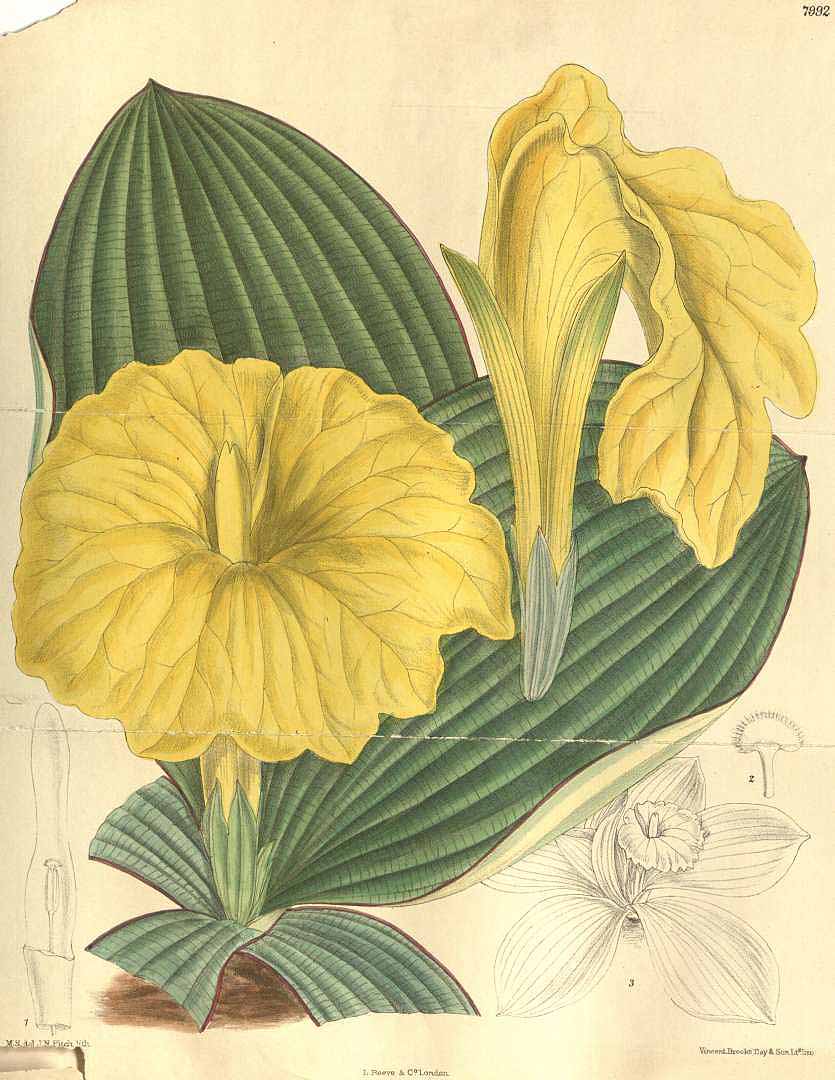
A bright yellow ground-hugging flower from tropical Africa
🇳🇬 Nigeria and 7 more · Wildflower
Costus spectabilis
A bright yellow ground-hugging flower from tropical Africa
🇳🇬 Nigeria and 7 more · Wildflower