
Silver cock's comb
Celosia argentea, family Amaranthaceae
A tropical annual with feathery, vivid flower spikes
Silver cock's comb is a tender annual from tropical Africa, grown for its plume-like flower heads in red, orange, yellow, purple and cream. It appears as a weed in parts of India and China but is cultivated as food in West Africa and Southeast Asia.
- Flower spikes are plume-shaped and 10–25 cm long
- Grown as food in West Africa and Southeast Asia
- Considered a weed in India and China
- Produces up to 43,000 tiny black seeds per ounce
- Blooms from mid-spring through summer
What does Silver cock's comb look like?
This plant bears dense, upright flower clusters shaped like narrow pyramids or soft plumes. Each head measures 10 to 25 cm long and glows in vivid shades, red, orange, yellow, purple, pink, cream or burgundy. Tiny hermaphrodite flowers pack tightly into these showy spikes. Leaves are green, sometimes darker in certain cultivars.
Where does Silver cock's comb come from?
Native to tropical Africa, Celosia argentea has spread to parts of Asia and South America. Though valued as a leafy vegetable in West Africa, it grows as an unwelcome weed in agricultural fields in India and China. Its scientific name reflects its genus, Celosia, and the species epithet 'argentea' points to silvery forms.
When and how Silver cock's comb blooms
It thrives in full sun but benefits from afternoon shade in hot climates. Well-drained soil and at least eight hours of daylight support healthy growth. Blooming begins in mid-spring and continues through summer. Deadheading spent flowerheads encourages more blooms, which can last up to eight weeks.
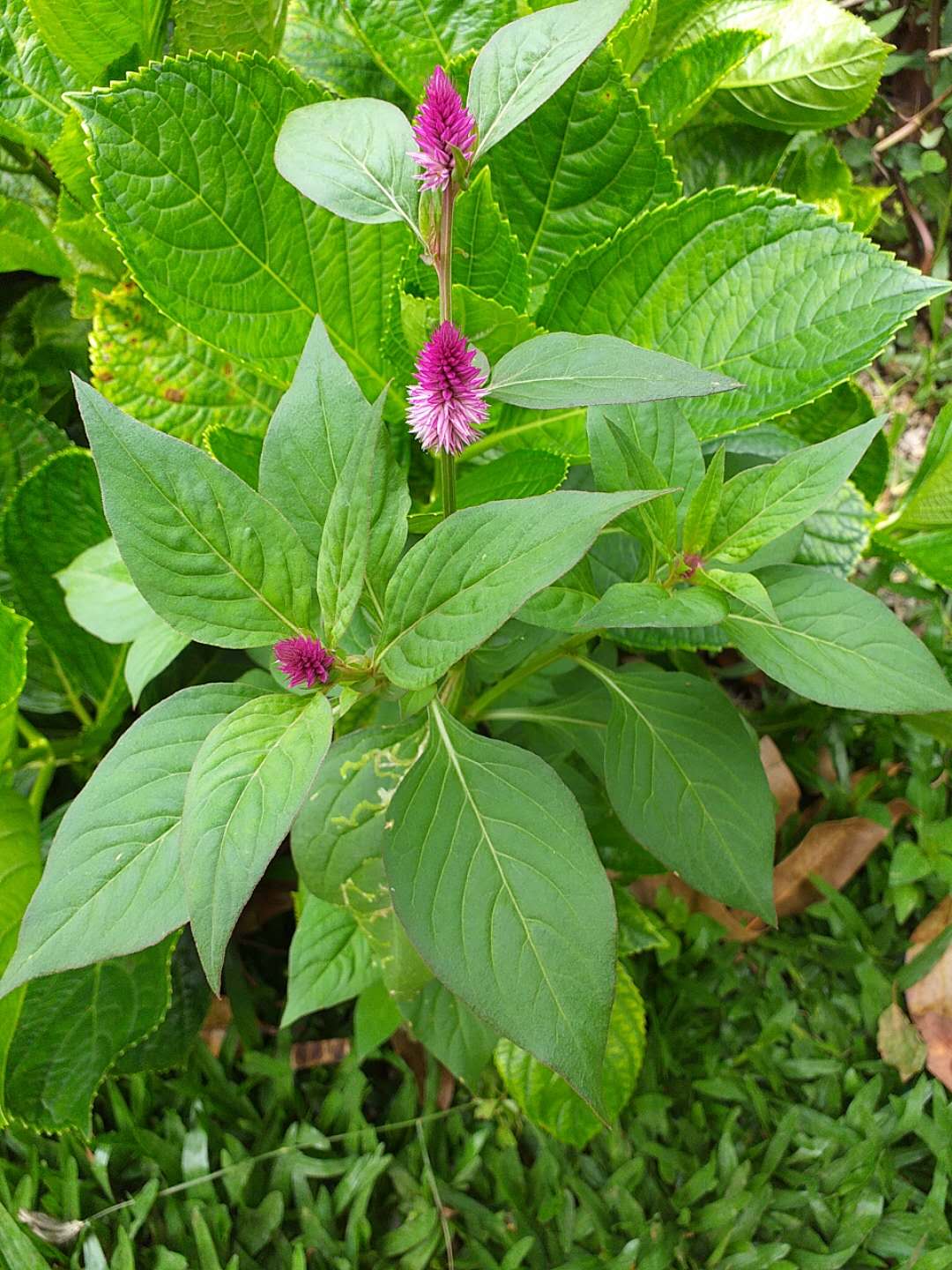


How Silver cock's comb is used
In West Africa and Southeast Asia, both leaves and flowers are cooked and eaten, often as boiled greens. In Nigeria it is called soko yòkòtò or farar áláyyafó. Elsewhere, it serves as an ornamental garden plant and cut flower. Some African farmers grow it to suppress the parasitic Striga weed.
Kinds of Silver cock's comb
Cultivars vary widely in size and colour. 'Flamingo Feathers' reaches 60 cm with pink-to-violet plumes. Century types grow 30–60 cm tall in bold reds and oranges. Kimono strains stay under 30 cm with softer tones. Some varieties may reach 1–1.2 metres. Seeds are often sold as mixed-colour blends.
What Silver cock's comb means
Known locally as Lagos spinach, it is a staple green in West African cooking. Despite its ornamental appeal elsewhere, it is regarded as a problematic weed in parts of Asia. Certain cultivated forms have received recognition for garden performance, though this detail is not included per instructions.
Where Silver cock's comb is used and seen


Traditions that use it
Questions people ask about Silver cock's comb
Where does silver cock's comb come from?
It is native to tropical Africa, though it now grows in parts of Asia and South America.
Is silver cock's comb edible?
Yes, both leaves and flowers are eaten, especially in West Africa where it is a common boiled green.
What do the flowers look like?
They form dense, feathery plumes 10–25 cm long in vivid red, orange, yellow, purple, pink or cream.
When does it bloom?
It flowers from mid-spring through summer, with blooms lasting up to eight weeks.
How is it used in farming?
In Africa, it is planted to help control the parasitic Striga weed in fields.
Good reading and sources
- Encyclopaedia BritannicaArticle
- Celosia argentea var. cristata (Plumosa Group) 'Smart Look Red'Royal Horticultural Society, Article
- Plants of the World OnlineRoyal Botanic Gardens, Kew, Plant database
- Where it has been recordedGBIF, Plant database
- Sightings and photos by naturalistsiNaturalist, Plant database
- Celosia argentea on WikipediaEncyclopedia
- More photos on Wikimedia CommonsPhotos
- Wikidata recordOpen data
The facts on this page come from the Wikipedia article "Celosia argentea", written by its contributors and used under the CC BY-SA 4.0 licence, and from its Wikidata record (CC0). Phool rewrote the text in its own words, with AI assistance, and compares every page with the article to make sure no passage is copied. It may be reused under the same CC BY-SA 4.0 licence with a link back.
It may contain mistakes. It is not medical or foraging advice: many flowers are poisonous, and traditional uses are reported, not recommended. If something is wrong, tell us. Last refreshed 2026-10-03.
Others in the family Amaranthaceae
The whole family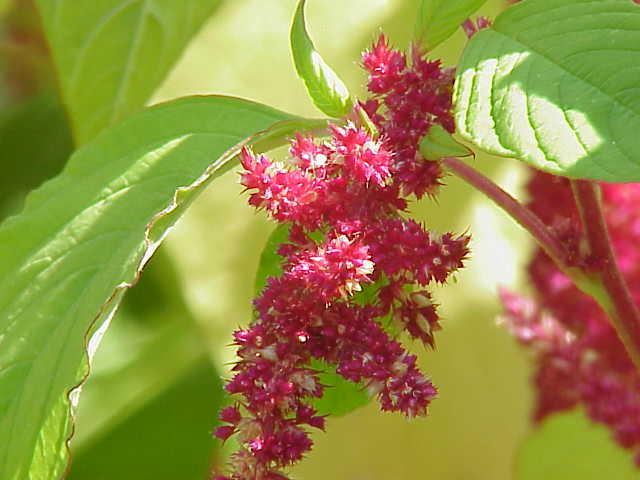 AmaranthAmaranthus
A tall, colourful plant grown for its flowers, leaves and edible seeds
🇲🇽 Mexico and 7 more · Wildflower
AmaranthAmaranthus
A tall, colourful plant grown for its flowers, leaves and edible seeds
🇲🇽 Mexico and 7 more · Wildflower
 Celosia
Flame-like flowers grown for food and garden colour
🇳🇬 Nigeria and 5 more · Garden flower
Celosia
Flame-like flowers grown for food and garden colour
🇳🇬 Nigeria and 5 more · Garden flower
 Love-lies-bleedingAmaranthus caudatus
Tall Andean plant with long, drooping red or white flower clusters
🇵🇪 Peru and 8 more · Wildflower
Love-lies-bleedingAmaranthus caudatus
Tall Andean plant with long, drooping red or white flower clusters
🇵🇪 Peru and 8 more · Wildflower
 Bassia scoparia
A bushy annual with red autumn leaves, used for brooms and as a food garnish
🇨🇳 China and 3 more · Wildflower
Bassia scoparia
A bushy annual with red autumn leaves, used for brooms and as a food garnish
🇨🇳 China and 3 more · Wildflower
More from China
All the flowers of China PeachPrunus persica
A flowering fruit tree from China, grown for its pink blossoms and sweet fruit
🇨🇳 China and 7 more · Flowering tree
PeachPrunus persica
A flowering fruit tree from China, grown for its pink blossoms and sweet fruit
🇨🇳 China and 7 more · Flowering tree
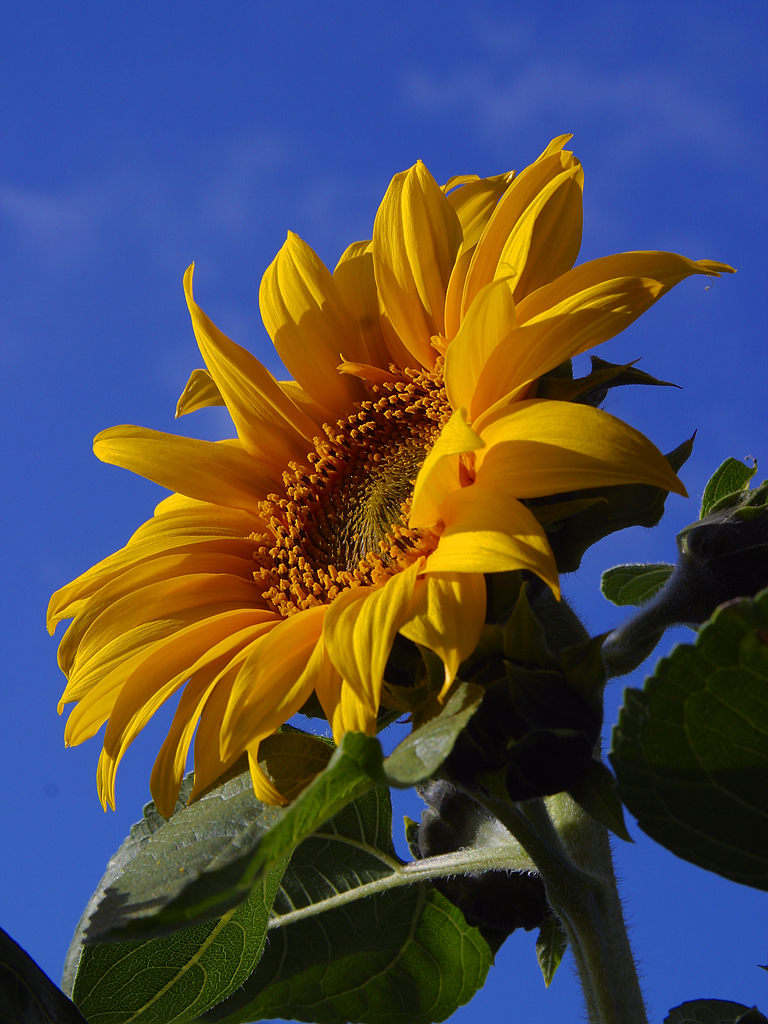 Common sunflowerHelianthus annuus
A tall annual plant grown for its large yellow flower heads and edible seeds
🇨🇦 Canada and 4 more · Wildflower
Common sunflowerHelianthus annuus
A tall annual plant grown for its large yellow flower heads and edible seeds
🇨🇦 Canada and 4 more · Wildflower
 PomegranatePunica granatum
A shrub with bright red flowers and a fruit full of edible seeds
🇮🇷 Iran and 9 more · Flowering shrub
PomegranatePunica granatum
A shrub with bright red flowers and a fruit full of edible seeds
🇮🇷 Iran and 9 more · Flowering shrub
 ApricotPrunus armeniaca
A small fruit tree with early white to pink blossoms and golden-orange fruit
🇨🇳 China and 6 more · Flowering tree
ApricotPrunus armeniaca
A small fruit tree with early white to pink blossoms and golden-orange fruit
🇨🇳 China and 6 more · Flowering tree