
Clerodendrum
A genus of shrubs and climbers with showy tubular flowers
Clerodendrum is a group of flowering shrubs, small trees and lianas found mainly in tropical Africa and southern Asia. Its blooms are often vividly coloured and tubular, attracting butterflies and hummingbirds, and several species are grown as ornamentals.
- Moved from Verbenaceae to Lamiaceae based on DNA evidence
- Flowers avoid self-pollination through timing and structure
- Used traditionally in north-east India for diabetes and as food
- Attracts both butterflies and hummingbirds
- Includes shrubs, trees and climbing vines up to 30 m tall
What does Clerodendrum look like?
Plants in this genus range from shrubs to small trees or climbing vines, typically between 1 and 12 metres tall, though one species can reach 30 metres. Their leaves grow opposite or in whorls. The flowers have a tubular shape with five uneven lobes and come in red, yellow, pink or white. Four stamens usually extend beyond the flower’s mouth.
Where does Clerodendrum come from?
Originally classified in the verbena family, Clerodendrum was moved to the mint family (Lamiaceae) in the 1990s after DNA and structural studies showed closer ties there. Linnaeus named it in 1753 from Greek words meaning 'chance' and 'tree', reflecting uncertain reports of its medicinal value and religious use in Asia.
When and how Clerodendrum blooms
These plants bloom with terminal clusters of flowers. Their unusual pollination system prevents self-fertilisation: when a flower opens, the male parts release pollen first while the female stigma stays out of reach; later, the stamens move away and the stigma moves into position to receive pollen from another flower.


How Clerodendrum is used
Some species are grown for their striking flowers in warm climates, including four in UK gardens. In north-east India, leaves of Clerodendrum glandulosum are used in traditional remedies for diabetes, obesity and high blood pressure, and certain groups also cook the plant as a vegetable.
Kinds of Clerodendrum
Estimates of species numbers vary widely due to taxonomic revisions. Around 30 species were moved to Rotheca, another 30 to Volkameria, and one to Ovieda. As of 2025, about 240 species remain in Clerodendrum, split into African and Asian lineages.
What Clerodendrum means
The type species, Clerodendrum infortunatum, comes from Sri Lanka and the Andaman Islands. Hollow-stemmed species provide homes for ants. The genus supports moth larvae like Endoclita malabaricus and Endoclita sericeus, and its nectar draws both butterflies and hummingbirds.
Questions people ask about Clerodendrum
Where does Clerodendrum come from?
It is native to tropical and warm temperate regions, especially tropical Africa and southern Asia, with some species in the Americas and northern Australasia.
What is Clerodendrum used for?
Some species are grown as ornamentals for their flowers. In north-east India, leaves are used in traditional medicine for diabetes, obesity and hypertension, and also eaten as a vegetable.
How does Clerodendrum avoid self-pollination?
Its flowers are protandrous: stamens release pollen first while the stigma is out of reach; later, stamens move away and the stigma moves into position to receive outside pollen.
Is Clerodendrum related to mint?
Yes. Though once placed in the verbena family, genetic and morphological studies moved it to Lamiaceae, the mint family, in the 1990s.
Are any Clerodendrum species grown in the UK?
Yes. C. chinense, C. splendens, C. thomsoniae and C. trichotomum are cultivated there.
Good reading and sources
- Encyclopaedia BritannicaArticle
- Index Nominum Genericorum (ING), Botany, Smithsonian InstitutionSmithsonian, Article
- USDA Plants DatabaseUS Department of Agriculture, Article
- Plants of the World OnlineRoyal Botanic Gardens, Kew, Plant database
- Where it has been recordedGBIF, Plant database
- Sightings and photos by naturalistsiNaturalist, Plant database
The facts on this page come from the Wikipedia article "Clerodendrum", written by its contributors and used under the CC BY-SA 4.0 licence, and from its Wikidata record (CC0). EveryPhool rewrote the text in its own words, with AI assistance, and compares every page with the article to make sure no passage is copied. It may be reused under the same CC BY-SA 4.0 licence with a link back.
It may contain mistakes. It is not medical or foraging advice: many flowers are poisonous, and traditional uses are reported, not recommended. If something is wrong, tell us. Last refreshed 2026-10-03.
Others in the family Lamiaceae
The whole family RosemarySalvia rosmarinus
A fragrant evergreen shrub with needle-like leaves and purple, blue, or white flowers
🇪🇸 Spain and 5 more · Flowering shrub
RosemarySalvia rosmarinus
A fragrant evergreen shrub with needle-like leaves and purple, blue, or white flowers
🇪🇸 Spain and 5 more · Flowering shrub
 Salvia
A vast group of aromatic herbs and shrubs known for their flowers and uses
Salvia · Wildflower
Salvia
A vast group of aromatic herbs and shrubs known for their flowers and uses
Salvia · Wildflower
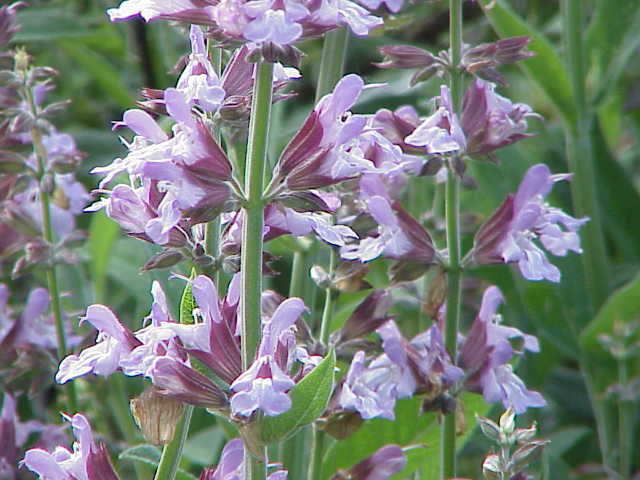 Common sageSalvia officinalis
A Mediterranean herb with grey-green leaves and blue to purple flowers
🇨🇳 China and 1 more · Herb or useful flower
Common sageSalvia officinalis
A Mediterranean herb with grey-green leaves and blue to purple flowers
🇨🇳 China and 1 more · Herb or useful flower
 Holy basilOcimum tenuiflorum
A fragrant herb central to Hindu worship and Southeast Asian cooking
🇲🇲 Myanmar and 6 more · Herb or useful flower
Holy basilOcimum tenuiflorum
A fragrant herb central to Hindu worship and Southeast Asian cooking
🇲🇲 Myanmar and 6 more · Herb or useful flower
More from India
All the flowers of India RoseRosa
Prickly flowering shrubs grown across the world for fragrant blossoms and rose hips
🇨🇳 China and 7 more · Flowering shrub
RoseRosa
Prickly flowering shrubs grown across the world for fragrant blossoms and rose hips
🇨🇳 China and 7 more · Flowering shrub
 PeachPrunus persica
A flowering fruit tree from China, grown for its pink blossoms and sweet fruit
🇨🇳 China and 7 more · Flowering tree
PeachPrunus persica
A flowering fruit tree from China, grown for its pink blossoms and sweet fruit
🇨🇳 China and 7 more · Flowering tree
 PomegranatePunica granatum
A shrub with bright red flowers and a fruit full of edible seeds
🇮🇷 Iran and 9 more · Flowering shrub
PomegranatePunica granatum
A shrub with bright red flowers and a fruit full of edible seeds
🇮🇷 Iran and 9 more · Flowering shrub
 Eucalyptus
The tall, aromatic trees and shrubs known as gum trees or eucalypts
🇦🇺 Australia and 7 more · Flowering tree
Eucalyptus
The tall, aromatic trees and shrubs known as gum trees or eucalypts
🇦🇺 Australia and 7 more · Flowering tree