
Coelogyne
A group of orchids with showy flowers from Asia and the Pacific
Coelogyne is a genus of orchids with about 600 species, mainly found in Borneo, Sumatra, and the Himalayas. These plants grow on trees or rocks in rainforests, producing medium to large flowers in shades of white, green, brown, and sometimes peach, often with a sweet scent.
- About 600 species are included in the genus Coelogyne.
- Most species are found in Borneo, Sumatra, and the Himalayas.
- Flowers range from white and green to brown and peach shades.
- Many species have a sweet scent and attract bees, wasps, and beetles.
- Coelogyne orchids grow mainly as epiphytes in tropical rainforests.
What does Coelogyne look like?
Coelogyne orchids usually grow on other plants or rocks, with creeping or hanging stems and thickened bases called pseudobulbs. Each pseudobulb has one or two leaves at its tip. The flowers are medium to large, sometimes many on a single stem, and come in white, green, brown, or peach tones. Their lips have raised side lobes and keels that may be smooth, toothed, or bumpy. Many species have a gentle, sweet fragrance.
Where does Coelogyne come from?
These orchids are native to rainforests in parts of Asia and the Pacific, especially Borneo, Sumatra, and the Himalayan region. Most species are found growing high in trees, but some live on rocks or in soil in humid places. The genus was first described in the early 1800s, and its name comes from Greek words meaning 'hollow' and 'pistil,' referring to the flower's shape. Botanists have debated how to classify the group, and recent studies suggest it may include other related genera.
When and how Coelogyne blooms
Coelogyne orchids flower at different times, depending on the species. Some bloom at the end of their growing season, while others flower before new growth starts in spring. They thrive in humid, tropical forests from sea level up to high mountains. Most are grown from divisions of their rhizomes, and need damp, airy conditions to do well.


How Coelogyne is used
There is no record in the sources of Coelogyne being widely used for decoration, ritual, or medicine. These orchids are mainly appreciated by collectors and orchid enthusiasts for their unique flowers and growth habits.
Kinds of Coelogyne
The genus includes around 600 species, with a wide range of flower forms and colors. Botanists have divided Coelogyne into several sections or subgroups, but the exact number and boundaries are still debated. Some species, like Coelogyne cristata, are especially well known among orchid growers.
What Coelogyne means
Coelogyne does not have a strong presence in folklore or as a symbol. Its main importance is among botanists and orchid collectors. The group is notable for its diversity and for the ongoing scientific discussion about its classification.
Questions people ask about Coelogyne
Where do Coelogyne orchids come from?
Coelogyne orchids are native to rainforests in Asia and the Pacific, especially in Borneo, Sumatra, and the Himalayas. They can also be found in India, China, Indonesia, and Fiji.
What do Coelogyne flowers look like?
Their flowers are medium to large, often showy, and come in shades of white, green, brown, and sometimes peach. The flowers have a distinctive lip with side lobes and keels, and many have a sweet scent.
How do Coelogyne orchids grow in nature?
Most Coelogyne species grow on trees as epiphytes, but some can be found on rocks or in soil in humid, open areas. They are adapted to tropical and montane rainforests from lowlands up to high elevations.
Are Coelogyne orchids used for any special purpose?
The sources do not mention any traditional or ceremonial uses for Coelogyne orchids. They are mainly grown and admired by orchid collectors and enthusiasts.
What does the name Coelogyne mean?
The name comes from Greek words meaning 'hollow' and 'pistil,' referring to the flower's concave stigma.
Good reading and sources
- Encyclopaedia BritannicaArticle
- Plants of the World OnlineRoyal Botanic Gardens, Kew, Plant database
- Where it has been recordedGBIF, Plant database
- Sightings and photos by naturalistsiNaturalist, Plant database
The facts on this page come from the Wikipedia article "Coelogyne", written by its contributors and used under the CC BY-SA 4.0 licence, and from its Wikidata record (CC0). Phool rewrote the text in its own words, with AI assistance, and compares every page with the article to make sure no passage is copied. It may be reused under the same CC BY-SA 4.0 licence with a link back.
It may contain mistakes. It is not medical or foraging advice: many flowers are poisonous, and traditional uses are reported, not recommended. If something is wrong, tell us. Last refreshed 2026-10-03.
Others in the family Orchidaceae
The whole family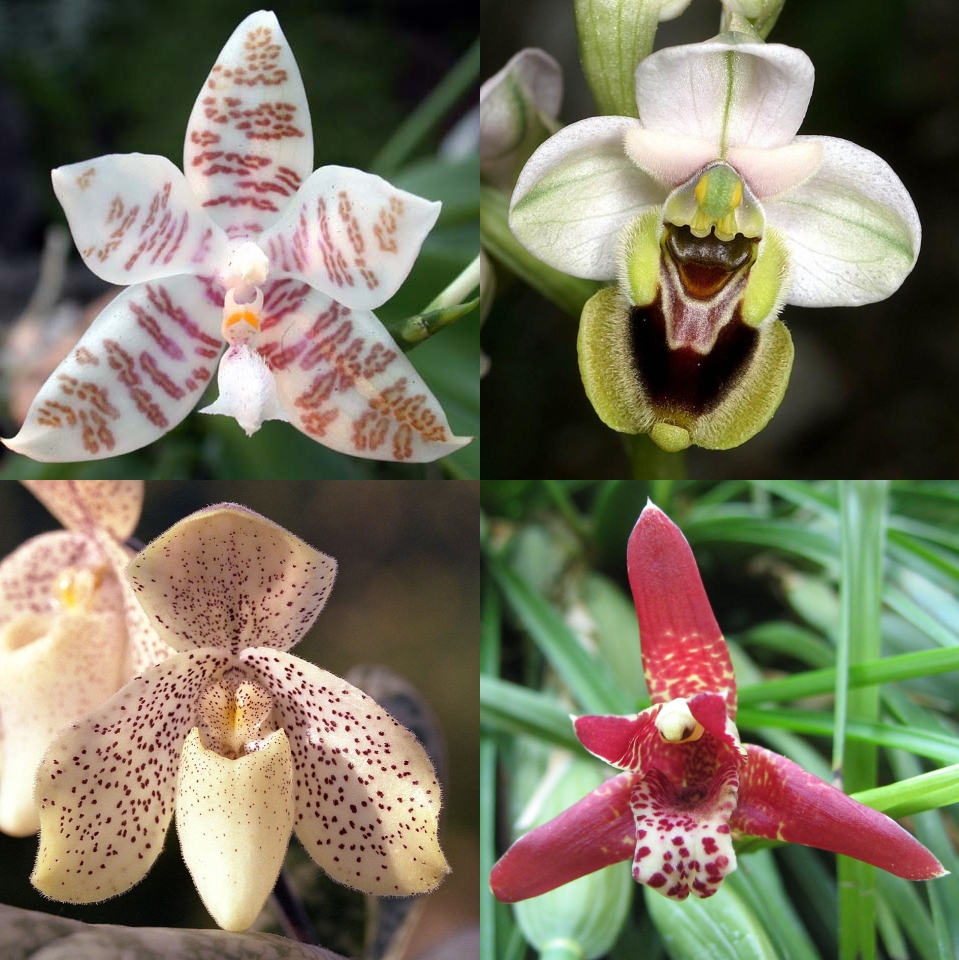 OrchidOrchidaceae
A vast family of colourful, often fragrant flowers found almost everywhere on earth
Orchidaceae · Wildflower
OrchidOrchidaceae
A vast family of colourful, often fragrant flowers found almost everywhere on earth
Orchidaceae · Wildflower
 Vanilla
Climbing orchids with pods used for the world’s most popular flavor
🇲🇽 Mexico and 7 more · Wildflower
Vanilla
Climbing orchids with pods used for the world’s most popular flavor
🇲🇽 Mexico and 7 more · Wildflower
 Orchis
A group of wild orchids with tuberous roots from Europe, North Africa and Asia
🇹🇷 Turkey and 7 more · Wildflower
Orchis
A group of wild orchids with tuberous roots from Europe, North Africa and Asia
🇹🇷 Turkey and 7 more · Wildflower
 Paphiopedilum glaucophyllum
A Southeast Asian slipper orchid with blue-green leaves and striped flowers
🇮🇩 Indonesia · Wildflower
Paphiopedilum glaucophyllum
A Southeast Asian slipper orchid with blue-green leaves and striped flowers
🇮🇩 Indonesia · Wildflower
More from India
All the flowers of India FennelFoeniculum vulgare
A tall, aromatic herb with feathery leaves and yellow umbels, used for food and spice
🇨🇳 China and 7 more · Herb or useful flower
FennelFoeniculum vulgare
A tall, aromatic herb with feathery leaves and yellow umbels, used for food and spice
🇨🇳 China and 7 more · Herb or useful flower
 TulipTulipa
Spring-blooming bulbs with showy, cup-shaped flowers in many colours
🇳🇱 Netherlands and 7 more · Wildflower
TulipTulipa
Spring-blooming bulbs with showy, cup-shaped flowers in many colours
🇳🇱 Netherlands and 7 more · Wildflower
 Common flaxLinum usitatissimum
The slender blue-flowered plant grown for linen and linseed
🇨🇳 China and 7 more · Wildflower
Common flaxLinum usitatissimum
The slender blue-flowered plant grown for linen and linseed
🇨🇳 China and 7 more · Wildflower
 Eucalyptus
The tall, aromatic trees and shrubs known as gum trees or eucalypts
🇦🇺 Australia and 7 more · Flowering tree
Eucalyptus
The tall, aromatic trees and shrubs known as gum trees or eucalypts
🇦🇺 Australia and 7 more · Flowering tree