
Spring crocus
Crocus vernus, family Iridaceae
A spring-flowering crocus grown for its large, colourful blooms
Spring crocus is a low-growing plant in the iris family, found in mountain regions of Europe. Its large, cup-shaped flowers bloom in early spring, with colours ranging from white to deep purple. Gardeners value it for brightening lawns and borders after winter.
- Blooms early in spring, often just after snow melts
- Flowers range from white to deep purple and striped forms
- Grows from a corm and reaches 10–15 cm tall
- Popular in gardens for bright spring colour
- Known as Dutch crocus when referring to larger cultivars
What does Spring crocus look like?
Spring crocus grows to about 10–15 cm tall, with narrow leaves and upright, cup-shaped flowers. The blooms can be white, blue, violet, deep purple, or striped, and appear singly on short stems. Some varieties have a dark base inside the flower, adding to their visual appeal. The plant forms small clumps and spreads slowly over time.
Where does Spring crocus come from?
This crocus species is found in mountain areas of Europe, including the Alps, Pyrenees, and Balkan ranges. It has been grown in gardens for its early spring display. The Latin name 'vernus' points to its springtime flowering. Over time, it has been introduced to grassy places in Britain, such as churchyards and roadside verges.
When and how Spring crocus blooms
Spring crocus grows from a corm, a swollen underground stem. It is planted in autumn, and the shoots emerge as winter ends. The flowers open in early spring, often soon after snow melts. It prefers well-drained soil and sunny spots, and is often planted in lawns, borders, or under trees.


How Spring crocus is used
People plant spring crocus for its colourful flowers that signal the start of spring. It is a popular choice for home gardens and public spaces. The plant is not known for fragrance or culinary use, but its blooms are valued for their beauty and as a sign of the changing season.
Kinds of Spring crocus
Many cultivated forms exist, differing in colour and size. Notable varieties include 'Jeanne d'Arc' with white petals, 'Pickwick' with violet stripes, and 'Remembrance' in dark blue and purple. These cultivars are often grouped as Dutch crocuses, which are larger than other types grown in gardens.
What Spring crocus means
Spring crocus is grown mainly for its ornamental value. It is sometimes used as a symbol of spring in local emblems or garden traditions. Its early flowering makes it a favourite for marking the end of winter in parks and lawns. Some confusion exists with similar crocus species, but gardeners prize it for its reliable bloom.
Where Spring crocus is used and seen
 TulipiereA pottery vessel with spouts for growing tulip bulbs indoors
 Dutch gardenA formal, geometric flower garden style from the Netherlands
 Duin- en BollenstreekThe Dutch coastal region famous for spring bulb fields and flower parades
 Hortus BulborumA Dutch garden preserving centuries-old spring bulbs
Questions people ask about Spring crocus
Where does spring crocus come from?
Spring crocus is native to mountain regions in Europe, including the Alps, Pyrenees, and Balkans. It has also become established in grassy areas in Britain.
What does the spring crocus flower look like?
The plant produces cup-shaped flowers in early spring, with colours such as white, blue, violet, deep purple, and striped patterns. The blooms are large for a crocus and grow on short stems.
How is spring crocus used?
It is mainly grown as an ornamental plant in gardens, lawns, and public spaces. People value it for its bright flowers that appear at the end of winter.
Are there different types of spring crocus?
Yes, there are several cultivated varieties, including 'Jeanne d'Arc', 'Pickwick', and 'Remembrance', each with distinct flower colours and patterns.
What does spring crocus symbolise?
Spring crocus is often seen as a sign of spring's arrival and the end of winter, marking renewal and new beginnings in gardens and parks.
Good reading and sources
- Encyclopaedia BritannicaArticle
- BBC - Gardening: Plant FinderBBC, Article
- USDA Plants DatabaseUS Department of Agriculture, Article
- Plants of the World OnlineRoyal Botanic Gardens, Kew, Plant database
- Where it has been recordedGBIF, Plant database
- Sightings and photos by naturalistsiNaturalist, Plant database
- Crocus vernus on WikipediaEncyclopedia
- More photos on Wikimedia CommonsPhotos
- Wikidata recordOpen data
The facts on this page come from the Wikipedia article "Crocus vernus", written by its contributors and used under the CC BY-SA 4.0 licence, and from its Wikidata record (CC0). Phool rewrote the text in its own words, with AI assistance, and compares every page with the article to make sure no passage is copied. It may be reused under the same CC BY-SA 4.0 licence with a link back.
It may contain mistakes. It is not medical or foraging advice: many flowers are poisonous, and traditional uses are reported, not recommended. If something is wrong, tell us. Last refreshed 2026-10-03.
Others in the family Iridaceae
The whole family Gladiolus
Tall, showy flower spikes grown from corms, known as sword lilies
Gladiolus · Garden flower
Gladiolus
Tall, showy flower spikes grown from corms, known as sword lilies
Gladiolus · Garden flower
 Iris
A large group of perennial flowers with striking, six-lobed blooms
Iris · Wildflower
Iris
A large group of perennial flowers with striking, six-lobed blooms
Iris · Wildflower
 Crocus
Small corm-grown flowers in white, yellow, orange or purple
🇹🇷 Turkey and 7 more · Wildflower
Crocus
Small corm-grown flowers in white, yellow, orange or purple
🇹🇷 Turkey and 7 more · Wildflower
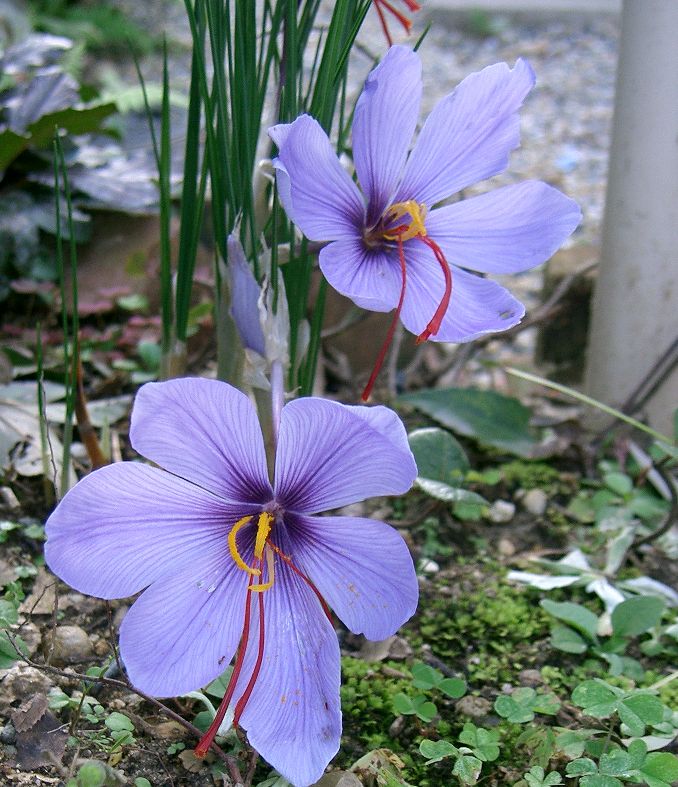 Saffron crocusCrocus sativus
The purple autumn flower whose red stigmas yield the spice saffron
🇨🇳 China and 1 more · Garden flower
Saffron crocusCrocus sativus
The purple autumn flower whose red stigmas yield the spice saffron
🇨🇳 China and 1 more · Garden flower