
Boat orchid
Cymbidium, family Orchidaceae
A genus of long-lived orchids with boat-shaped lips, grown worldwide for their sprays of blooms
Boat orchids are evergreen orchids with pseudobulbs, long-lasting leaves, and upright flower spikes. Native across tropical and subtropical Asia to Australia, they are prized in horticulture for their showy, often fragrant flowers and ease of cultivation indoors.
- Named for its boat-shaped lip (labellum)
- Cultivated since the Jin dynasty (around 200s CE)
- Cymbidium hookerianum is eaten in Bhutanese curry
- About 55 species and 16 natural hybrids exist
- One of the easiest orchids to grow indoors
What does Boat orchid look like?
Boat orchids are sympodial herbs that may grow on trees, rocks, or in soil. They form pseudobulbs topped with three to twelve leathery leaves that persist for years. Their flower spikes rise from the base of the pseudobulb and carry multiple blooms. Each flower has similar sepals and petals, while the lip, shaped like a small boat, is distinct, three-lobed, and often hinged to the central column.
Where does Boat orchid come from?
The genus Cymbidium was first described in 1799 by Olof Swartz, who named it for the boat-like shape of its lip. It occurs naturally from northern India through Southeast Asia to Japan, the Philippines, and Australia. Over time, taxonomists have reclassified some species into other genera, but molecular studies support its current division into three subgenera.
When and how Boat orchid blooms
These orchids grow as epiphytes, lithophytes, or terrestrials in the wild. In cultivation, they thrive outdoors in mild climates and can be brought inside for winter. To encourage flowering, they require cooler nighttime temperatures in late summer and early autumn, often staying outside until near freezing before being moved indoors.


How Boat orchid is used
Boat orchids have been cultivated since at least the 3rd century CE in China and remain among the most popular orchids for home growing. In Bhutan, the species Cymbidium hookerianum is cooked in spicy stews and known as 'olatshe' or 'olachoto'. Their long-lasting flower spikes also make them common gifts and decorative plants.
Kinds of Boat orchid
The genus includes about fifty-five wild species and sixteen natural hybrids. It is divided into three subgenera: Cymbidium, Cyperorchis, and Jensoa, distinguished by pollinia number and how the lip attaches to the column. Horticultural types range from large-flowered lowland forms to compact high-altitude varieties with smaller blooms.
What Boat orchid means
Mentioned in ancient Chinese texts and by Confucius, Cymbidium has a long history in East Asian horticulture. Though not tied to specific religious rites in the sources, it holds culinary importance in Bhutan. Its scientific name reflects the distinctive boat-shaped lip that defines the genus.
Traditions that use it
Questions people ask about Boat orchid
Where do boat orchids come from?
They grow wild across tropical and subtropical Asia, from India and China to Japan, Malaysia, the Philippines, and extend to Australia.
Why are they called boat orchids?
The genus name Cymbidium means 'little boat', referring to the shape of the lip (labellum) in the flower.
Are boat orchids used for anything besides decoration?
Yes, in Bhutan, Cymbidium hookerianum is cooked as a spicy stew and called 'olatshe' or 'olachoto'.
How hard are they to grow at home?
They are among the least demanding indoor orchids, needing cool nights in late summer to trigger flowering.
How long have people grown them?
Since at least the 3rd century CE, with mentions in Chinese manuscripts and by Confucius.
Good reading and sources
- Encyclopaedia BritannicaArticle
- How to grow cymbidium orchids / RHS Growing GuideRoyal Horticultural Society, Article
- USDA Plants DatabaseUS Department of Agriculture, Article
- Plants of the World OnlineRoyal Botanic Gardens, Kew, Plant database
- Where it has been recordedGBIF, Plant database
- Sightings and photos by naturalistsiNaturalist, Plant database
The facts on this page come from the Wikipedia article "Cymbidium", written by its contributors and used under the CC BY-SA 4.0 licence, and from its Wikidata record (CC0). Phool rewrote the text in its own words, with AI assistance, and compares every page with the article to make sure no passage is copied. It may be reused under the same CC BY-SA 4.0 licence with a link back.
It may contain mistakes. It is not medical or foraging advice: many flowers are poisonous, and traditional uses are reported, not recommended. If something is wrong, tell us. Last refreshed 2026-10-03.
Others in the family Orchidaceae
The whole family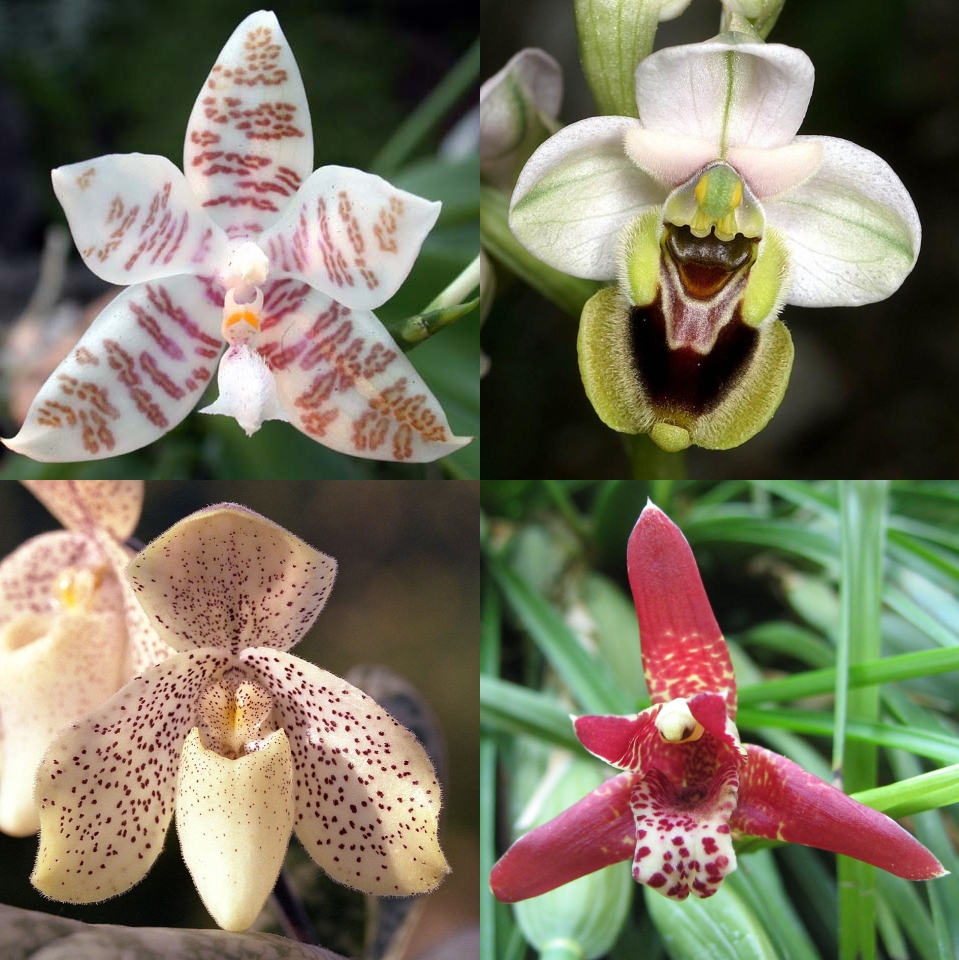 OrchidOrchidaceae
A vast family of colourful, often fragrant flowers found almost everywhere on earth
Orchidaceae · Wildflower
OrchidOrchidaceae
A vast family of colourful, often fragrant flowers found almost everywhere on earth
Orchidaceae · Wildflower
 Vanilla
Climbing orchids with pods used for the world’s most popular flavor
🇲🇽 Mexico and 7 more · Wildflower
Vanilla
Climbing orchids with pods used for the world’s most popular flavor
🇲🇽 Mexico and 7 more · Wildflower
 Orchis
A group of wild orchids with tuberous roots from Europe, North Africa and Asia
🇹🇷 Turkey and 7 more · Wildflower
Orchis
A group of wild orchids with tuberous roots from Europe, North Africa and Asia
🇹🇷 Turkey and 7 more · Wildflower
 Pansy orchidMiltoniopsis
An orchid with flowers that resemble garden pansies
🇨🇷 Costa Rica and 5 more · Orchid
Pansy orchidMiltoniopsis
An orchid with flowers that resemble garden pansies
🇨🇷 Costa Rica and 5 more · Orchid
More from India
All the flowers of India PeachPrunus persica
A flowering fruit tree from China, grown for its pink blossoms and sweet fruit
🇨🇳 China and 7 more · Flowering tree
PeachPrunus persica
A flowering fruit tree from China, grown for its pink blossoms and sweet fruit
🇨🇳 China and 7 more · Flowering tree
 PomegranatePunica granatum
A shrub with bright red flowers and a fruit full of edible seeds
🇮🇷 Iran and 9 more · Flowering shrub
PomegranatePunica granatum
A shrub with bright red flowers and a fruit full of edible seeds
🇮🇷 Iran and 9 more · Flowering shrub
 TulipTulipa
Spring-blooming bulbs with showy, cup-shaped flowers in many colours
🇳🇱 Netherlands and 7 more · Wildflower
TulipTulipa
Spring-blooming bulbs with showy, cup-shaped flowers in many colours
🇳🇱 Netherlands and 7 more · Wildflower
 FennelFoeniculum vulgare
A tall, aromatic herb with feathery leaves and yellow umbels, used for food and spice
🇨🇳 China and 7 more · Herb or useful flower
FennelFoeniculum vulgare
A tall, aromatic herb with feathery leaves and yellow umbels, used for food and spice
🇨🇳 China and 7 more · Herb or useful flower