
Lady's-slipper orchid
Cypripedium calceolus, family Orchidaceae
A wild orchid with a yellow slipper-shaped flower found across Europe and Asia
The lady's-slipper orchid is a perennial wildflower with large yellow pouch-like blooms and twisted petals, native from Spain across Europe to northeast Asia. It grows in open woodlands on calcareous soils and is legally protected in many countries due to population declines. Its unique flower shape and rarity have made it a symbol in several cultures.
- Europe's largest-flowered wild orchid, up to 60 cm tall
- Yellow slipper-shaped blooms with twisted red-brown petals
- Protected and reintroduced in the UK and Switzerland
- Native from Spain to northeast Asia, including Russia and China
- Appears on stamps and emblems in several countries
What does Lady's-slipper orchid look like?
This orchid grows up to 60 cm tall and has broad, ovate leaves up to 18 cm long. Its flowers are large, up to 9 cm wide, with a bright yellow, slipper-shaped pouch (labellum) marked with red dots inside. The long side petals are often twisted and range in color from red-brown to black, sometimes green. Each stem usually bears one or two flowers. The plant spreads through underground stems called rhizomes and is long-lived.
Where does Lady's-slipper orchid come from?
Cypripedium calceolus is native to a wide area stretching from Spain across most of Europe, through Russia, and into northeast China, Mongolia, Korea, and northern Japan. It is typically found in open woodlands with moist, lime-rich soils. The name comes from Greek and Latin, meaning 'Aphrodite's foot' and 'small shoe', referring to the flower's shape. It has become rare in parts of its range due to habitat loss and collection, but remains common in some countries.
When and how Lady's-slipper orchid blooms
The lady's-slipper orchid blooms in spring and early summer, producing its distinctive flowers on stems that rise from rhizomes. It prefers semi-shaded woods with calcareous (chalky) soils and is often found among hazel trees. The plant relies on specific mycorrhizal fungi in the soil to access nutrients, which is essential for its growth and survival. It can be grown in gardens with suitable conditions, but is sensitive to disturbance.


How Lady's-slipper orchid is used
This orchid is valued for its unusual appearance and rarity. It is a protected species in many countries, and reintroduction efforts have taken place in places like the UK and Switzerland. The flower appears on postage stamps and municipal emblems, such as in Snåsa, Norway. While it has been mentioned in folklore and literature, it is not widely used in traditional ceremonies or as a cut flower.
Kinds of Lady's-slipper orchid
Closely related orchids in North America, such as Cypripedium parviflorum and C. pubescens, are sometimes considered subspecies or varieties. The genus Cypripedium includes several similar species, but C. calceolus is the largest-flowered in Europe. Its flower color and size may vary, but the yellow slipper-shaped pouch is characteristic.
What Lady's-slipper orchid means
The lady's-slipper orchid has become a symbol of rarity and conservation. It is legally protected in many countries and has featured on stamps and coats of arms. In Britain, it was nearly extinct but is now the focus of reintroduction programs. In Russian literature, it is called Adam's head or Cuckoo's slippers and is linked to folk remedies and beliefs.
Questions people ask about Lady's-slipper orchid
Where does the lady's-slipper orchid come from?
It is native to a wide area from Spain across Europe, through Russia, and into northeast China, Mongolia, Korea, and northern Japan, usually in open woodlands with calcareous soils.
What does the flower look like?
The flower has a bright yellow, slipper-shaped pouch with red dots inside and long, twisted side petals that can be red-brown, black, or rarely green. Each plant usually has one or two large flowers.
Why is the lady's-slipper orchid protected?
Its populations have declined in many countries due to habitat loss and collection. It is now legally protected in several places and is the subject of reintroduction programs.
What does the lady's-slipper orchid symbolise?
It is seen as a symbol of rarity and conservation, and appears on stamps and municipal emblems in some countries. In Russian folklore, it is linked to folk remedies and beliefs.
Can it be grown in gardens?
It can be grown in gardens that provide semi-shaded, moist, lime-rich soils, but it is sensitive to disturbance and relies on specific soil fungi for survival.
Good reading and sources
- Encyclopaedia BritannicaArticle
- IUCN Red List of Threatened SpeciesIUCN Red List, Article
- Yorkshire Dales project helping to save rare orchid from extinctionBBC, Article
- Cypripedium calceolusRoyal Horticultural Society, Article
- Plants of the World OnlineRoyal Botanic Gardens, Kew, Plant database
- Where it has been recordedGBIF, Plant database
- Sightings and photos by naturalistsiNaturalist, Plant database
- Cypripedium calceolus on WikipediaEncyclopedia
- More photos on Wikimedia CommonsPhotos
- Wikidata recordOpen data
The facts on this page come from the Wikipedia article "Cypripedium calceolus", written by its contributors and used under the CC BY-SA 4.0 licence, and from its Wikidata record (CC0). Phool rewrote the text in its own words, with AI assistance, and compares every page with the article to make sure no passage is copied. It may be reused under the same CC BY-SA 4.0 licence with a link back.
It may contain mistakes. It is not medical or foraging advice: many flowers are poisonous, and traditional uses are reported, not recommended. If something is wrong, tell us. Last refreshed 2026-10-03.
Others in the family Orchidaceae
The whole family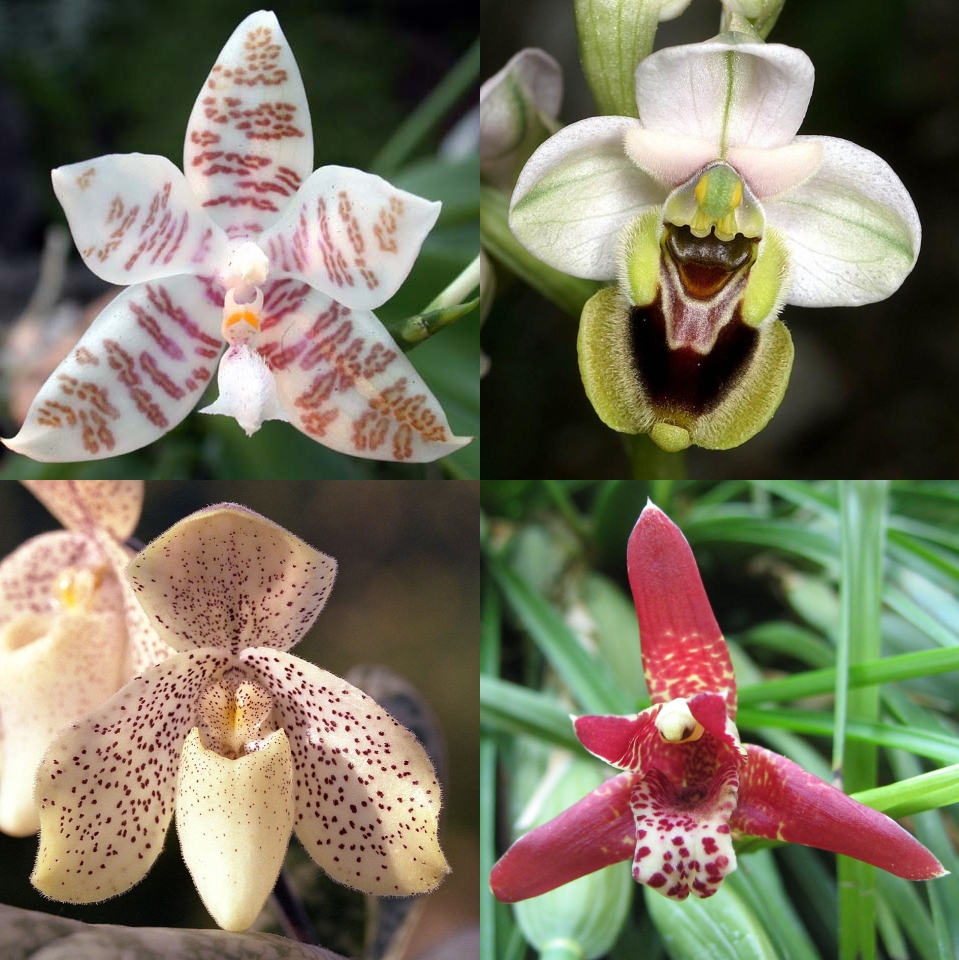 OrchidOrchidaceae
A vast family of colourful, often fragrant flowers found almost everywhere on earth
Orchidaceae · Wildflower
OrchidOrchidaceae
A vast family of colourful, often fragrant flowers found almost everywhere on earth
Orchidaceae · Wildflower
 Vanilla
Climbing orchids with pods used for the world’s most popular flavor
🇲🇽 Mexico and 7 more · Wildflower
Vanilla
Climbing orchids with pods used for the world’s most popular flavor
🇲🇽 Mexico and 7 more · Wildflower
 Orchis
A group of wild orchids with tuberous roots from Europe, North Africa and Asia
🇹🇷 Turkey and 7 more · Wildflower
Orchis
A group of wild orchids with tuberous roots from Europe, North Africa and Asia
🇹🇷 Turkey and 7 more · Wildflower
 Pansy orchidMiltoniopsis
An orchid with flowers that resemble garden pansies
🇨🇷 Costa Rica and 5 more · Orchid
Pansy orchidMiltoniopsis
An orchid with flowers that resemble garden pansies
🇨🇷 Costa Rica and 5 more · Orchid
More from the United Kingdom
All the flowers of the United Kingdom Narcissus
Spring-flowering bulbs with trumpet-shaped blooms in white, yellow, and orange
🇬🇧 United Kingdom and 7 more · Wildflower
Narcissus
Spring-flowering bulbs with trumpet-shaped blooms in white, yellow, and orange
🇬🇧 United Kingdom and 7 more · Wildflower
 HawthornCrataegus
A thorny shrub or tree with white or pink spring flowers and small edible fruits
🇮🇪 Ireland and 7 more · Wildflower
HawthornCrataegus
A thorny shrub or tree with white or pink spring flowers and small edible fruits
🇮🇪 Ireland and 7 more · Wildflower
 BlackthornPrunus spinosa
A spiny shrub with white spring flowers and tart blue-black fruit
🇬🇧 United Kingdom and 7 more · Wildflower
BlackthornPrunus spinosa
A spiny shrub with white spring flowers and tart blue-black fruit
🇬🇧 United Kingdom and 7 more · Wildflower
 Common poppyPapaver rhoeas
The vivid red wildflower of fields and remembrance
🇨🇳 China and 7 more · Wildflower
Common poppyPapaver rhoeas
The vivid red wildflower of fields and remembrance
🇨🇳 China and 7 more · Wildflower