
Dendrosenecio
Giant rosette plants of the high East African mountains
Dendrosenecio is a group of large, woody plants in the sunflower family found on the highest mountains of equatorial East Africa. These plants form tall, candelabra-like shapes with leafy rosettes and are adapted to the cold, alpine zones where few other large plants grow.
- Grows only on high mountains of East Africa
- Forms tall, woody stems with leafy rosettes
- Flowers infrequently, then branches out
- Adapted to freezing nights and strong sun
- Each species is usually limited to one mountain
What does Dendrosenecio look like?
Dendrosenecio plants are striking for their size and form. They grow as tall, woody stems topped with a rosette of large leaves, sometimes reaching the height of a telephone pole. When flowering, each stem produces a single, large cluster of flowers at the top. Older plants branch out, giving them a candelabra-like appearance, with each branch ending in its own leafy rosette. These plants are a prominent feature of the high-altitude landscapes where they grow.
Where does Dendrosenecio come from?
Dendrosenecio is native to the alpine zones of several tall mountains in equatorial East Africa, including Mount Kenya, Kilimanjaro, Rwenzori, and others. The genus split from Senecio and adapted to the cold, fluctuating conditions above the tree line. Over time, different species developed on separate mountains and at different heights, with most species restricted to a single range. Their spread and evolution have been shaped by the isolation of these 'sky islands' and the unique climate of each mountain.
When and how Dendrosenecio blooms
These plants grow in the moorlands and upper alpine zones, often between 3,400 and 4,500 meters. They reproduce infrequently, with long intervals between flowering. When a rosette flowers, it produces a large inflorescence at the top, then dies back, and new rosettes sprout from the base, leading to branching. Their seeds are dispersed by wind. Adaptations like water storage in the stem, insulation from dead leaves, and special fluids help them survive freezing nights and strong sunlight.
How Dendrosenecio is used
Dendrosenecio is not known for traditional or everyday human use. Its main significance is as a distinctive part of the mountain scenery in East Africa, where it is often noticed by climbers and scientists. The plant is important for studies of adaptation and evolution in extreme environments, and is a symbol of the unique flora of these high mountains.
Kinds of Dendrosenecio
There are several species and subspecies of Dendrosenecio, each typically confined to a single mountain or altitude zone. Notable species include D. keniensis and D. keniodendron on Mount Kenya, D. kilimanjari on Kilimanjaro, and D. johnstonii on several mountains. Some species are found only in wetter or drier habitats, and some, like D. erici-rosenii, occur on multiple mountains in the Albertine Rift.
What Dendrosenecio means
Dendrosenecio stands out as a symbol of the Afroalpine region. Its unusual form and survival strategies have made it a subject of scientific interest, especially in studies of evolution and adaptation. The plant is not tied to local folklore or religious practice, but it is a notable feature for visitors to these mountains and is often photographed by climbers and naturalists.
Questions people ask about Dendrosenecio
Where does Dendrosenecio come from?
Dendrosenecio is native to the alpine zones of tall mountains in equatorial East Africa, including Mount Kenya, Mount Kilimanjaro, the Aberdare Range, Rwenzori Mountains, and others.
What does Dendrosenecio look like?
It grows as a tall, woody plant with a rosette of large leaves at the top of each stem. Older plants branch out, creating a candelabra shape, and the flowers form large clusters at the ends of the branches.
How does Dendrosenecio survive in such harsh environments?
It has special adaptations like water storage in its stem, insulation from dead leaves, and the ability to close its leaves at night to protect against freezing temperatures.
Is Dendrosenecio used for anything by people?
There is no record of traditional or everyday human use. Its main importance is as a unique part of the mountain ecosystem and as a subject for scientific study.
What is special about its flowering?
Dendrosenecio plants flower only rarely, sometimes synchronously across a whole mountain, and after flowering, the main rosette dies and new branches form from the base.
Good reading and sources
- Index Nominum Genericorum (ING), Botany, Smithsonian InstitutionSmithsonian, Article
- Plants of the World OnlineRoyal Botanic Gardens, Kew, Plant database
- Where it has been recordedGBIF, Plant database
- Sightings and photos by naturalistsiNaturalist, Plant database
- Dendrosenecio on WikipediaEncyclopedia
- More photos on Wikimedia CommonsPhotos
- Wikidata recordOpen data
The facts on this page come from the Wikipedia article "Dendrosenecio", written by its contributors and used under the CC BY-SA 4.0 licence, and from its Wikidata record (CC0). Phool rewrote the text in its own words, with AI assistance, and compares every page with the article to make sure no passage is copied. It may be reused under the same CC BY-SA 4.0 licence with a link back.
It may contain mistakes. It is not medical or foraging advice: many flowers are poisonous, and traditional uses are reported, not recommended. If something is wrong, tell us. Last refreshed 2026-10-03.
Others in the family Asteraceae
The whole family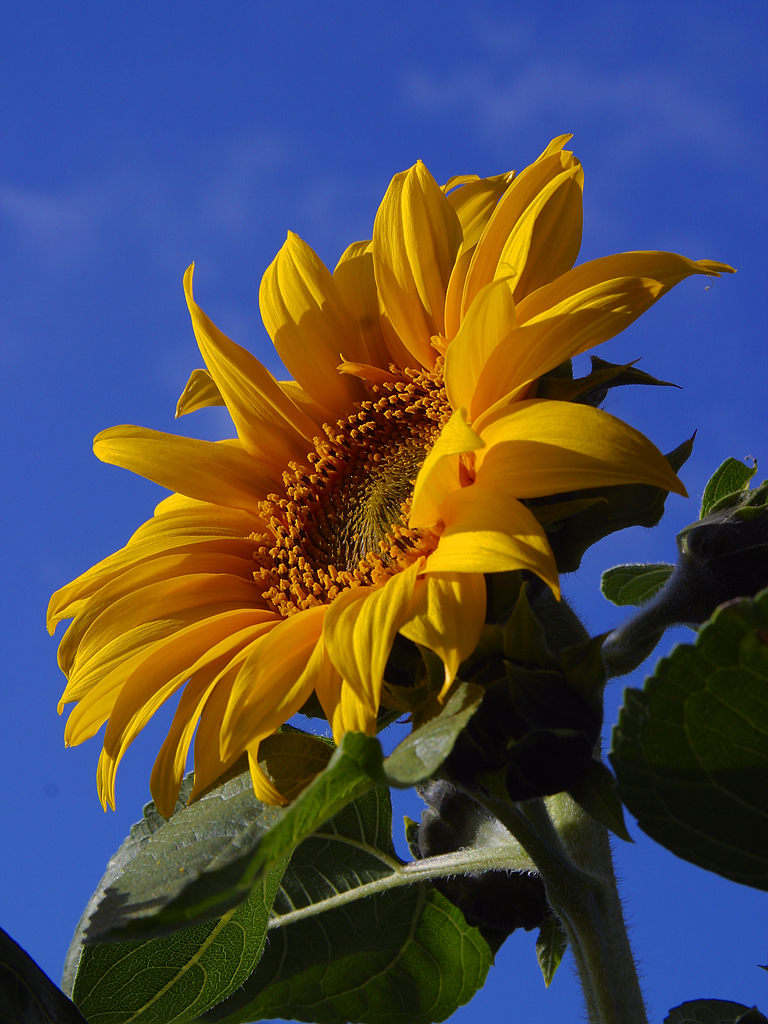 Common sunflowerHelianthus annuus
A tall annual plant grown for its large yellow flower heads and edible seeds
🇨🇦 Canada and 4 more · Wildflower
Common sunflowerHelianthus annuus
A tall annual plant grown for its large yellow flower heads and edible seeds
🇨🇦 Canada and 4 more · Wildflower
 Chrysanthemum菊花
Autumn-blooming flower with thousands of varieties, cherished in East Asia and beyond
🇨🇳 China and 6 more · Wildflower
Chrysanthemum菊花
Autumn-blooming flower with thousands of varieties, cherished in East Asia and beyond
🇨🇳 China and 6 more · Wildflower
 Asteraceae
The vast family of daisies, asters, and sunflowers with star-like flower heads
Asteraceae · Wildflower
Asteraceae
The vast family of daisies, asters, and sunflowers with star-like flower heads
Asteraceae · Wildflower
 DandelionTaraxacum
A yellow-flowered perennial found in fields, lawns, and gardens worldwide
Taraxacum · Wildflower
DandelionTaraxacum
A yellow-flowered perennial found in fields, lawns, and gardens worldwide
Taraxacum · Wildflower
More from Kenya
All the flowers of Kenya AchioteBixa orellana
Shrub with spiky red pods, source of the natural dye annatto
🇧🇷 Brazil and 9 more · Flowering shrub
AchioteBixa orellana
Shrub with spiky red pods, source of the natural dye annatto
🇧🇷 Brazil and 9 more · Flowering shrub
 African violetSaintpaulia
A small, velvety-leaved house plant with violet, blue or white flowers from East Africa
🇹🇿 Tanzania and 1 more · Wildflower
African violetSaintpaulia
A small, velvety-leaved house plant with violet, blue or white flowers from East Africa
🇹🇿 Tanzania and 1 more · Wildflower
 Cape primroseStreptocarpus
A houseplant with tubular blooms from African mountains and forests
🇿🇦 South Africa and 7 more · Wildflower
Cape primroseStreptocarpus
A houseplant with tubular blooms from African mountains and forests
🇿🇦 South Africa and 7 more · Wildflower
 Love-lies-bleedingAmaranthus caudatus
Tall Andean plant with long, drooping red or white flower clusters
🇵🇪 Peru and 8 more · Wildflower
Love-lies-bleedingAmaranthus caudatus
Tall Andean plant with long, drooping red or white flower clusters
🇵🇪 Peru and 8 more · Wildflower