
Dutchman's pipe cactus
Epiphyllum oxypetalum, family Cactaceae
A night-blooming cactus with large, fragrant white flowers
Dutchman's pipe cactus is a cactus from Mexico to Nicaragua, famous for its large white flowers that open at night and fade before sunrise. The plant climbs or sprawls, and is grown widely in tropical regions for its dramatic blooms and strong fragrance.
- Blooms only at night and wilts before dawn
- Native to Mexico and Central America
- Flowers are large, white, and strongly scented
- Used in traditional medicine in Asia
- Naturalised and widely grown in tropical regions
What does Dutchman's pipe cactus look like?
This cactus has long, branching stems that can reach up to 6 meters, with flat, wavy-edged sections. The flowers are large, reaching up to 30 cm long and 17 cm wide, and open only at night. Their petals are white inside and reddish or amber outside. The blooms give off a strong, sweet scent, and the plant produces oblong, purplish red fruit.
Where does Dutchman's pipe cactus come from?
Epiphyllum oxypetalum grows wild from southern Mexico through Central America to Nicaragua. It is an epiphyte, meaning it often grows on other plants rather than in soil. Over time, it has been cultivated widely in tropical areas and has become naturalised in places such as China. The plant has also been collected and described in Mexico since at least the early 1900s.
When and how Dutchman's pipe cactus blooms
The Dutchman's pipe cactus blooms from late spring to late summer, with some plants producing several rounds of flowers in one season. The flowers open after dark and wilt before dawn. It is usually grown in warm, humid climates, often as a garden or houseplant. The plant can be started from cuttings and prefers to grow on supports or in hanging baskets.


How Dutchman's pipe cactus is used
People grow this cactus for its spectacular night flowers, which are often the focus of gatherings to watch them open. In parts of Asia, including India, Vietnam, and Malaysia, it is used in traditional medicine for respiratory and bleeding problems, and to ease pain and swelling. The plant is also featured in popular culture, such as in the film Crazy Rich Asians.
Kinds of Dutchman's pipe cactus
Some forms of this species have flowers with carmine red outer petals and a less pleasant scent. These were once considered a separate species but are now included under Epiphyllum oxypetalum.
What Dutchman's pipe cactus means
The cactus is admired for its rare and fleeting blooms, which inspire gatherings and celebrations. In China, it is called tan hua and is known for its brief flowering. Its night-blooming habit and strong fragrance have made it a symbol of beauty and transience in several cultures.
Questions people ask about Dutchman's pipe cactus
Where does the Dutchman's pipe cactus come from?
It is native to southern Mexico and Central America, including countries like Belize, Guatemala, Honduras, El Salvador, and Nicaragua.
What does the flower look like?
The flower is large, up to 30 cm long, with white inner petals and reddish or amber outer petals. It opens at night and gives off a strong, sweet scent.
Why is it called 'queen of the night'?
This name comes from its habit of blooming only at night, with flowers that open after dark and fade before morning.
How is this plant used?
It is grown for its dramatic flowers and is also used in traditional medicine in some Asian countries to treat various ailments.
What does the Dutchman's pipe cactus symbolise?
Its brief, beautiful blooms have made it a symbol of fleeting beauty and special moments, especially in Chinese culture.
Good reading and sources
- IUCN Red List of Threatened SpeciesIUCN Red List, Article
- USDA Plants DatabaseUS Department of Agriculture, Article
- Epiphyllum oxypetalumRoyal Horticultural Society, Article
- Plants of the World OnlineRoyal Botanic Gardens, Kew, Plant database
- Where it has been recordedGBIF, Plant database
- Sightings and photos by naturalistsiNaturalist, Plant database
- Epiphyllum oxypetalum on WikipediaEncyclopedia
- More photos on Wikimedia CommonsPhotos
- Wikidata recordOpen data
The facts on this page come from the Wikipedia article "Epiphyllum oxypetalum", written by its contributors and used under the CC BY-SA 4.0 licence, and from its Wikidata record (CC0). Phool rewrote the text in its own words, with AI assistance, and compares every page with the article to make sure no passage is copied. It may be reused under the same CC BY-SA 4.0 licence with a link back.
It may contain mistakes. It is not medical or foraging advice: many flowers are poisonous, and traditional uses are reported, not recommended. If something is wrong, tell us. Last refreshed 2026-10-03.
Others in the family Cactaceae
The whole family Prickly pearOpuntia
Cactus with flat pads and edible fruit, native to the Americas
🇲🇽 Mexico and 7 more · Wildflower
Indian fig opuntiaOpuntia ficus-indica
A large, spiny cactus grown for its sweet fruit and edible pads
🇲🇽 Mexico and 7 more · Wildflower
Prickly pearOpuntia
Cactus with flat pads and edible fruit, native to the Americas
🇲🇽 Mexico and 7 more · Wildflower
Indian fig opuntiaOpuntia ficus-indica
A large, spiny cactus grown for its sweet fruit and edible pads
🇲🇽 Mexico and 7 more · Wildflower
 Mammillaria
A diverse group of small, rounded cacti with funnel-shaped flowers
🇲🇽 Mexico and 5 more · Wildflower
Mammillaria
A diverse group of small, rounded cacti with funnel-shaped flowers
🇲🇽 Mexico and 5 more · Wildflower
 Disocactus ackermannii
A scarlet-flowered epiphytic cactus from southern Mexico's cloud forests
🇲🇽 Mexico and 1 more · Wildflower
Disocactus ackermannii
A scarlet-flowered epiphytic cactus from southern Mexico's cloud forests
🇲🇽 Mexico and 1 more · Wildflower
More from Mexico
All the flowers of Mexico Common sunflowerHelianthus annuus
A tall annual plant grown for its large yellow flower heads and edible seeds
🇨🇦 Canada and 4 more · Wildflower
Common sunflowerHelianthus annuus
A tall annual plant grown for its large yellow flower heads and edible seeds
🇨🇦 Canada and 4 more · Wildflower
 CactusCactaceae
Succulent plants with spines, native to the Americas
🇲🇽 Mexico and 7 more · Wildflower
CactusCactaceae
Succulent plants with spines, native to the Americas
🇲🇽 Mexico and 7 more · Wildflower
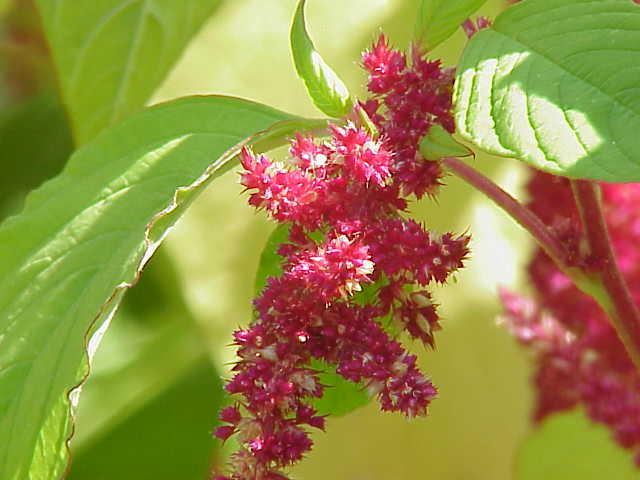 AmaranthAmaranthus
A tall, colourful plant grown for its flowers, leaves and edible seeds
🇲🇽 Mexico and 7 more · Wildflower
AmaranthAmaranthus
A tall, colourful plant grown for its flowers, leaves and edible seeds
🇲🇽 Mexico and 7 more · Wildflower
 HawthornCrataegus
A thorny shrub or tree with white or pink spring flowers and small edible fruits
🇮🇪 Ireland and 7 more · Wildflower
HawthornCrataegus
A thorny shrub or tree with white or pink spring flowers and small edible fruits
🇮🇪 Ireland and 7 more · Wildflower