
Cross-leaved Heath
Erica tetralix, family Ericaceae
A pink-flowered heather of bogs and wet heaths in western Europe
Cross-leaved heath is a perennial shrub from western Europe, found in bogs and damp woodlands. It has small pink bell-shaped flowers in summer and autumn, with whorls of four sticky leaves. Gardeners grow it in acidic soils, and white and pink cultivars are available.
- Native to bogs and wet heaths from Portugal to Norway
- Pink bell-shaped flowers bloom in summer and autumn
- Leaves are sticky and arranged in whorls of four
- White and pink garden cultivars are available
- Mentioned in the German song 'Erika'
What does Cross-leaved Heath look like?
Cross-leaved heath is a low, perennial shrub with sticky, glandular leaves arranged in whorls of four. Its flowers are small, pink, and bell-shaped, hanging in tight clusters at the tips of the shoots. The plant blooms from summer into autumn, and its foliage and flowers often give bogs and wet heaths a soft pink hue. Some cultivated forms have white or deeper pink flowers.
Where does Cross-leaved Heath come from?
This heather grows wild across western Europe, from southern Portugal up to central Norway, and also in boggy parts of Austria and Switzerland. It thrives in wet, acidic soils, often becoming a dominant plant in bogs and damp coniferous woods. The species has also been introduced to some areas of North America. Its sticky leaves and sepals once led Charles Darwin to suggest it might be a protocarnivorous plant, though little research has followed.
When and how Cross-leaved Heath blooms
Cross-leaved heath flowers in summer and autumn. It prefers acidic, moist soils and is often found in bogs or wet heaths. In gardens, it is grown as a shrub, needing similar acidic conditions. Many cultivars have been bred, including white and pink forms, and some have received horticultural awards for their garden value.

How Cross-leaved Heath is used
Gardeners plant cross-leaved heath for its attractive flowers and ability to thrive in acidic, damp soils. It is valued for naturalistic and bog gardens, and some cultivars are chosen for their flower colour. The plant is not noted for ceremonial or religious uses, but it appears in European culture and music.
Kinds of Cross-leaved Heath
Several cultivars of cross-leaved heath are grown, including 'Alba Mollis', a white-flowered form, and 'Pink Star', both of which have received awards for garden merit. Related species include Erica cinerea and Calluna vulgaris, which differ in leaf arrangement and size.
What Cross-leaved Heath means
Cross-leaved heath is part of the landscape in many European bogs and heaths. It is mentioned in the 1938 German song 'Erika' by Herms Niel. The plant's sticky leaves once drew scientific interest for possible protocarnivorous traits, but it is mainly valued for its role in wild and cultivated landscapes.
Questions people ask about Cross-leaved Heath
Where does cross-leaved heath come from?
Cross-leaved heath is native to western Europe, ranging from southern Portugal to central Norway, and is also found in boggy regions of Austria and Switzerland.
What does cross-leaved heath look like?
It is a low, perennial shrub with sticky leaves in whorls of four and small, pink, bell-shaped flowers that cluster at the ends of its shoots.
When does cross-leaved heath flower?
The plant blooms from summer into autumn, producing its distinctive pink flowers during these seasons.
How is cross-leaved heath used?
It is mainly grown in gardens with acidic soil, especially in naturalistic or bog gardens, and valued for its flowers and foliage.
Are there different varieties of cross-leaved heath?
Yes, there are several cultivars, including white-flowered and pink forms, some of which have received awards for their garden performance.
Good reading and sources
- Erica tetralix f. alba 'Alba Mollis' | cross-leaved heath 'Alba Mollis'Royal Horticultural Society, Article
- USDA Plants DatabaseUS Department of Agriculture, Article
- Plants of the World OnlineRoyal Botanic Gardens, Kew, Plant database
- Where it has been recordedGBIF, Plant database
- Sightings and photos by naturalistsiNaturalist, Plant database
- Erica tetralix on WikipediaEncyclopedia
- More photos on Wikimedia CommonsPhotos
- Wikidata recordOpen data
The facts on this page come from the Wikipedia article "Erica tetralix", written by its contributors and used under the CC BY-SA 4.0 licence, and from its Wikidata record (CC0). Phool rewrote the text in its own words, with AI assistance, and compares every page with the article to make sure no passage is copied. It may be reused under the same CC BY-SA 4.0 licence with a link back.
It may contain mistakes. It is not medical or foraging advice: many flowers are poisonous, and traditional uses are reported, not recommended. If something is wrong, tell us. Last refreshed 2026-10-03.
Others in the family Ericaceae
The whole family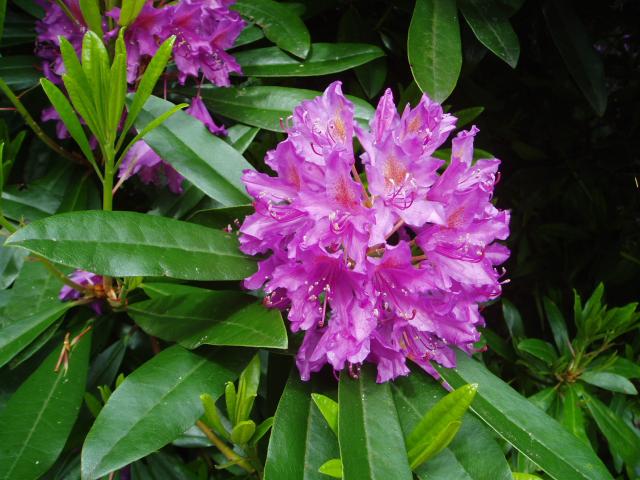 Rhododendron
A vast group of shrubs and trees with showy blooms in many colours
🇳🇵 Nepal and 4 more · Wildflower
Rhododendron
A vast group of shrubs and trees with showy blooms in many colours
🇳🇵 Nepal and 4 more · Wildflower
 Erica
Evergreen shrubs with tiny needle leaves and nodding flowers, known as heaths or heathers
🇿🇦 South Africa and 1 more · Wildflower
Erica
Evergreen shrubs with tiny needle leaves and nodding flowers, known as heaths or heathers
🇿🇦 South Africa and 1 more · Wildflower
 Catawba rosebayRhododendron catawbiense
A spring-flowering rhododendron native to the southern Appalachian Mountains
🇺🇸 United States · Wildflower
Catawba rosebayRhododendron catawbiense
A spring-flowering rhododendron native to the southern Appalachian Mountains
🇺🇸 United States · Wildflower
 Common rhododendronRhododendron ponticum
A dense evergreen shrub with violet-purple flowers from Europe and the Caucasus
🇵🇹 Portugal and 6 more · Flowering shrub
Common rhododendronRhododendron ponticum
A dense evergreen shrub with violet-purple flowers from Europe and the Caucasus
🇵🇹 Portugal and 6 more · Flowering shrub
More from Portugal
All the flowers of Portugal RosemarySalvia rosmarinus
A fragrant evergreen shrub with needle-like leaves and purple, blue, or white flowers
🇪🇸 Spain and 5 more · Flowering shrub
RosemarySalvia rosmarinus
A fragrant evergreen shrub with needle-like leaves and purple, blue, or white flowers
🇪🇸 Spain and 5 more · Flowering shrub
 Eucalyptus
The tall, aromatic trees and shrubs known as gum trees or eucalypts
🇦🇺 Australia and 7 more · Flowering tree
Eucalyptus
The tall, aromatic trees and shrubs known as gum trees or eucalypts
🇦🇺 Australia and 7 more · Flowering tree
 Narcissus
Spring-flowering bulbs with trumpet-shaped blooms in white, yellow, and orange
🇬🇧 United Kingdom and 7 more · Wildflower
Narcissus
Spring-flowering bulbs with trumpet-shaped blooms in white, yellow, and orange
🇬🇧 United Kingdom and 7 more · Wildflower
 OleanderNerium oleander
A showy, evergreen shrub with clusters of pink, white or red flowers
🇲🇦 Morocco and 8 more · Flowering shrub
OleanderNerium oleander
A showy, evergreen shrub with clusters of pink, white or red flowers
🇲🇦 Morocco and 8 more · Flowering shrub