Leopard plant
Farfugium japonicum, family Asteraceae
In its own language: 石蕗
A shade-loving perennial with bold leaves and yellow autumn flowers
Leopard plant is an evergreen perennial from Japan, valued for its large, rounded leaves and clusters of yellow, daisy-like flowers that bloom in the cooler months. It is often grown in gardens and containers, especially in shaded spots, and some forms have striking variegated foliage.
- Native to Japan and parts of southern China
- Large, rounded leaves can be plain or variegated
- Yellow daisy-like flowers appear in autumn and winter
- Grown mainly for shade gardens and containers
- Contains toxic pyrrolizidine alkaloids
What does Leopard plant look like?
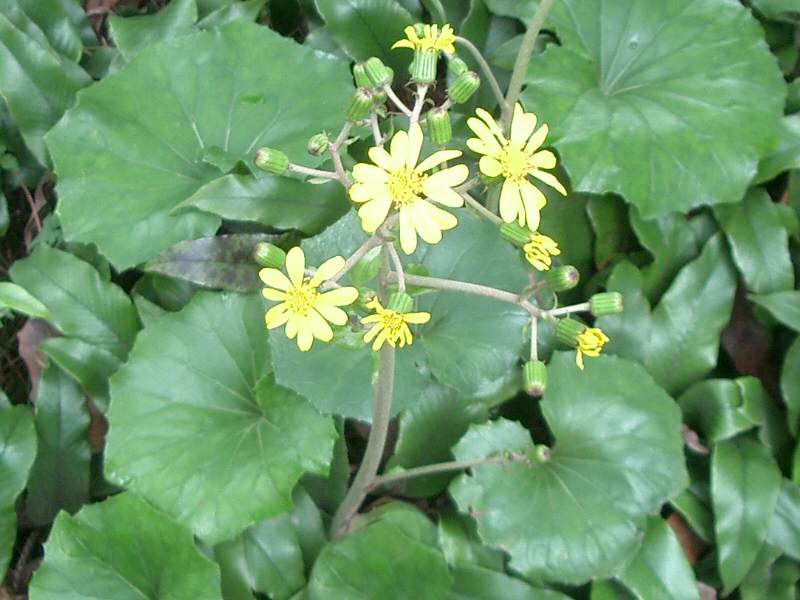
Leopard plant forms a clump of glossy, rounded or kidney-shaped leaves that can be plain green or marked with creamy white or yellow. The leaves are thick and often have wavy or toothed edges, held up on long stalks. In autumn and winter, it produces loose sprays of yellow flowers that resemble small daisies, each about 2.5 to 5 cm across.
Where does Leopard plant come from?
This plant is native to Japan, where it grows along streams and coastal areas, and is also found in parts of southern China including Fujian, Guangdong, and the Zhoushan Archipelago. In Japan, it is known as tsuwabuki. Over time, it has been introduced to gardens in other regions for its decorative foliage and late-season flowers.
When and how Leopard plant blooms
Leopard plant is usually grown for its foliage, thriving in shady or partially shaded spots with moist soil. It is evergreen and spreads slowly by rhizomes. Gardeners often choose it for containers or to brighten shaded garden beds, especially using the variegated forms. Some selections, like var. giganteum, have especially large leaves.


How Leopard plant is used
People grow leopard plant mainly for its bold leaves and to add interest to shaded areas in gardens. The plant is also used in containers. Variegated types are particularly popular for their decorative patterns. It is not used for food or medicine, as it contains toxic compounds.
Kinds of Leopard plant
There are several cultivated forms, including those with plain green leaves and others with irregular cream or yellow markings. The variety giganteum is noted for its extra-large leaves. The cultivar 'Aureomaculatum' is recognized for its garden value and is widely grown for its showy foliage.
What Leopard plant means
In Japan, leopard plant is called tsuwabuki and is a familiar garden plant. While it is not tied to specific festivals or religious practices, its distinctive leaves and late-season flowers make it a valued ornamental. It contains pyrrolizidine alkaloids, which are toxic if ingested.
Questions people ask about Leopard plant
Where does leopard plant come from?
Leopard plant is native to Japan, where it grows along streams and coastal areas, and is also found in some regions of southern China such as Fujian and Guangdong.
What does leopard plant look like?
It has large, rounded or kidney-shaped leaves that can be plain green or marked with creamy or yellow patterns. In autumn and winter, it produces clusters of yellow, daisy-like flowers.
Is leopard plant toxic?
Yes, leopard plant contains pyrrolizidine alkaloids, which are toxic and can be harmful if eaten.
How is leopard plant used in gardens?
It is grown mainly for its bold foliage and is popular in shaded garden beds and containers. Variegated forms are especially valued for their decorative leaves.
Does leopard plant have any special meaning or use in culture?
In Japan, it is known as tsuwabuki and is a common ornamental plant, but it is not especially tied to festivals or symbolic meanings.
Good reading and sources
- Farfugium japonicum 'Aureomaculatum' (v) | gold-spotted Japanese farfugiumRoyal Horticultural Society, Article
- Plants of the World OnlineRoyal Botanic Gardens, Kew, Plant database
- Where it has been recordedGBIF, Plant database
- Sightings and photos by naturalistsiNaturalist, Plant database
- Farfugium japonicum on WikipediaEncyclopedia
- More photos on Wikimedia CommonsPhotos
- Wikidata recordOpen data
The facts on this page come from the Wikipedia article "Farfugium japonicum", written by its contributors and used under the CC BY-SA 4.0 licence, and from its Wikidata record (CC0). Phool rewrote the text in its own words, with AI assistance, and compares every page with the article to make sure no passage is copied. It may be reused under the same CC BY-SA 4.0 licence with a link back.
It may contain mistakes. It is not medical or foraging advice: many flowers are poisonous, and traditional uses are reported, not recommended. If something is wrong, tell us. Last refreshed 2026-10-03.
Others in the family Asteraceae
The whole family Chrysanthemum菊花
Autumn-blooming flower with thousands of varieties, cherished in East Asia and beyond
🇨🇳 China and 6 more · Wildflower
Chrysanthemum菊花
Autumn-blooming flower with thousands of varieties, cherished in East Asia and beyond
🇨🇳 China and 6 more · Wildflower
 Asteraceae
The vast family of daisies, asters, and sunflowers with star-like flower heads
Asteraceae · Wildflower
Asteraceae
The vast family of daisies, asters, and sunflowers with star-like flower heads
Asteraceae · Wildflower
 DandelionTaraxacum
A yellow-flowered perennial found in fields, lawns, and gardens worldwide
Taraxacum · Wildflower
DandelionTaraxacum
A yellow-flowered perennial found in fields, lawns, and gardens worldwide
Taraxacum · Wildflower
 Dahlia
A bushy perennial with tuberous roots and bright, star-shaped blooms
🇲🇽 Mexico and 1 more · Garden flower
Dahlia
A bushy perennial with tuberous roots and bright, star-shaped blooms
🇲🇽 Mexico and 1 more · Garden flower
More from China
All the flowers of China PeachPrunus persica
A flowering fruit tree from China, grown for its pink blossoms and sweet fruit
🇨🇳 China and 7 more · Flowering tree
PeachPrunus persica
A flowering fruit tree from China, grown for its pink blossoms and sweet fruit
🇨🇳 China and 7 more · Flowering tree
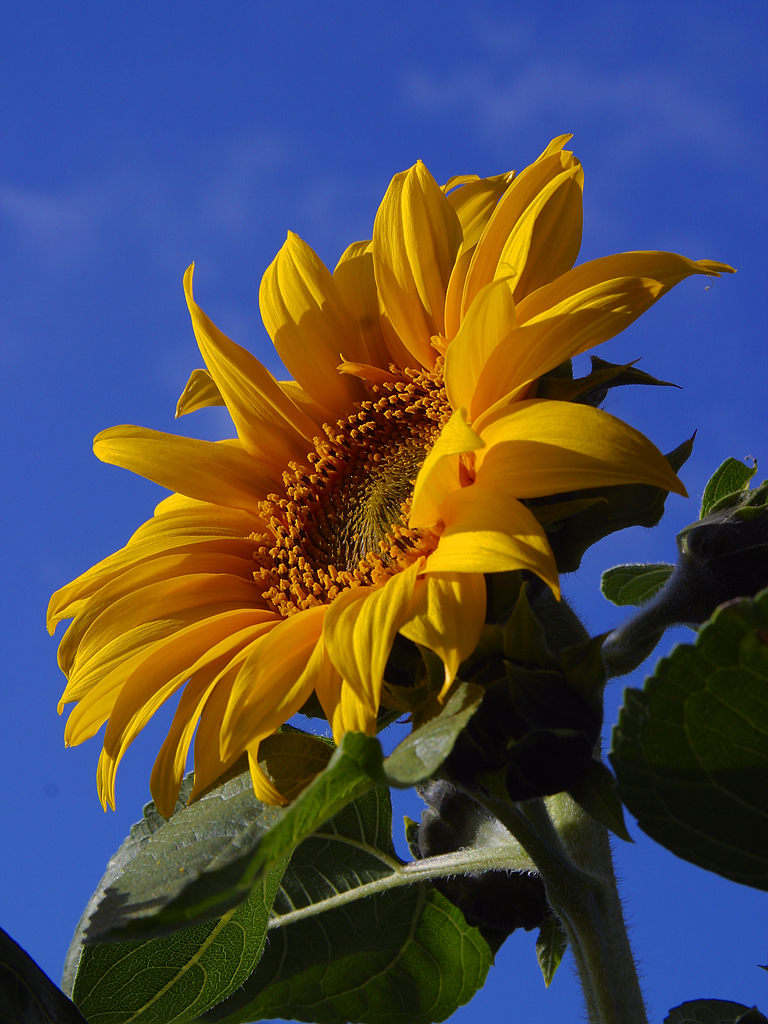 Common sunflowerHelianthus annuus
A tall annual plant grown for its large yellow flower heads and edible seeds
🇨🇦 Canada and 4 more · Wildflower
Common sunflowerHelianthus annuus
A tall annual plant grown for its large yellow flower heads and edible seeds
🇨🇦 Canada and 4 more · Wildflower
 PomegranatePunica granatum
A shrub with bright red flowers and a fruit full of edible seeds
🇮🇷 Iran and 9 more · Flowering shrub
PomegranatePunica granatum
A shrub with bright red flowers and a fruit full of edible seeds
🇮🇷 Iran and 9 more · Flowering shrub
 BirchBetula
Slender trees with papery bark found across the northern world
🇨🇳 China and 7 more · Wildflower
BirchBetula
Slender trees with papery bark found across the northern world
🇨🇳 China and 7 more · Wildflower