
Felicia
A daisy-like African genus with purple, blue or white ray flowers
Felicia is a genus of about 85 species of small shrubs and herbaceous plants in the daisy family. Most grow in southern Africa, especially the Cape region, and many have daisy-like flower heads with yellow centres and rings of purple, blue, pink, white or yellow petals.
- Contains about 85 species, mostly from southern Africa
- Flower heads have yellow disc florets and one ring of coloured ray florets
- Most diverse in the Cape Floristic Region
- Named after scientist Fortunato Bartolomeo de Felice
- Some species grow as pendulous plants on vertical rock faces
What does Felicia look like?
Felicia plants are small shrubs or herbaceous annuals and perennials, usually under 60 cm tall. Their flower heads resemble daisies: a central disc of tiny yellow florets surrounded by a single ring of strap-shaped ray florets. These rays are most often purple, but can also be blue, pink, white or yellow. Some species lack ray florets entirely.
Where does Felicia come from?
The genus likely originated in the Cape Floristic Region of South Africa, where most of its 85 species are found. From there, it spread northward through eastern Africa as far as Sudan and southwest Arabia, and along the west coast to Angola, with isolated populations near the Cameroon–Nigeria border and in central Nigeria.
When and how Felicia blooms
Felicia species grow as woody shrubs, perennial herbs, or annuals. About 60% are shrubs, 20% perennials, and 20% annuals. Many produce numerous flower heads on branched stems, though some form rosettes with a single head. They typically grow in well-drained soils and open habitats across southern and parts of tropical Africa.


Kinds of Felicia
The genus is split into six sections: Anhebecarpaea, Dracontium, Felicia, Lignofelicia, Longistylis and Neodetris. Sections differ in growth form, shrubs dominate Lignofelicia and Felicia, while Longistylis contains only annuals. Some species, like F. petiolata, grow pendulously on cliffs. Chromosome numbers vary, with base counts from five to nine.
What Felicia means
Named after the Italian-Swiss scientist Fortunato Bartolomeo de Felice, the genus was formally established in 1818 by Henri Cassini. Though older names like Detris existed, Felicia was conserved due to widespread use. The first species now placed in Felicia was recorded in 1692, but valid naming began with Linnaeus in 1763.
Questions people ask about Felicia
Where does Felicia come from?
Most Felicia species are native to southern Africa, especially the Cape Floristic Region of South Africa, with others found as far north as Sudan and west to Angola and Nigeria.
What do Felicia flowers look like?
They have daisy-like heads: a yellow centre surrounded by a single ring of purple, blue, pink, white or yellow petals. Some species lack the outer petals entirely.
Is Felicia used for anything?
The article mentions some species are grown as ornamentals and hybrids have been developed, but gives no details on specific uses in culture, medicine or food.
How many kinds of Felicia are there?
There are 85 known species, grouped into six botanical sections based on structure, growth habit and genetics.
Who named the genus Felicia?
It was formally named Felicia in 1818 by French botanist Henri Cassini, likely in honour of the Italian-Swiss scientist Fortunato Bartolomeo de Felice.
Good reading and sources
- USDA Plants DatabaseUS Department of Agriculture, Article
- Plants of the World OnlineRoyal Botanic Gardens, Kew, Plant database
- Where it has been recordedGBIF, Plant database
- Sightings and photos by naturalistsiNaturalist, Plant database
- Felicia (plant) on WikipediaEncyclopedia
- More photos on Wikimedia CommonsPhotos
- Wikidata recordOpen data
The facts on this page come from the Wikipedia article "Felicia (plant)", written by its contributors and used under the CC BY-SA 4.0 licence, and from its Wikidata record (CC0). Phool rewrote the text in its own words, with AI assistance, and compares every page with the article to make sure no passage is copied. It may be reused under the same CC BY-SA 4.0 licence with a link back.
It may contain mistakes. It is not medical or foraging advice: many flowers are poisonous, and traditional uses are reported, not recommended. If something is wrong, tell us. Last refreshed 2026-10-03.
Others in the family Asteraceae
The whole family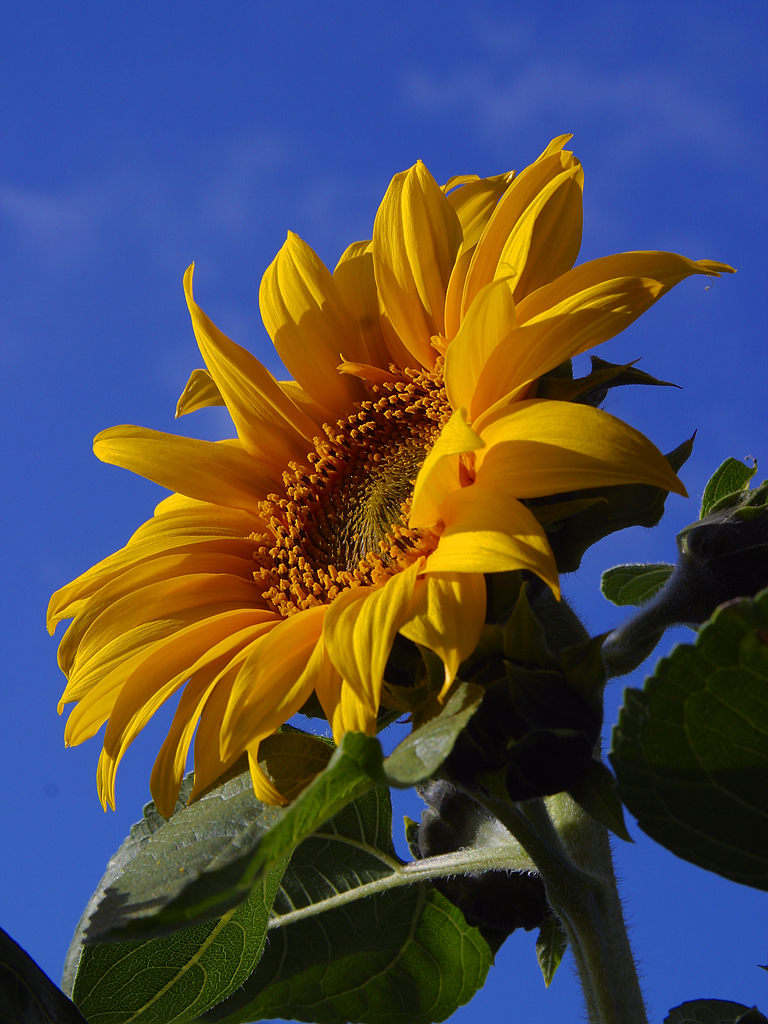 Common sunflowerHelianthus annuus
A tall annual plant grown for its large yellow flower heads and edible seeds
🇨🇦 Canada and 4 more · Wildflower
Common sunflowerHelianthus annuus
A tall annual plant grown for its large yellow flower heads and edible seeds
🇨🇦 Canada and 4 more · Wildflower
 Chrysanthemum菊花
Autumn-blooming flower with thousands of varieties, cherished in East Asia and beyond
🇨🇳 China and 6 more · Wildflower
Chrysanthemum菊花
Autumn-blooming flower with thousands of varieties, cherished in East Asia and beyond
🇨🇳 China and 6 more · Wildflower
 Asteraceae
The vast family of daisies, asters, and sunflowers with star-like flower heads
Asteraceae · Wildflower
Asteraceae
The vast family of daisies, asters, and sunflowers with star-like flower heads
Asteraceae · Wildflower
 DandelionTaraxacum
A yellow-flowered perennial found in fields, lawns, and gardens worldwide
Taraxacum · Wildflower
DandelionTaraxacum
A yellow-flowered perennial found in fields, lawns, and gardens worldwide
Taraxacum · Wildflower
More from South Africa
All the flowers of South Africa Eucalyptus
The tall, aromatic trees and shrubs known as gum trees or eucalypts
🇦🇺 Australia and 7 more · Flowering tree
Eucalyptus
The tall, aromatic trees and shrubs known as gum trees or eucalypts
🇦🇺 Australia and 7 more · Flowering tree
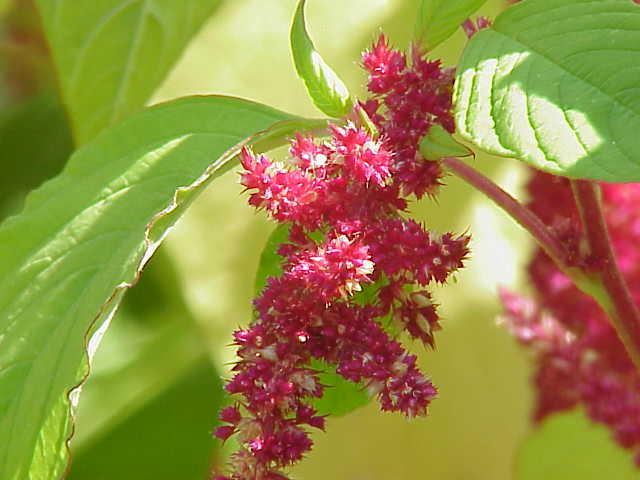 AmaranthAmaranthus
A tall, colourful plant grown for its flowers, leaves and edible seeds
🇲🇽 Mexico and 7 more · Wildflower
AmaranthAmaranthus
A tall, colourful plant grown for its flowers, leaves and edible seeds
🇲🇽 Mexico and 7 more · Wildflower
 Acacia
Shrubs and trees with golden or cream puffball flowers, native mostly to Australia
🇦🇺 Australia and 6 more · Wildflower
Acacia
Shrubs and trees with golden or cream puffball flowers, native mostly to Australia
🇦🇺 Australia and 6 more · Wildflower
 Sensitive PlantMimosa pudica
A touch-sensitive plant whose leaves fold up when disturbed
🇧🇷 Brazil and 8 more · Wildflower
Sensitive PlantMimosa pudica
A touch-sensitive plant whose leaves fold up when disturbed
🇧🇷 Brazil and 8 more · Wildflower