
Hardy fuchsia
Fuchsia magellanica, family Onagraceae
A South American shrub with drooping red and purple flowers
Hardy fuchsia is a shrub from southern Argentina and Chile, known for its slender, hanging flowers in shades of red, purple, pink, and sometimes white. It grows in damp places near water and is widely grown in gardens for its long flowering season and appeal to hummingbirds.
- Native to southern Argentina and Chile
- Commonly seen in Irish hedgerows, especially West Cork
- Flowers hang down in red, purple, pink or white
- Attracts hummingbirds with its nectar-rich blooms
- Many garden cultivars exist, but most are hybrids
What does Hardy fuchsia look like?
Hardy fuchsia is a bushy plant that can reach up to 3 metres tall and wide in mild climates. Its stems arch outward, and the leaves are arranged in whorls or pairs, with toothed edges. The flowers are small, tubular, and hang down, showing off vivid reds and purples, with some forms in pink, lavender, or white. The berries are small, oval, and dark. Its flowers are a favourite for hummingbirds, thanks to their shape and nectar.
Where does Hardy fuchsia come from?
This species is native to the southern tip of South America, growing wild in Argentina and Chile, especially near streams and forest edges. It became known in Europe in the late 1700s, with a story of James Lee buying a plant from a sailor’s window in England. Since then, it has spread widely as a garden plant and has naturalised in places like Ireland and Australia.
When and how Hardy fuchsia blooms
Hardy fuchsia blooms from spring through autumn, producing many flowers over several months. It prefers moist soils and a sunny spot, and can survive light frost, dying back only in colder winters. Gardeners grow it in borders, containers, or as hedges. It is usually grown from cuttings or nursery plants. Some cultivars have colourful leaves or different flower shades.


How Hardy fuchsia is used
People grow hardy fuchsia mainly for its decorative flowers, both in gardens and containers. In Ireland’s West Cork, it is so common in hedges that it serves as a regional emblem. The flowers attract hummingbirds in the Americas. Some traditional remedies have used parts of the plant. Its popularity has led to many named varieties for garden use.
Kinds of Hardy fuchsia
There are many garden forms of hardy fuchsia, but botanists do not recognise official varieties within the species. Cultivars include 'Aurea' with golden leaves, 'Gracilis' with arching branches, 'Gracilis Variegata' with cream-edged leaves, 'Molinae' with pale flowers, and 'Riccartonii' with dark green leaves. Most garden forms are hybrids to some degree.
What Hardy fuchsia means
In West Cork, Ireland, hardy fuchsia is seen as a symbol of the region, lining country roads and hedgerows. Its long flowering season and bright colours have made it a favourite in temperate gardens. The plant is also valued for attracting wildlife, especially hummingbirds. It is susceptible to the fuchsia gall mite, a pest that has spread in recent decades.
Where Hardy fuchsia is used and seen
 Hidcote Manor GardenA famous Arts and Crafts garden of outdoor rooms in Gloucestershire, England
 San Diego Botanic GardenA 37-acre garden in Encinitas with global plant collections and rare bamboos
 Mendocino Coast Botanical GardensA coastal garden in Mendocino County, California with ocean views and diverse plantings
Questions people ask about Hardy fuchsia
Where does hardy fuchsia come from?
Hardy fuchsia is native to the southern parts of Argentina and Chile, where it grows in damp areas near water and forest edges.
What does hardy fuchsia look like?
It is a shrub with arching stems and small, tubular flowers that hang down. The flowers are usually red and purple, but some forms are pink, lavender, or white.
How is hardy fuchsia used?
It is widely grown as a garden shrub for its long-lasting flowers. In Ireland, especially West Cork, it is a familiar sight in hedgerows and serves as a regional emblem.
Are there different types of hardy fuchsia?
There are many garden cultivars with different leaf and flower colours, but botanists do not recognise official varieties. Most garden forms are hybrids.
What does hardy fuchsia symbolise?
In West Cork, Ireland, it is a symbol of the region due to its abundance in local hedgerows.
Good reading and sources
- Fuchsia magellanicaRoyal Horticultural Society, Article
- Onagraceae - Species Page/ Botany, National Museum of Natural History, Smithsonian InstitutionSmithsonian, Article
- USDA Plants DatabaseUS Department of Agriculture, Article
- Plants of the World OnlineRoyal Botanic Gardens, Kew, Plant database
- Where it has been recordedGBIF, Plant database
- Sightings and photos by naturalistsiNaturalist, Plant database
- Fuchsia magellanica on WikipediaEncyclopedia
- More photos on Wikimedia CommonsPhotos
- Wikidata recordOpen data
The facts on this page come from the Wikipedia article "Fuchsia magellanica", written by its contributors and used under the CC BY-SA 4.0 licence, and from its Wikidata record (CC0). Phool rewrote the text in its own words, with AI assistance, and compares every page with the article to make sure no passage is copied. It may be reused under the same CC BY-SA 4.0 licence with a link back.
It may contain mistakes. It is not medical or foraging advice: many flowers are poisonous, and traditional uses are reported, not recommended. If something is wrong, tell us. Last refreshed 2026-10-03.
Others in the family Onagraceae
The whole family FireweedChamaenerion angustifolium
A tall pink wildflower that quickly covers burned or disturbed ground
🇨🇳 China and 3 more · Wildflower
FireweedChamaenerion angustifolium
A tall pink wildflower that quickly covers burned or disturbed ground
🇨🇳 China and 3 more · Wildflower
 Evening primroseOenothera
A group of night-blooming wildflowers native to the Americas
🇲🇽 Mexico and 3 more · Wildflower
Evening primroseOenothera
A group of night-blooming wildflowers native to the Americas
🇲🇽 Mexico and 3 more · Wildflower
 Dwarf fireweedChamerion latifolium
A bright pink wildflower of Arctic and alpine regions, eaten and cherished in Greenland
🇬🇱 Greenland · Wildflower
Dwarf fireweedChamerion latifolium
A bright pink wildflower of Arctic and alpine regions, eaten and cherished in Greenland
🇬🇱 Greenland · Wildflower
 Clarkia
Wildflowers and garden annuals with four-petalled blooms, mostly from western North America
Clarkia · Wildflower
Clarkia
Wildflowers and garden annuals with four-petalled blooms, mostly from western North America
Clarkia · Wildflower
More from Argentina
All the flowers of Argentina CactusCactaceae
Succulent plants with spines, native to the Americas
🇲🇽 Mexico and 7 more · Wildflower
CactusCactaceae
Succulent plants with spines, native to the Americas
🇲🇽 Mexico and 7 more · Wildflower
 Eucalyptus
The tall, aromatic trees and shrubs known as gum trees or eucalypts
🇦🇺 Australia and 7 more · Flowering tree
Eucalyptus
The tall, aromatic trees and shrubs known as gum trees or eucalypts
🇦🇺 Australia and 7 more · Flowering tree
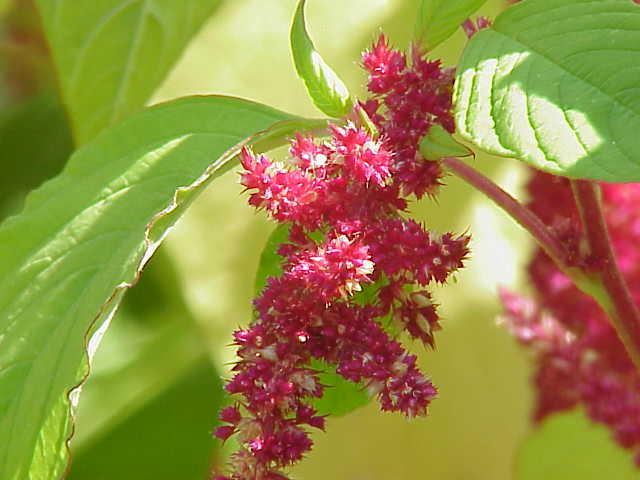 AmaranthAmaranthus
A tall, colourful plant grown for its flowers, leaves and edible seeds
🇲🇽 Mexico and 7 more · Wildflower
AmaranthAmaranthus
A tall, colourful plant grown for its flowers, leaves and edible seeds
🇲🇽 Mexico and 7 more · Wildflower
 Passion fruitPassiflora edulis
A tropical vine grown for its sweet-sour, aromatic fruit
🇧🇷 Brazil and 6 more · Climber
Passion fruitPassiflora edulis
A tropical vine grown for its sweet-sour, aromatic fruit
🇧🇷 Brazil and 6 more · Climber