
Pride of India
Lagerstroemia speciosa, family Lythraceae
A tree with showy pink to purple flowers, grown across South and Southeast Asia
Pride of India is a tall, deciduous tree known for its large clusters of pink to purple flowers. Native to parts of Asia, it is widely planted in gardens and along streets for its striking blooms. Its leaves, bark, and fruit are used in traditional medicine and as tea in several countries.
- State flower of Maharashtra, India
- Flowers are used for tea in the Philippines and Japan
- Linked to Buddhist and Hindu traditions
- Young leaves eaten as vegetables in Vietnam
- Flowers bloom mainly from April to June
What does Pride of India look like?
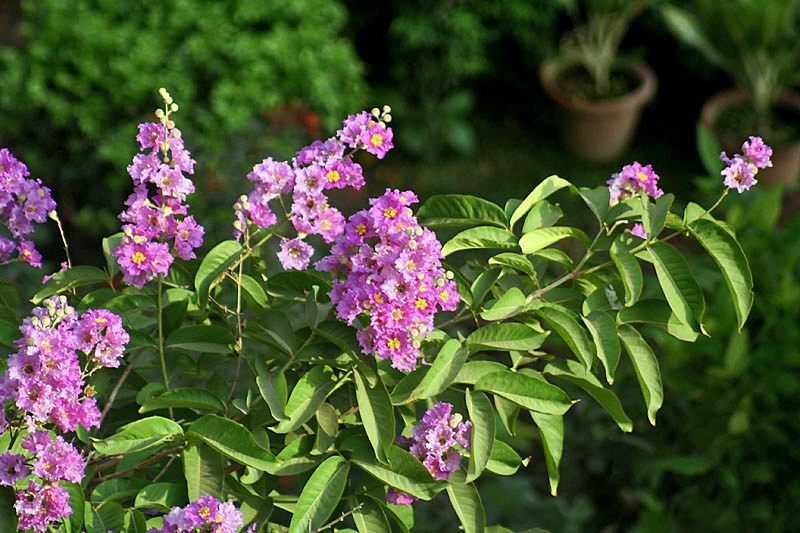
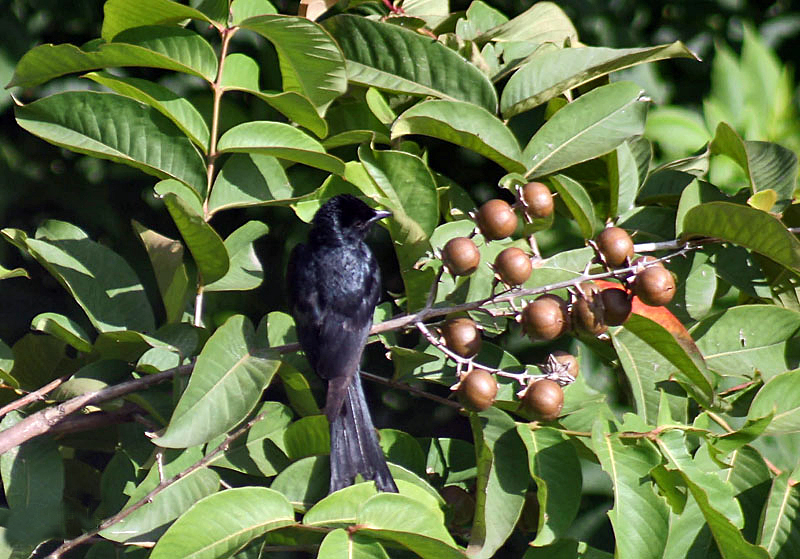
This tree grows up to 15 meters tall and forms a rounded crown. Its bark is smooth and pale, sometimes flaking. The leaves are large, oval, and fall off seasonally. The flowers appear in upright clusters, each with six petals that look crinkled, like crepe paper, and range from white to pink and purple. The fruit is a woody capsule that changes from green to brown and then black as it matures.
Where does Pride of India come from?
Pride of India is found growing wild in regions such as India, Myanmar, and southern China. It thrives in warm, humid climates with rich, moist soil, and can tolerate waterlogged ground. The tree is especially common in western and northeastern India. Over time, it has been planted widely in tropical and subtropical areas for its decorative flowers and shade.
When and how Pride of India blooms
The tree starts flowering three to five years after planting. Its main blooming period is from April to June, with a possible second flush in July and August. The fruit ripens from November to January. It grows best from seed in deep, fertile soil with plenty of moisture and warmth. The tree is often raised for ornamental use in parks and gardens.


How Pride of India is used
People plant Pride of India for its attractive flowers and as a shade tree. In the Philippines, Japan, and Taiwan, its leaves are made into tea. In Vietnam, young leaves are eaten and older leaves and fruit are used in traditional remedies. In Maharashtra, India, it is the state flower. The tree also appears in religious stories and ceremonies in Hinduism and Buddhism.
Kinds of Pride of India
There are two main subspecies: Lagerstroemia speciosa subsp. intermedia and Lagerstroemia speciosa subsp. speciosa. The tree is known by many names in different languages and regions, reflecting its wide distribution and cultural importance.
What Pride of India means
Pride of India is the state flower of Maharashtra. In Hindu tradition, it is linked to prosperity and worship of Lord Brahma. In Theravada Buddhist stories, it is said to have been the tree under which two Buddhas attained enlightenment. The tree is valued for its beauty, symbolism, and practical uses in several Asian cultures.
Questions people ask about Pride of India
Where does Pride of India come from?
It grows wild in parts of South and Southeast Asia, including India, Myanmar, and southern China, and is now widely planted in tropical and subtropical regions.
What does the tree look like?
It is a tall, deciduous tree with smooth pale bark, large oval leaves, and clusters of crepe-like pink to purple flowers.
How is Pride of India used?
People use its leaves for tea, eat the young leaves, and use other parts in traditional medicine. It is also planted for shade and decoration.
What does Pride of India symbolise?
It is the state flower of Maharashtra and is associated with prosperity in Hindu tradition. In Buddhist stories, it is linked to enlightenment.
When does it flower?
The main flowering season is from April to June, with a possible second flush in July and August.
Good reading and sources
- USDA Plants DatabaseUS Department of Agriculture, Article
- Plants of the World OnlineRoyal Botanic Gardens, Kew, Plant database
- Where it has been recordedGBIF, Plant database
- Sightings and photos by naturalistsiNaturalist, Plant database
- Lagerstroemia speciosa on WikipediaEncyclopedia
- More photos on Wikimedia CommonsPhotos
- Wikidata recordOpen data
The facts on this page come from the Wikipedia article "Lagerstroemia speciosa", written by its contributors and used under the CC BY-SA 4.0 licence, and from its Wikidata record (CC0). Phool rewrote the text in its own words, with AI assistance, and compares every page with the article to make sure no passage is copied. It may be reused under the same CC BY-SA 4.0 licence with a link back.
It may contain mistakes. It is not medical or foraging advice: many flowers are poisonous, and traditional uses are reported, not recommended. If something is wrong, tell us. Last refreshed 2026-10-03.
Others in the family Lythraceae
The whole family HennaLawsonia inermis
Shrub whose leaves yield the dye henna for skin, hair, and fabric
Lawsonia inermis · Wildflower
HennaLawsonia inermis
Shrub whose leaves yield the dye henna for skin, hair, and fabric
Lawsonia inermis · Wildflower
 Woodfordia fruticosadhavdi
A flowering shrub found from Africa to South and Southeast Asia
🇲🇲 Myanmar and 7 more · Wildflower
Woodfordia fruticosadhavdi
A flowering shrub found from Africa to South and Southeast Asia
🇲🇲 Myanmar and 7 more · Wildflower
 Purple-loosestrifeLythrum salicaria
Tall spikes of reddish-purple flowers found in wetlands and gardens
🇨🇳 China and 3 more · Wildflower
Purple-loosestrifeLythrum salicaria
Tall spikes of reddish-purple flowers found in wetlands and gardens
🇨🇳 China and 3 more · Wildflower
 Crape myrtleLagerstroemia indica
A summer-flowering tree with crinkled blooms in white, pink, purple or red
🇨🇳 China and 7 more · Flowering tree
Crape myrtleLagerstroemia indica
A summer-flowering tree with crinkled blooms in white, pink, purple or red
🇨🇳 China and 7 more · Flowering tree
More from India
All the flowers of India PeachPrunus persica
A flowering fruit tree from China, grown for its pink blossoms and sweet fruit
🇨🇳 China and 7 more · Flowering tree
PeachPrunus persica
A flowering fruit tree from China, grown for its pink blossoms and sweet fruit
🇨🇳 China and 7 more · Flowering tree
 PomegranatePunica granatum
A shrub with bright red flowers and a fruit full of edible seeds
🇮🇷 Iran and 9 more · Flowering shrub
PomegranatePunica granatum
A shrub with bright red flowers and a fruit full of edible seeds
🇮🇷 Iran and 9 more · Flowering shrub
 TulipTulipa
Spring-blooming bulbs with showy, cup-shaped flowers in many colours
🇳🇱 Netherlands and 7 more · Wildflower
TulipTulipa
Spring-blooming bulbs with showy, cup-shaped flowers in many colours
🇳🇱 Netherlands and 7 more · Wildflower
 FennelFoeniculum vulgare
A tall, aromatic herb with feathery leaves and yellow umbels, used for food and spice
🇨🇳 China and 7 more · Herb or useful flower
FennelFoeniculum vulgare
A tall, aromatic herb with feathery leaves and yellow umbels, used for food and spice
🇨🇳 China and 7 more · Herb or useful flower