
Lion's ear
Leonotis leonurus, family Lamiaceae
An orange-flowered shrub from southern Africa with tiered whorls of tubular blooms
Lion's ear is a tall, aromatic evergreen shrub in the mint family. It bears bright orange tubular flowers in stacked rings around its square stems and grows wild across southern Africa, especially in rocky grasslands.
- Flowers grow in tiered whorls around square stems, typical of the mint family
- Attracts sunbirds, bees, and butterflies; larval host for Cacyreus lingeus
- Contains leonurine and marrubiin, studied for medicinal and toxic effects
- Banned as a controlled substance in Latvia and Poland since 2009
- Naturalised in Australia, California, and Hawaii as an ornamental
What does Lion's ear look like?
Lion's ear grows up to 3 metres tall with softly woody stems and medium-dark green leaves that smell when crushed. Its most striking feature is the whorled clusters of hairy, tubular orange flowers, each about 4–5 cm long, arranged in tiers around the square stems typical of mint-family plants.
Where does Lion's ear come from?
This shrub originates in southern Africa, thriving among rocks and in grasslands from sea level to nearly 2,000 metres elevation. Though Wikidata notes Angola in its range, the plant is widespread and common across South Africa. It reached Europe in the 1600s and has since spread to other warm regions as a garden plant.
When and how Lion's ear blooms
It blooms at different times depending on location: summer (November–January) in some areas, autumn to winter (April–June) in others. The flowers rise nearly a metre above the foliage. It tolerates dry conditions and is grown as a perennial in warm climates or as an annual where winters are cold.


How Lion's ear is used
Gardeners plant it as a specimen shrub or screen for its showy flower spikes. Traditionally, infusions of its leaves, flowers, or stems treat ailments like tuberculosis, jaundice, and diarrhoea. Fresh stem juice is drunk in parts of South Africa for 'blood impurity'. It also serves as larval food for the Cacyreus lingeus butterfly.
Kinds of Lion's ear
A white-flowered form once named Leonotis leonurus var. albiflora is no longer accepted as a distinct variety. Yellow-flowered cultivars are also known to exist alongside the typical orange type.
What Lion's ear means
Known locally as 'wild dagga', with 'dagga' derived from Khoikhoi via Afrikaans, the name distinguishes it from cannabis, which shares the same colloquial term. In Latvia and Poland, it is legally controlled as a Schedule 1 drug due to its psychoactive compounds like leonurine and labdane diterpenes.
Questions people ask about Lion's ear
Where does lion's ear come from?
It is native to southern Africa, especially in rocky grasslands of the wetter eastern and southern regions, and is very common in South Africa.
What does lion's ear look like when flowering?
It produces stacked rings of orange, hairy, tubular flowers about 4–5 cm long, encircling its square stems and rising up to 0.9 m above the leaves.
Is lion's ear used in traditional medicine?
Yes, infusions of its leaves, flowers, or stems are used to treat tuberculosis, jaundice, diarrhoea, and other conditions in parts of South Africa.
Is lion's ear legal everywhere?
No. It is classified as a Schedule 1 drug in Latvia and Poland, where possession can lead to fines or imprisonment.
Does lion's ear have any ecological value?
It provides nectar for sunbirds, bees, and butterflies, and its leaves serve as food for the larvae of the Cacyreus lingeus butterfly.
Good reading and sources
- USDA Plants DatabaseUS Department of Agriculture, Article
- Plants of the World OnlineRoyal Botanic Gardens, Kew, Plant database
- Where it has been recordedGBIF, Plant database
- Sightings and photos by naturalistsiNaturalist, Plant database
- Leonotis leonurus on WikipediaEncyclopedia
- More photos on Wikimedia CommonsPhotos
- Wikidata recordOpen data
The facts on this page come from the Wikipedia article "Leonotis leonurus", written by its contributors and used under the CC BY-SA 4.0 licence, and from its Wikidata record (CC0). Phool rewrote the text in its own words, with AI assistance, and compares every page with the article to make sure no passage is copied. It may be reused under the same CC BY-SA 4.0 licence with a link back.
It may contain mistakes. It is not medical or foraging advice: many flowers are poisonous, and traditional uses are reported, not recommended. If something is wrong, tell us. Last refreshed 2026-10-03.
Others in the family Lamiaceae
The whole family RosemarySalvia rosmarinus
A fragrant evergreen shrub with needle-like leaves and purple, blue, or white flowers
🇪🇸 Spain and 5 more · Flowering shrub
RosemarySalvia rosmarinus
A fragrant evergreen shrub with needle-like leaves and purple, blue, or white flowers
🇪🇸 Spain and 5 more · Flowering shrub
 Salvia
A vast group of aromatic herbs and shrubs known for their flowers and uses
Salvia · Wildflower
Salvia
A vast group of aromatic herbs and shrubs known for their flowers and uses
Salvia · Wildflower
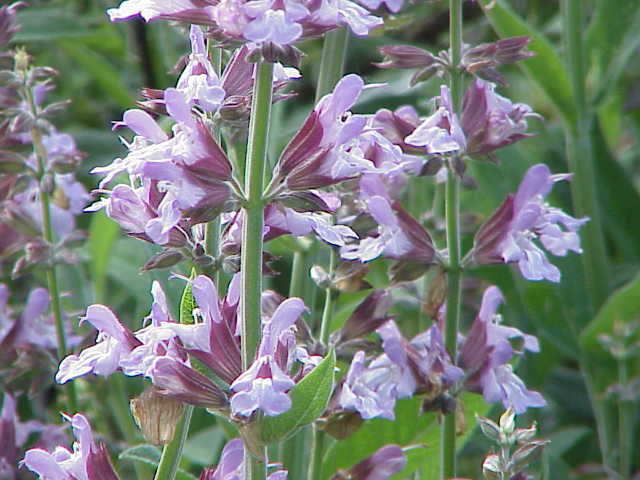 Common sageSalvia officinalis
A Mediterranean herb with grey-green leaves and blue to purple flowers
🇨🇳 China and 1 more · Herb or useful flower
Common sageSalvia officinalis
A Mediterranean herb with grey-green leaves and blue to purple flowers
🇨🇳 China and 1 more · Herb or useful flower
 Holy basilOcimum tenuiflorum
A fragrant herb central to Hindu worship and Southeast Asian cooking
🇲🇲 Myanmar and 6 more · Herb or useful flower
Holy basilOcimum tenuiflorum
A fragrant herb central to Hindu worship and Southeast Asian cooking
🇲🇲 Myanmar and 6 more · Herb or useful flower
More from South Africa
All the flowers of South Africa Eucalyptus
The tall, aromatic trees and shrubs known as gum trees or eucalypts
🇦🇺 Australia and 7 more · Flowering tree
Eucalyptus
The tall, aromatic trees and shrubs known as gum trees or eucalypts
🇦🇺 Australia and 7 more · Flowering tree
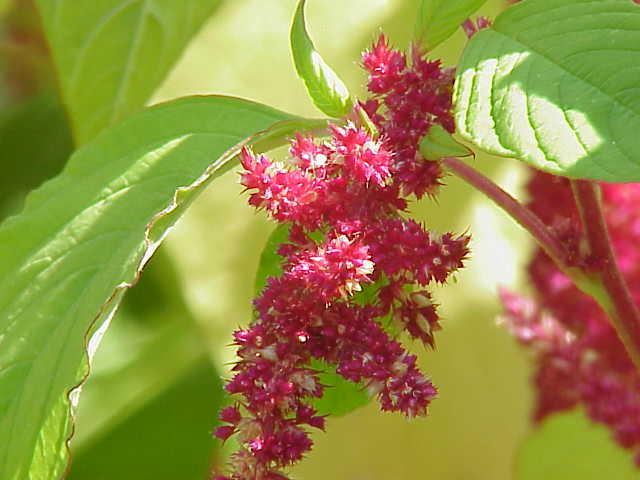 AmaranthAmaranthus
A tall, colourful plant grown for its flowers, leaves and edible seeds
🇲🇽 Mexico and 7 more · Wildflower
AmaranthAmaranthus
A tall, colourful plant grown for its flowers, leaves and edible seeds
🇲🇽 Mexico and 7 more · Wildflower
 Acacia
Shrubs and trees with golden or cream puffball flowers, native mostly to Australia
🇦🇺 Australia and 6 more · Wildflower
Acacia
Shrubs and trees with golden or cream puffball flowers, native mostly to Australia
🇦🇺 Australia and 6 more · Wildflower
 Sensitive PlantMimosa pudica
A touch-sensitive plant whose leaves fold up when disturbed
🇧🇷 Brazil and 8 more · Wildflower
Sensitive PlantMimosa pudica
A touch-sensitive plant whose leaves fold up when disturbed
🇧🇷 Brazil and 8 more · Wildflower