
Wood lily
Lilium philadelphicum, family Liliaceae
A red or orange wild lily native to North America’s prairies and forests
The wood lily (Lilium philadelphicum) is a perennial wildflower found across large parts of Canada and the United States. It grows upright, with striking red or orange flowers that bloom in summer. The plant is recognized as Saskatchewan’s floral emblem and is protected by law there.
- Official flower of Saskatchewan, Canada
- Bright red or orange flowers bloom in summer
- Endangered or threatened in several U.S. states
- Bulbs were eaten by some Native Americans
- Highly toxic to cats
What does Wood lily look like?
Wood lily is a perennial plant that stands between 30 and 90 centimeters tall. Its flowers are trumpet-shaped, facing upward, and display vivid shades of red or orange. The blooms appear singly at the top of the stem, and the petals often have darker spots near their base. The plant’s leaves are narrow and arranged in whorls along the stem.
Where does Wood lily come from?
This lily is native to North America, with a range that covers a broad sweep of Canada and parts of the United States, including the Northeast, Great Lakes, and mountain regions. It has adapted to prairies, open woods, and meadows. Over time, it became a symbol of Saskatchewan, where it is now legally protected.
When and how Wood lily blooms
Wood lily blooms in the summer months, from June to August. It grows from a bulb and prefers open, sunny places with well-drained soil. The plant can be found in wild habitats and is sometimes grown in gardens, though care is needed due to its toxicity to cats.


How Wood lily is used
The wood lily is valued as a wildflower and as an emblem. In Saskatchewan, it is the official provincial flower and is featured on the provincial flag. Some Native American groups traditionally ate the bulbs. Because it is endangered or threatened in several U.S. states, picking or disturbing wild plants is discouraged or illegal.
Kinds of Wood lily
One main variety, Lilium philadelphicum var. andinum, is found in the Midwest, Great Plains, and western regions of the United States. This variety is sometimes called the western wood lily.
What Wood lily means
The wood lily holds special status in Saskatchewan, where it is protected by law and cannot be picked or harmed. It is also listed as endangered or threatened in several U.S. states. The plant is highly toxic to cats, making it risky for households with pets.
Questions people ask about Wood lily
Where does the wood lily come from?
The wood lily is native to North America, found across much of Canada and parts of the United States, especially in prairies, open woods, and meadows.
What does the wood lily look like?
It grows 30 to 90 centimeters tall and produces upright, trumpet-shaped flowers in red or orange, often with dark spots at the base of the petals.
Is the wood lily used for anything special?
It is the official floral emblem of Saskatchewan and is protected by law there. Some Native American groups traditionally ate its bulbs.
Is the wood lily dangerous to pets?
Yes, all parts of the wood lily are extremely toxic to cats, and even small amounts can be fatal if ingested.
Are there different types of wood lily?
Yes, the variety Lilium philadelphicum var. andinum grows in the Midwest, Great Plains, and western United States.
Good reading and sources
- Encyclopaedia BritannicaArticle
- Lady Bird Johnson Wildflower CenterLady Bird Johnson Wildflower Center, Article
- USDA Plants DatabaseUS Department of Agriculture, Article
- Plants of the World OnlineRoyal Botanic Gardens, Kew, Plant database
- Where it has been recordedGBIF, Plant database
- Sightings and photos by naturalistsiNaturalist, Plant database
- Lilium philadelphicum on WikipediaEncyclopedia
- More photos on Wikimedia CommonsPhotos
- Wikidata recordOpen data
The facts on this page come from the Wikipedia article "Lilium philadelphicum", written by its contributors and used under the CC BY-SA 4.0 licence, and from its Wikidata record (CC0). Phool rewrote the text in its own words, with AI assistance, and compares every page with the article to make sure no passage is copied. It may be reused under the same CC BY-SA 4.0 licence with a link back.
It may contain mistakes. It is not medical or foraging advice: many flowers are poisonous, and traditional uses are reported, not recommended. If something is wrong, tell us. Last refreshed 2026-10-03.
Others in the family Liliaceae
The whole family LilyLilium
Tall bulb flowers with large, colourful blooms in many gardens and cultures
Lilium · Wildflower
LilyLilium
Tall bulb flowers with large, colourful blooms in many gardens and cultures
Lilium · Wildflower
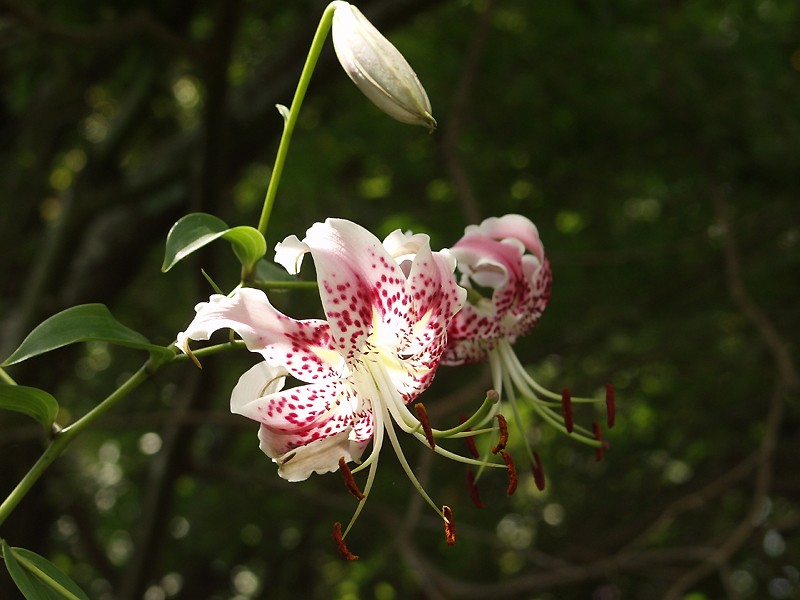 Lilium speciosum
A late-summer lily with fragrant white to pink flowers from East Asia
🇯🇵 Japan and 2 more · Wildflower
Lilium speciosum
A late-summer lily with fragrant white to pink flowers from East Asia
🇯🇵 Japan and 2 more · Wildflower
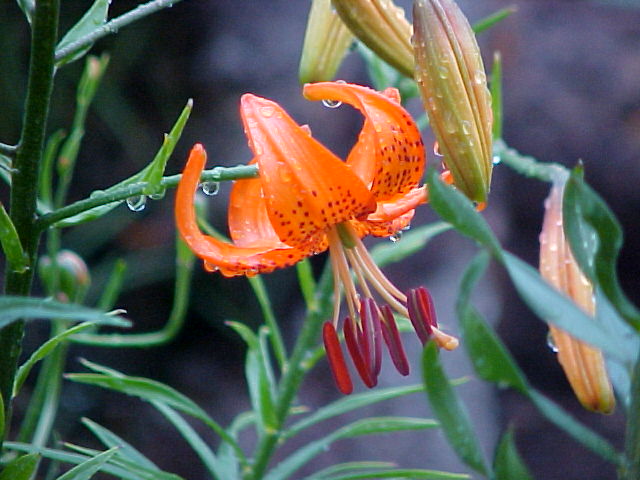 Lilium davidii
A tall Asian lily with edible bulbs and orange recurved flowers
🇨🇳 China and 1 more · Wildflower
Lilium davidii
A tall Asian lily with edible bulbs and orange recurved flowers
🇨🇳 China and 1 more · Wildflower
 Fritillaria
Bell-shaped spring flowers from the lily family grown for gardens and tradition
Fritillaria · Wildflower
Fritillaria
Bell-shaped spring flowers from the lily family grown for gardens and tradition
Fritillaria · Wildflower
More from Canada
All the flowers of Canada Common sunflowerHelianthus annuus
A tall annual plant grown for its large yellow flower heads and edible seeds
🇨🇦 Canada and 4 more · Wildflower
Common sunflowerHelianthus annuus
A tall annual plant grown for its large yellow flower heads and edible seeds
🇨🇦 Canada and 4 more · Wildflower
 BirchBetula
Slender trees with papery bark found across the northern world
🇨🇳 China and 7 more · Wildflower
BirchBetula
Slender trees with papery bark found across the northern world
🇨🇳 China and 7 more · Wildflower
 CactusCactaceae
Succulent plants with spines, native to the Americas
🇲🇽 Mexico and 7 more · Wildflower
CactusCactaceae
Succulent plants with spines, native to the Americas
🇲🇽 Mexico and 7 more · Wildflower
 TulipTulipa
Spring-blooming bulbs with showy, cup-shaped flowers in many colours
🇳🇱 Netherlands and 7 more · Wildflower
TulipTulipa
Spring-blooming bulbs with showy, cup-shaped flowers in many colours
🇳🇱 Netherlands and 7 more · Wildflower