
Marjoram
Origanum majorana, family Lamiaceae
A sweet Mediterranean culinary herb with tiny clustered white, pink, or purple blooms
Marjoram is a tender perennial herb native to Cyprus, Turkey, the Mediterranean, and Western Asia. It produces hairy oval leaves and small white, pink, red, blue, or purple flowers, widely gathered for cooking, teas, essential oil, and herbal traditions.
- Native to Cyprus, Turkey, the Mediterranean, Western Asia, and the Arabian Peninsula.
- Ancient Greeks believed the fragrant plant was created by the goddess Aphrodite.
- Features soft, hairy leaves with citrus-pine aroma and white, pink, or purple flowers.
- A key ingredient in culinary herb blends like za'atar and herbes de Provence.
What does Marjoram look like?
Marjoram is a tender perennial herb or subshrub known for its pleasant citrus and pine scent. Its stalked leaves are small and oval or oblong, measuring up to one and a half centimetres long. While the leaf margins are smooth and unbroken, a dense coating of minute hairs gives the foliage an exceptionally soft texture. Networked veins run across each blade from a tapered base to a rounded tip. The plant bears tiny blossoms gathered together on the stems. Depending on the specimen, these flowers open in shades of white, pink to red, or soft blue to purple.
Where does Marjoram come from?
The plant is indigenous to Cyprus, the Mediterranean basin, Turkey, the Arabian Peninsula, Western Asia, and the Levant. Classical Mediterranean cultures valued it highly. Ancient Greek mythology attributed the herb's creation to the goddess Aphrodite and recorded a tale in which Amaracus, a royal perfumer from Cyprus, became the plant. The physician Hippocrates utilized it as an antiseptic, and it was documented by Pedanius Dioscorides in his ancient medical compendium. During the Middle Ages, marjoram likely reached the British Isles, though widespread culinary use in the United States emerged only after World War II.
When and how Marjoram blooms
In cultivation, marjoram behaves as a cold-sensitive perennial, flourishing primarily in temperate zones seven through nine, though occasionally surviving in colder zone five climates. Because the root system and foliage spread quickly under good conditions, growers frequently cultivate it in pots to prevent it from invading neighboring garden beds. Gardeners typically harvest the leafy tops just as the flower buds begin to open, drying the cut sprigs slowly in shaded areas to preserve their aromatic oils. Distillers also process these flowering tops using steam to make an essential oil that deepens from yellow to amber-brown.


How Marjoram is used
Cooks value fresh and dried marjoram leaves to season roasted lamb, sausages, soups, vegetable stews, sauces, and dressings. It is an essential component in seasoning mixtures like za'atar and herbes de Provence, and can be brewed into herbal tea. Its distilled oil provides fragrance and flavoring. Historically, practitioners used marjoram in teas, tinctures, and poultices for digestive trouble, coughs, colds, and muscle aches. While the herb is safe for culinary amounts, sources advise that pregnant and nursing women should avoid using it for medicinal purposes.
Kinds of Marjoram
Several close relatives belong to the same genus. Wild marjoram, also called common oregano (Origanum vulgare), grows widely across southern Europe and northward into Sweden, producing stout stems, purple blossom clusters, and a sharper taste. Pot marjoram or Cretan oregano (O. onites) offers similar culinary qualities. A cold-tolerant hybrid between marjoram and oregano is known as hardy marjoram or French, Italian, or Sicilian marjoram (O. × majoricum). Another ornamental hybrid, O. × hybridum, is cultivated as showy marjoram.
What Marjoram means
Ancient Greeks and Romans revered marjoram as a symbol of joy and happiness, with Roman folklore maintaining that the herb could lengthen a person's life. In Sephardi Jewish communities, the plant has played a role in traditional ritual healing customs. The herb also appears in classical drama; in William Shakespeare's play All's Well That Ends Well, the clown Lavatch pays tribute to the character Helena by describing her as the sweet marjoram of the salad and the herb of grace.
Where Marjoram is used and seen


Questions people ask about Marjoram
Where does marjoram come from?
Marjoram grows natively across Cyprus, Turkey, the Mediterranean basin, the Levant, Western Asia, and the Arabian Peninsula. Over time, it spread throughout Europe and into wider cultivation worldwide.
What does marjoram look and smell like?
It is a tender herb with tiny, hairy oval leaves carrying sweet citrus and pine aromas. Its small flowers appear in clusters that range from white and pink to red, blue, or purple.
How is marjoram used?
People harvest the aromatic leaves for cooking meats, soups, and vegetable dishes, or for brewing teas. Steam-distilling the flowering tops yields an essential oil, and the plant has a long tradition in folk medicine.
What did marjoram symbolize in classical history?
To both the ancient Greeks and Romans, marjoram stood as a symbol of happiness. Roman tradition also held that consuming or keeping the herb could promote a longer lifespan.
Good reading and sources
- Encyclopaedia BritannicaArticle
- USDA Plants DatabaseUS Department of Agriculture, Article
- Origanum majoranaRoyal Horticultural Society, Article
- Plants of the World OnlineRoyal Botanic Gardens, Kew, Plant database
- Where it has been recordedGBIF, Plant database
- Sightings and photos by naturalistsiNaturalist, Plant database
The facts on this page come from the Wikipedia article "Marjoram", written by its contributors and used under the CC BY-SA 4.0 licence, and from its Wikidata record (CC0). EveryPhool rewrote the text in its own words, with AI assistance, and compares every page with the article to make sure no passage is copied. It may be reused under the same CC BY-SA 4.0 licence with a link back.
It may contain mistakes. It is not medical or foraging advice: many flowers are poisonous, and traditional uses are reported, not recommended. If something is wrong, tell us. Last refreshed 2026-10-04.
Others in the family Lamiaceae
The whole family RosemarySalvia rosmarinus
A fragrant evergreen shrub with needle-like leaves and purple, blue, or white flowers
🇪🇸 Spain and 5 more · Flowering shrub
RosemarySalvia rosmarinus
A fragrant evergreen shrub with needle-like leaves and purple, blue, or white flowers
🇪🇸 Spain and 5 more · Flowering shrub
 Salvia
A vast group of aromatic herbs and shrubs known for their flowers and uses
Salvia · Wildflower
Salvia
A vast group of aromatic herbs and shrubs known for their flowers and uses
Salvia · Wildflower
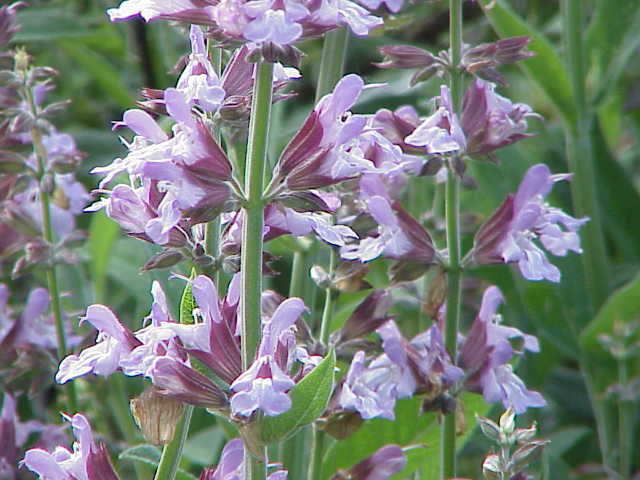 Common sageSalvia officinalis
A Mediterranean herb with grey-green leaves and blue to purple flowers
🇨🇳 China and 1 more · Herb or useful flower
Common sageSalvia officinalis
A Mediterranean herb with grey-green leaves and blue to purple flowers
🇨🇳 China and 1 more · Herb or useful flower
 Holy basilOcimum tenuiflorum
A fragrant herb central to Hindu worship and Southeast Asian cooking
🇲🇲 Myanmar and 6 more · Herb or useful flower
Holy basilOcimum tenuiflorum
A fragrant herb central to Hindu worship and Southeast Asian cooking
🇲🇲 Myanmar and 6 more · Herb or useful flower
More from Cyprus
All the flowers of Cyprus Orchis
A group of wild orchids with tuberous roots from Europe, North Africa and Asia
🇹🇷 Turkey and 7 more · Wildflower
Orchis
A group of wild orchids with tuberous roots from Europe, North Africa and Asia
🇹🇷 Turkey and 7 more · Wildflower
 Fritillaria persica
A tall bulb plant with deep purple to greenish-brown bell flowers from the Middle East
🇹🇷 Turkey and 7 more · Wildflower
Fritillaria persica
A tall bulb plant with deep purple to greenish-brown bell flowers from the Middle East
🇹🇷 Turkey and 7 more · Wildflower
 Tulipa agenensis
A wild red tulip from the eastern Mediterranean and Middle East
🇹🇷 Turkey and 6 more · Wildflower
Tulipa agenensis
A wild red tulip from the eastern Mediterranean and Middle East
🇹🇷 Turkey and 6 more · Wildflower
 Cyclamen cyprium
A tuberous wildflower with heart-shaped leaves, native to the mountains of Cyprus
🇨🇾 Cyprus · Wildflower
Cyclamen cyprium
A tuberous wildflower with heart-shaped leaves, native to the mountains of Cyprus
🇨🇾 Cyprus · Wildflower