Bells of Ireland
Moluccella laevis, family Lamiaceae
Tall green spikes with bell-shaped calyces, grown for fresh and dried arrangements
Bells of Ireland is a fast-growing annual from Turkey, Syria and the Caucasus, valued for its tall spikes lined with apple-green, bell-like calyces. The plant reaches about 1 metre, with pale green leaves and tiny white flowers, and is often used in both fresh and dried floral displays.
- Tall spikes with apple-green, bell-shaped calyces
- Native to Turkey, Syria, and the Caucasus
- Used in both fresh and dried flower arrangements
- Fast-growing annual, up to 1 metre tall
What does Bells of Ireland look like?
Bells of Ireland is an upright, branching annual that can grow up to 1 metre tall and about 30 centimeters wide. Its most striking feature is the long spikes covered in apple-green, bell-shaped calyces, which surround tiny white flowers. The leaves are rounded and pale green. The plant belongs to the mint family and is often grown for its unusual, persistent green calyces, which make it popular in floral arrangements.
Where does Bells of Ireland come from?
Native to Turkey, Syria, and the Caucasus, Bells of Ireland has been cultivated in gardens for its decorative value. Despite its common name, it is not from Ireland. The plant has spread to other regions as a garden ornamental and is now grown in places like the United States and Israel. Its scientific name is Moluccella laevis, and it is a member of the mint family (Lamiaceae).
When and how Bells of Ireland blooms
Bells of Ireland blooms in summer and grows quickly from seed. It prefers full sun and regular watering, but does not thrive in hot, humid climates. The plant is self-seeding, meaning it can return in the same spot year after year if conditions are right. Gardeners often cut the flowering stems for use in fresh or dried arrangements, taking advantage of the persistent green calyces.
How Bells of Ireland is used
The tall, green spikes of Bells of Ireland are popular in both fresh and dried flower arrangements, making them a favorite for home decoration and gifts. Florists value the plant for its unique color and shape, which add height and texture to bouquets. The plant is not noted for fragrance or traditional ceremonial use in the sources.
Kinds of Bells of Ireland
There are no widely recognized named varieties or cultivars of Bells of Ireland mentioned in the sources. The plant is generally grown from seed and valued for its standard form with green calyces and white flowers.
What Bells of Ireland means
Although called Bells of Ireland, the plant is not native to Ireland. Its green, bell-shaped calyces have led to its association with good luck and Irish-themed decorations, but this is a matter of appearance rather than tradition. It is mainly appreciated for its ornamental qualities in gardens and floral design.
Where Bells of Ireland is used and seen

Questions people ask about Bells of Ireland
Where does Bells of Ireland come from?
Bells of Ireland is native to Turkey, Syria, and the Caucasus, though it is widely grown elsewhere as a garden plant.
What does the flower look like?
It has tall, upright spikes lined with apple-green, bell-shaped calyces that surround small white flowers, and rounded pale green leaves.
How is Bells of Ireland used?
The plant is mainly grown for its decorative spikes, which are popular in both fresh and dried floral arrangements for home and gifts.
Is Bells of Ireland really from Ireland?
Despite the name, Bells of Ireland is not native to Ireland. Its green color and bell shapes have led to the association.
Does Bells of Ireland have any special meaning?
The sources do not mention traditional symbolic meanings, though its green color is sometimes linked to good luck in modern floral design.
Good reading and sources
- Encyclopaedia BritannicaArticle
- USDA Plants DatabaseUS Department of Agriculture, Article
- Moluccella laevisRoyal Horticultural Society, Article
- Plants of the World OnlineRoyal Botanic Gardens, Kew, Plant database
- Where it has been recordedGBIF, Plant database
- Sightings and photos by naturalistsiNaturalist, Plant database
- Moluccella laevis on WikipediaEncyclopedia
- More photos on Wikimedia CommonsPhotos
- Wikidata recordOpen data
The facts on this page come from the Wikipedia article "Moluccella laevis", written by its contributors and used under the CC BY-SA 4.0 licence, and from its Wikidata record (CC0). Phool rewrote the text in its own words, with AI assistance, and compares every page with the article to make sure no passage is copied. It may be reused under the same CC BY-SA 4.0 licence with a link back.
It may contain mistakes. It is not medical or foraging advice: many flowers are poisonous, and traditional uses are reported, not recommended. If something is wrong, tell us. Last refreshed 2026-10-03.
Others in the family Lamiaceae
The whole family RosemarySalvia rosmarinus
A fragrant evergreen shrub with needle-like leaves and purple, blue, or white flowers
🇪🇸 Spain and 5 more · Flowering shrub
RosemarySalvia rosmarinus
A fragrant evergreen shrub with needle-like leaves and purple, blue, or white flowers
🇪🇸 Spain and 5 more · Flowering shrub
 Salvia
A vast group of aromatic herbs and shrubs known for their flowers and uses
Salvia · Wildflower
Salvia
A vast group of aromatic herbs and shrubs known for their flowers and uses
Salvia · Wildflower
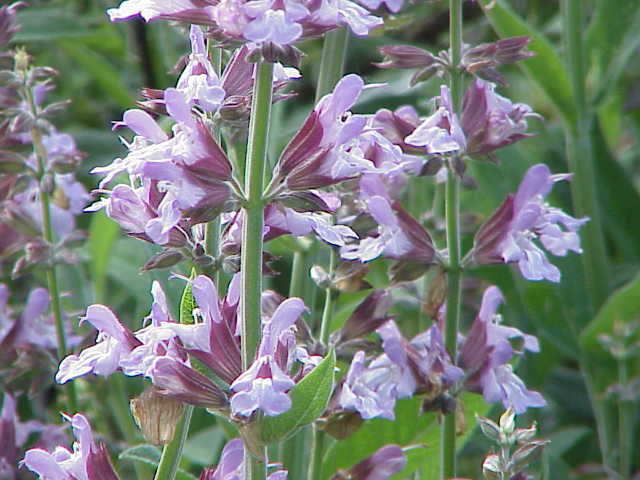 Common sageSalvia officinalis
A Mediterranean herb with grey-green leaves and blue to purple flowers
🇨🇳 China and 1 more · Herb or useful flower
Common sageSalvia officinalis
A Mediterranean herb with grey-green leaves and blue to purple flowers
🇨🇳 China and 1 more · Herb or useful flower
 Holy basilOcimum tenuiflorum
A fragrant herb central to Hindu worship and Southeast Asian cooking
🇲🇲 Myanmar and 6 more · Herb or useful flower
Holy basilOcimum tenuiflorum
A fragrant herb central to Hindu worship and Southeast Asian cooking
🇲🇲 Myanmar and 6 more · Herb or useful flower
More from Turkey
All the flowers of Turkey PeachPrunus persica
A flowering fruit tree from China, grown for its pink blossoms and sweet fruit
🇨🇳 China and 7 more · Flowering tree
PeachPrunus persica
A flowering fruit tree from China, grown for its pink blossoms and sweet fruit
🇨🇳 China and 7 more · Flowering tree
 PomegranatePunica granatum
A shrub with bright red flowers and a fruit full of edible seeds
🇮🇷 Iran and 9 more · Flowering shrub
PomegranatePunica granatum
A shrub with bright red flowers and a fruit full of edible seeds
🇮🇷 Iran and 9 more · Flowering shrub
 TulipTulipa
Spring-blooming bulbs with showy, cup-shaped flowers in many colours
🇳🇱 Netherlands and 7 more · Wildflower
TulipTulipa
Spring-blooming bulbs with showy, cup-shaped flowers in many colours
🇳🇱 Netherlands and 7 more · Wildflower
 Sour cherryPrunus cerasus
The small, tart cherry tree grown for its sour red fruit
🇹🇷 Turkey and 7 more · Flowering tree
Sour cherryPrunus cerasus
The small, tart cherry tree grown for its sour red fruit
🇹🇷 Turkey and 7 more · Flowering tree