
Early Purple Orchid
Orchis mascula, family Orchidaceae
A wild orchid with purple flowers found across Europe, North Africa, and the Middle East
The Early Purple Orchid is a perennial wildflower with dense spikes of pinkish-purple to purple blooms. It grows in meadows, woods, and pastures from Europe to Iran, and its tubers have been used to make a flour called salep. The plant is linked to legends and old folk names.
- Blooms in spring with dense spikes of purple flowers
- Grows wild from Europe to Iran, in meadows and woods
- Tubers used to make the traditional flour salep
- Linked to Shakespeare and folk legends
- Forms a partnership with soil fungi to grow
What does Early Purple Orchid look like?
The Early Purple Orchid is a herbaceous perennial that grows up to 60 cm tall. Its stem is green at the base and turns purple towards the top. The plant has two rounded or ellipsoid tubers and a rosette of oblong, sometimes speckled leaves at the base. The flower spike holds 6 to 20 small, pinkish-purple to purple flowers, each about 2.5 cm wide. The flowers have three lobes with wavy edges and spotted bases, and the whole spike forms a dense, upright cluster.
Where does Early Purple Orchid come from?
This orchid is native to a wide area stretching from Portugal and Ireland through much of Europe, across North Africa, and into the Middle East as far as Iran. It grows in open meadows, mountain pastures, and woodlands, from sea level up to 2,500 metres. The name 'mascula' comes from Latin, meaning 'male,' possibly referring to the robust look of the plant or the shape of its tubers. It is one of several species in the genus Orchis.
When and how Early Purple Orchid blooms
The Early Purple Orchid blooms in spring, from April to June. It grows from two underground tubers and forms a partnership with fungi in the soil. The plant thrives in a range of habitats, from sunny meadows to shady woods, and can be found at various altitudes. It is usually found growing wild rather than cultivated in gardens.


How Early Purple Orchid is used
The tubers of Orchis mascula and related orchids have been ground to make a flour called salep, which contains a starchy substance called glucomannan. This flour has been used in traditional drinks and foods in some regions. The plant is not known for use in gardens or as a cut flower, but it has a place in folk traditions and legends.
Kinds of Early Purple Orchid
There are several recognized subspecies of Orchis mascula, including subsp. ichnusae, laxifloriformis, mascula, scopulorum, and speciosa. These subspecies differ in their distribution and some features of their flowers or growth.
What Early Purple Orchid means
Orchis mascula is sometimes linked to the 'long purples' mentioned in Shakespeare's Hamlet, though this identification is debated. Folk names for the plant often refer to its tubers, which resemble testicles. A legend connects the plant to the Garden of Gethsemane, saying its leaf spots are drops of Christ's blood. The orchid is not a national emblem but is part of local folklore.
Questions people ask about Early Purple Orchid
Where does the Early Purple Orchid come from?
It is native to a wide area from western Europe, including Ireland and Portugal, across much of Europe, North Africa, and into the Middle East as far as Iran.
What does the Early Purple Orchid look like?
It has a tall stem, up to 60 cm, with a cluster of pinkish-purple to purple flowers in a dense spike. The leaves are pale green and sometimes speckled.
How has the Early Purple Orchid been used?
The tubers have been ground to make a flour called salep, used in traditional foods and drinks in some regions.
What does the Early Purple Orchid symbolise?
It is connected to legends, including one about the Garden of Gethsemane, and is sometimes linked to Shakespeare's 'long purples,' but it is not a national emblem.
When does the Early Purple Orchid flower?
It blooms in spring, usually from April to June.
Good reading and sources
- Encyclopaedia BritannicaArticle
- Orchis masculaRoyal Horticultural Society, Article
- Plants of the World OnlineRoyal Botanic Gardens, Kew, Plant database
- Where it has been recordedGBIF, Plant database
- Sightings and photos by naturalistsiNaturalist, Plant database
- Orchis mascula on WikipediaEncyclopedia
- More photos on Wikimedia CommonsPhotos
- Wikidata recordOpen data
The facts on this page come from the Wikipedia article "Orchis mascula", written by its contributors and used under the CC BY-SA 4.0 licence, and from its Wikidata record (CC0). Phool rewrote the text in its own words, with AI assistance, and compares every page with the article to make sure no passage is copied. It may be reused under the same CC BY-SA 4.0 licence with a link back.
It may contain mistakes. It is not medical or foraging advice: many flowers are poisonous, and traditional uses are reported, not recommended. If something is wrong, tell us. Last refreshed 2026-10-03.
Others in the family Orchidaceae
The whole family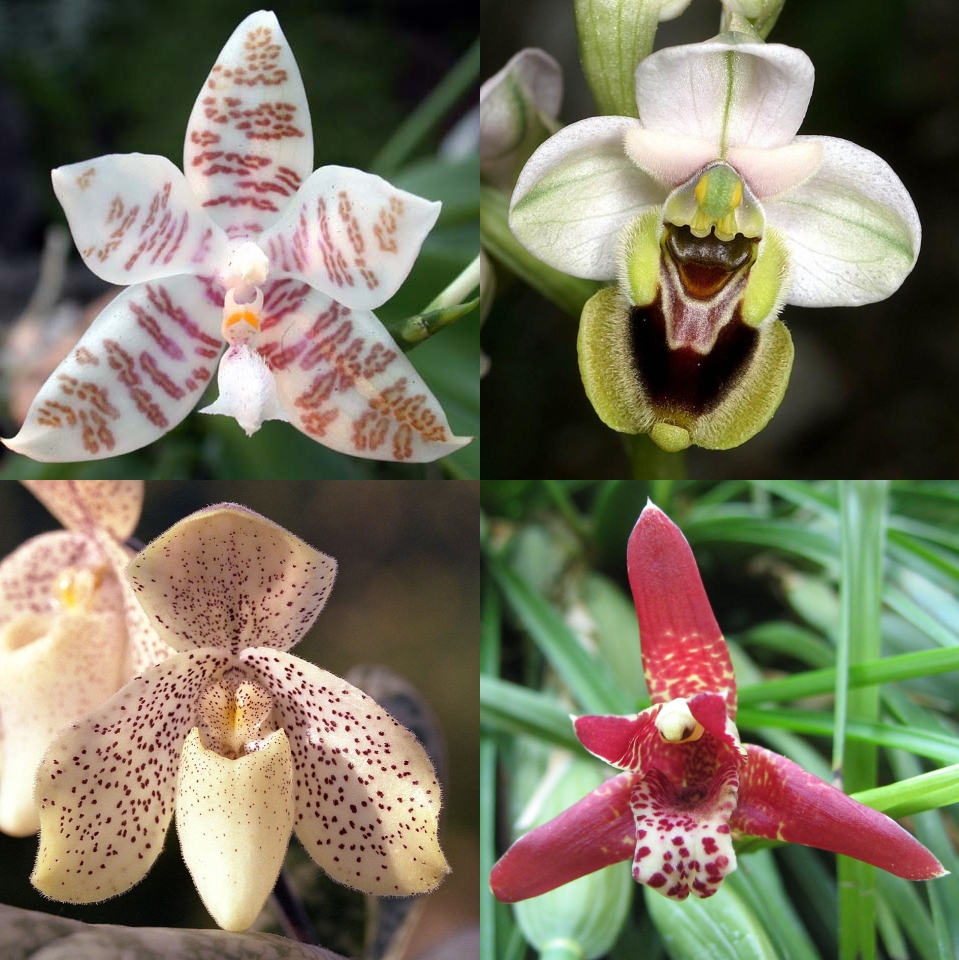 OrchidOrchidaceae
A vast family of colourful, often fragrant flowers found almost everywhere on earth
Orchidaceae · Wildflower
OrchidOrchidaceae
A vast family of colourful, often fragrant flowers found almost everywhere on earth
Orchidaceae · Wildflower
 Vanilla
Climbing orchids with pods used for the world’s most popular flavor
🇲🇽 Mexico and 7 more · Wildflower
Vanilla
Climbing orchids with pods used for the world’s most popular flavor
🇲🇽 Mexico and 7 more · Wildflower
 Orchis
A group of wild orchids with tuberous roots from Europe, North Africa and Asia
🇹🇷 Turkey and 7 more · Wildflower
Orchis
A group of wild orchids with tuberous roots from Europe, North Africa and Asia
🇹🇷 Turkey and 7 more · Wildflower
 Pansy orchidMiltoniopsis
An orchid with flowers that resemble garden pansies
🇨🇷 Costa Rica and 5 more · Orchid
Pansy orchidMiltoniopsis
An orchid with flowers that resemble garden pansies
🇨🇷 Costa Rica and 5 more · Orchid
More from Ireland
All the flowers of Ireland Common flaxLinum usitatissimum
The slender blue-flowered plant grown for linen and linseed
🇨🇳 China and 7 more · Wildflower
Common flaxLinum usitatissimum
The slender blue-flowered plant grown for linen and linseed
🇨🇳 China and 7 more · Wildflower
 HawthornCrataegus
A thorny shrub or tree with white or pink spring flowers and small edible fruits
🇮🇪 Ireland and 7 more · Wildflower
HawthornCrataegus
A thorny shrub or tree with white or pink spring flowers and small edible fruits
🇮🇪 Ireland and 7 more · Wildflower
 Lily-of-the-valleyConvallaria majalis
A woodland plant with sweet-scented white bell flowers in late spring
🇫🇮 Finland and 4 more · Wildflower
Lily-of-the-valleyConvallaria majalis
A woodland plant with sweet-scented white bell flowers in late spring
🇫🇮 Finland and 4 more · Wildflower
 RapeseedBrassica napus
A yellow-flowered crop grown for its oil-rich seeds and protein meal
🇨🇳 China and 7 more · Wildflower
RapeseedBrassica napus
A yellow-flowered crop grown for its oil-rich seeds and protein meal
🇨🇳 China and 7 more · Wildflower