Fowlie's Paphiopedilum
Paphiopedilum fowliei, family Orchidaceae
A rare slipper orchid found only in Palawan’s moist lowland forests
Fowlie's Paphiopedilum is a small orchid native to the southeast forests of Palawan, Philippines. It grows on limestone with blue-gray, patterned leaves and produces a single veined flower, but is now critically endangered due to habitat loss.
- Endemic to southeast Palawan in the Philippines
- Single flower with green and purple-veined, warty petals
- Critically endangered due to habitat loss
- Grows on limestone with patterned blue-gray leaves
What does Fowlie's Paphiopedilum look like?
This orchid grows up to 20 cm tall and has leaves about 10–14 cm long, marked with blue-gray and faint, chessboard-like patterns on top and pale green underneath. Its flower stalk reaches 25 cm and holds a single bloom. The petals show green and purple veins, curve in an S-shape, and have black bumps along their edges.
Where does Fowlie's Paphiopedilum come from?
Fowlie's Paphiopedilum is found only in the forests of southeast Palawan, an island in the Philippines. It grows in moist, lowland areas, often on limestone covered with leaf litter. The orchid is not found anywhere else in the wild, making its habitat very limited. Its name honors a person closely associated with orchid studies.
When and how Fowlie's Paphiopedilum blooms
This orchid blooms mainly from January to April, though flowers may appear at other times. It grows in humid, shaded forests at 600–950 meters above sea level, preferring bright but indirect light. The plant roots in leaf litter or debris on limestone rocks, thriving in warm temperatures and good air flow.
How Fowlie's Paphiopedilum is used
There are no records of Fowlie's Paphiopedilum being used in gardens, ceremonies, or for any practical purpose. Its main significance comes from its rarity and its place in the wild flora of Palawan. The plant is mainly of interest to botanists and orchid enthusiasts.
Kinds of Fowlie's Paphiopedilum
Paphiopedilum fowliei is a single species with no widely recognized varieties. Other orchids in the Paphiopedilum genus grow in Southeast Asia, but this species is unique to Palawan. Another orchid, Paphiopedilum jackii, also carries the name of the same person.
What Fowlie's Paphiopedilum means
The orchid is critically endangered, with its only known population on Palawan. The island is a protected area, but habitat loss remains a threat. Its rarity makes it important for conservation efforts, and it is valued by collectors and researchers for its distinct appearance and limited range.
Questions people ask about Fowlie's Paphiopedilum
Where does Fowlie's Paphiopedilum come from?
This orchid is native only to the southeast part of Palawan Island in the Philippines, where it grows in moist lowland forests on limestone.
What does the flower look like?
It has a single flower on a tall stalk, with petals marked by green and purple veins, curved in an S-shape, and edged with black bumps. The leaves are blue-gray with faint patterns.
When does it bloom?
Fowlie's Paphiopedilum usually flowers between January and April, though it can sometimes bloom at other times of the year.
Is this orchid endangered?
Yes, it is critically endangered and only found in one location on Palawan. Its habitat is threatened by loss and disturbance.
Does it have any special meaning or use?
There are no traditional uses or symbolic meanings recorded for this orchid. Its importance comes from its rarity and conservation status.
Good reading and sources
- IUCN Red List of Threatened SpeciesIUCN Red List, Article
- Plants of the World OnlineRoyal Botanic Gardens, Kew, Plant database
- Where it has been recordedGBIF, Plant database
- Sightings and photos by naturalistsiNaturalist, Plant database
- Paphiopedilum fowliei on WikipediaEncyclopedia
- More photos on Wikimedia CommonsPhotos
- Wikidata recordOpen data
The facts on this page come from the Wikipedia article "Paphiopedilum fowliei", written by its contributors and used under the CC BY-SA 4.0 licence, and from its Wikidata record (CC0). Phool rewrote the text in its own words, with AI assistance, and compares every page with the article to make sure no passage is copied. It may be reused under the same CC BY-SA 4.0 licence with a link back.
It may contain mistakes. It is not medical or foraging advice: many flowers are poisonous, and traditional uses are reported, not recommended. If something is wrong, tell us. Last refreshed 2026-10-03.
Others in the family Orchidaceae
The whole family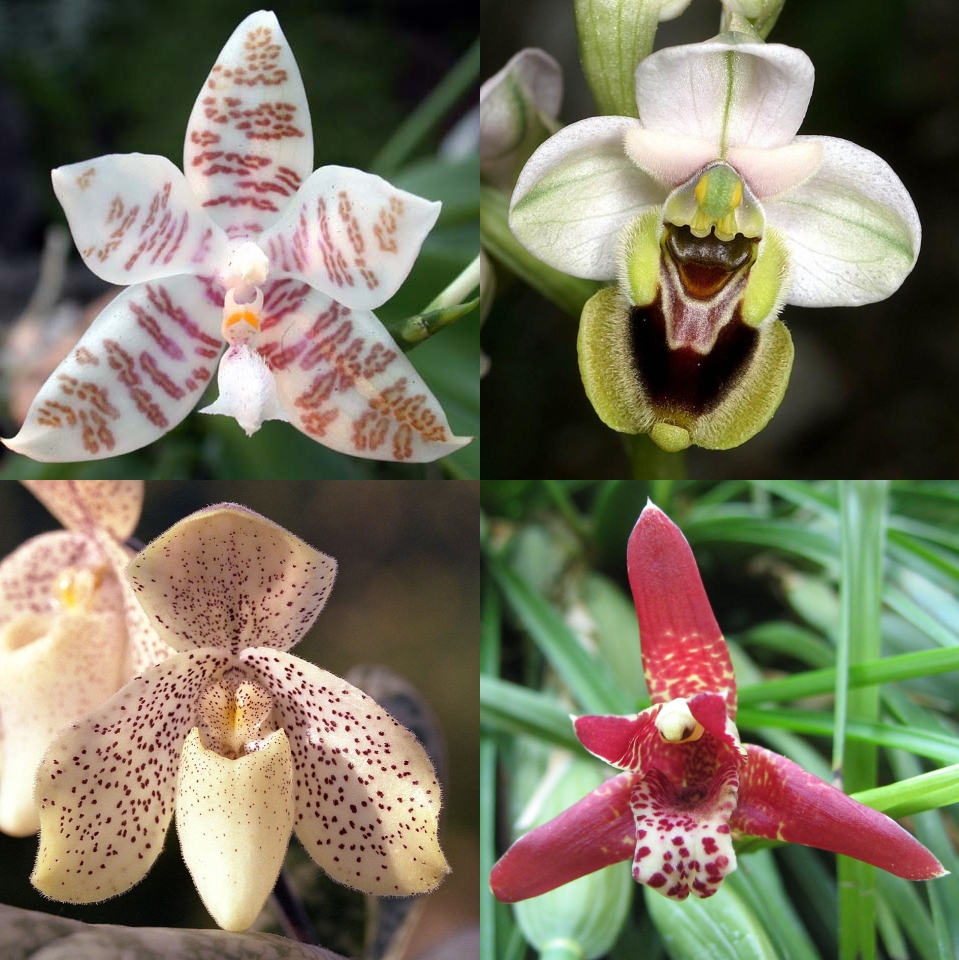 OrchidOrchidaceae
A vast family of colourful, often fragrant flowers found almost everywhere on earth
Orchidaceae · Wildflower
OrchidOrchidaceae
A vast family of colourful, often fragrant flowers found almost everywhere on earth
Orchidaceae · Wildflower
 Vanilla
Climbing orchids with pods used for the world’s most popular flavor
🇲🇽 Mexico and 7 more · Wildflower
Vanilla
Climbing orchids with pods used for the world’s most popular flavor
🇲🇽 Mexico and 7 more · Wildflower
 Orchis
A group of wild orchids with tuberous roots from Europe, North Africa and Asia
🇹🇷 Turkey and 7 more · Wildflower
Orchis
A group of wild orchids with tuberous roots from Europe, North Africa and Asia
🇹🇷 Turkey and 7 more · Wildflower
 Waling-walingVanda sanderiana
A rare orchid known as the 'Queen of Philippine flowers'
🇵🇭 Philippines · Orchid
Waling-walingVanda sanderiana
A rare orchid known as the 'Queen of Philippine flowers'
🇵🇭 Philippines · Orchid
More from the Philippines
All the flowers of the Philippines JasmineJasminum
A group of fragrant shrubs and vines with white or yellow star-shaped flowers
🇵🇰 Pakistan and 7 more · Wildflower
JasmineJasminum
A group of fragrant shrubs and vines with white or yellow star-shaped flowers
🇵🇰 Pakistan and 7 more · Wildflower
 WaterlilyNymphaea
Floating aquatic flowers found in ponds and lakes worldwide
🇪🇬 Egypt and 7 more · Water flower
WaterlilyNymphaea
Floating aquatic flowers found in ponds and lakes worldwide
🇪🇬 Egypt and 7 more · Water flower
 AchioteBixa orellana
Shrub with spiky red pods, source of the natural dye annatto
🇧🇷 Brazil and 9 more · Flowering shrub
AchioteBixa orellana
Shrub with spiky red pods, source of the natural dye annatto
🇧🇷 Brazil and 9 more · Flowering shrub
 Pigeon orchidDendrobium crumenatum
A white, fragrant orchid that blooms all at once after rain
🇮🇳 India and 5 more · Wildflower
Pigeon orchidDendrobium crumenatum
A white, fragrant orchid that blooms all at once after rain
🇮🇳 India and 5 more · Wildflower