
Large white petunia
Petunia axillaris, family Solanaceae
The only white-flowered petunia, native to southern South America
Large white petunia is an annual herb from southern Brazil, Argentina, and Uruguay. It has white, trumpet-shaped flowers 3 to 7 cm long and is the only white-flowered member of its genus. This wild species is one parent of the common garden petunia.
- Only white-flowered species in the Petunia genus
- Native to southern Brazil, Argentina, and Uruguay
- Parent of the common garden petunia
- Flowers are 3–7 cm long and trumpet-shaped
What does Large white petunia look like?
Petunia axillaris is a soft, annual herb with upright stems and green leaves. Its most striking feature is its white, trumpet-shaped flowers, which are 3 to 7 centimeters long. Unlike other petunias, it is the only species in its genus with white blooms. The plant grows low to the ground and is found in open, grassy areas.
Where does Large white petunia come from?
This species grows wild in temperate parts of South America, especially in southern Brazil, Argentina, and Uruguay. It is native to the Pampas grasslands and some highland areas near the Andes. The plant was named for its white flowers and its place in the Petunia genus. It is one of the ancestors of the widely grown garden petunia.
When and how Large white petunia blooms
Large white petunia grows as an annual, completing its life cycle in one season. It thrives in open, sunny grasslands and pampas, where it grows from seed each year. The plant is adapted to temperate climates and is found in both flat and highland regions, depending on the subspecies.
How Large white petunia is used
While not widely used in gardens itself, Petunia axillaris is important as a parent of the common garden petunia. Its white flowers contributed to the range of colors found in cultivated petunias. In the wild, it grows naturally and is not known for ceremonial or medicinal uses.
Kinds of Large white petunia
There are three subspecies: P. a. axillaris and P. a. parodii, which grow in the flat Pampas, and P. a. subandina, found in highland areas near the Andes. These subspecies differ mainly in their habitat within the plant's native range.
What Large white petunia means
Petunia axillaris is valued mainly for its role in the development of garden petunias. Its white flowers made it unique within its genus and important for breeding. The plant itself is not tied to symbolism, festivals, or religious use in its native region.
Where Large white petunia is used and seen


Questions people ask about Large white petunia
Where does the large white petunia come from?
It is native to temperate regions of South America, especially southern Brazil, Argentina, and Uruguay, where it grows wild in grasslands and some highland areas.
What does Petunia axillaris look like?
It is a low-growing annual herb with white, trumpet-shaped flowers that are 3 to 7 centimeters long. It is the only species in its genus with white blooms.
Is this plant used in gardens?
Petunia axillaris itself is not commonly grown in gardens, but it is one of the parent species of the popular garden petunia, which comes in many colors.
Are there different types of Petunia axillaris?
Yes, there are three subspecies: P. a. axillaris and P. a. parodii, found in the Pampas, and P. a. subandina, which grows in highland areas near the Andes.
Does the large white petunia have any special meaning or uses?
It is mainly valued for its role in breeding garden petunias. It is not known for symbolic or ceremonial uses.
Good reading and sources
- USDA Plants DatabaseUS Department of Agriculture, Article
- Petunia axillarisRoyal Horticultural Society, Article
- Plants of the World OnlineRoyal Botanic Gardens, Kew, Plant database
- Where it has been recordedGBIF, Plant database
- Sightings and photos by naturalistsiNaturalist, Plant database
- Petunia axillaris on WikipediaEncyclopedia
- More photos on Wikimedia CommonsPhotos
- Wikidata recordOpen data
The facts on this page come from the Wikipedia article "Petunia axillaris", written by its contributors and used under the CC BY-SA 4.0 licence, and from its Wikidata record (CC0). Phool rewrote the text in its own words, with AI assistance, and compares every page with the article to make sure no passage is copied. It may be reused under the same CC BY-SA 4.0 licence with a link back.
It may contain mistakes. It is not medical or foraging advice: many flowers are poisonous, and traditional uses are reported, not recommended. If something is wrong, tell us. Last refreshed 2026-10-03.
Others in the family Solanaceae
The whole family Thorn-appleDatura stramonium
A poisonous, night-blooming plant with trumpet-shaped white or violet flowers
🇨🇳 China and 7 more · Wildflower
Thorn-appleDatura stramonium
A poisonous, night-blooming plant with trumpet-shaped white or violet flowers
🇨🇳 China and 7 more · Wildflower
 Datura
A group of trumpet-shaped, highly toxic flowering plants in the nightshade family
🇲🇽 Mexico and 7 more · Wildflower
Datura
A group of trumpet-shaped, highly toxic flowering plants in the nightshade family
🇲🇽 Mexico and 7 more · Wildflower
 Nicotiana
The tobacco plant genus, grown for leaves and garden flowers worldwide
Nicotiana · Wildflower
Nicotiana
The tobacco plant genus, grown for leaves and garden flowers worldwide
Nicotiana · Wildflower
 Petunia
A South American garden flower with trumpet-shaped blooms in many colours
Petunia · Garden flower
Petunia
A South American garden flower with trumpet-shaped blooms in many colours
Petunia · Garden flower
More from Brazil
All the flowers of Brazil CactusCactaceae
Succulent plants with spines, native to the Americas
🇲🇽 Mexico and 7 more · Wildflower
CactusCactaceae
Succulent plants with spines, native to the Americas
🇲🇽 Mexico and 7 more · Wildflower
 Eucalyptus
The tall, aromatic trees and shrubs known as gum trees or eucalypts
🇦🇺 Australia and 7 more · Flowering tree
Eucalyptus
The tall, aromatic trees and shrubs known as gum trees or eucalypts
🇦🇺 Australia and 7 more · Flowering tree
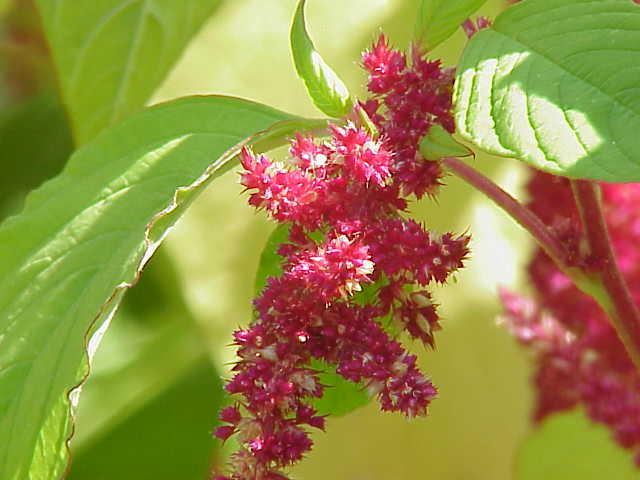 AmaranthAmaranthus
A tall, colourful plant grown for its flowers, leaves and edible seeds
🇲🇽 Mexico and 7 more · Wildflower
AmaranthAmaranthus
A tall, colourful plant grown for its flowers, leaves and edible seeds
🇲🇽 Mexico and 7 more · Wildflower
 Sensitive PlantMimosa pudica
A touch-sensitive plant whose leaves fold up when disturbed
🇧🇷 Brazil and 8 more · Wildflower
Sensitive PlantMimosa pudica
A touch-sensitive plant whose leaves fold up when disturbed
🇧🇷 Brazil and 8 more · Wildflower