
Violetflower petunia
Petunia integrifolia, family Solanaceae
A wild South American petunia with violet blooms
Violetflower petunia is a wild species of petunia bearing violet flowers about 1.5 inches across. It grows naturally in parts of Brazil, Argentina, Paraguay and Uruguay, and is smaller and more difficult to grow than common garden petunias.
- Flowers are violet and about 1.5 inches across
- Native to southern South America
- Reported as a hallucinogen in Ecuador under the name shanín
- Originally classified in the genus Salpiglossis
- Smaller and harder to grow than common garden petunias
What does Violetflower petunia look like?
This plant produces violet flowers roughly 1.5 inches wide. It is a smaller, less robust species compared to the familiar hybrid petunias used in bedding displays. Its growth habit is herbaceous, and it belongs to the nightshade family.
Where does Violetflower petunia come from?
Violetflower petunia grows wild across southern South America, especially in grasslands and forests of Brazil, Argentina, Paraguay and Uruguay. Originally named Salpiglossis integrifolia in 1831, it was later moved into the Petunia genus in 1915.
When and how Violetflower petunia blooms
As a wild species, it grows from seed in its native habitats. It does not thrive easily under cultivation, unlike modern garden petunias. The plant prefers open or lightly wooded areas in temperate to subtropical zones.

How Violetflower petunia is used
In Ecuador, where it is called shanín, the plant has been used traditionally as a hallucinogen. Users report sensations of levitation and flight, effects similar to those of certain antimuscarinic substances found in historical European preparations.
Kinds of Violetflower petunia
It was once grouped with Petunia inflata as a single species, but they are now recognized as distinct due to differences in their natural ranges. P. inflata occurs farther north than P. integrifolia.
What Violetflower petunia means
The species holds no known symbolic or ceremonial role beyond its reported use in Ecuadorian traditional practices. It is primarily noted in botanical literature for its taxonomic history and chemical properties.
Where Violetflower petunia is used and seen


Questions people ask about Violetflower petunia
Where does violetflower petunia come from?
It is native to Brazil, Argentina, Paraguay and Uruguay, growing in regions like the Pampa and Atlantic Forest.
What is it used for?
In Ecuador, it has been used as a hallucinogen called shanín, said to cause feelings of levitation and flight.
How does it differ from garden petunias?
It is a wild species that is smaller and more difficult to cultivate than the common hybrid bedding petunias.
What colour are its flowers?
The blooms are violet, giving the plant its common name violetflower petunia.
Is it related to other petunias?
Yes, it belongs to the genus Petunia and was once confused with Petunia inflata, but they have separate native ranges.
Good reading and sources
- USDA Plants DatabaseUS Department of Agriculture, Article
- Plants of the World OnlineRoyal Botanic Gardens, Kew, Plant database
- Where it has been recordedGBIF, Plant database
- Sightings and photos by naturalistsiNaturalist, Plant database
- Petunia integrifolia on WikipediaEncyclopedia
- More photos on Wikimedia CommonsPhotos
- Wikidata recordOpen data
The facts on this page come from the Wikipedia article "Petunia integrifolia", written by its contributors and used under the CC BY-SA 4.0 licence, and from its Wikidata record (CC0). Phool rewrote the text in its own words, with AI assistance, and compares every page with the article to make sure no passage is copied. It may be reused under the same CC BY-SA 4.0 licence with a link back.
It may contain mistakes. It is not medical or foraging advice: many flowers are poisonous, and traditional uses are reported, not recommended. If something is wrong, tell us. Last refreshed 2026-10-03.
Others in the family Solanaceae
The whole family Thorn-appleDatura stramonium
A poisonous, night-blooming plant with trumpet-shaped white or violet flowers
🇨🇳 China and 7 more · Wildflower
Thorn-appleDatura stramonium
A poisonous, night-blooming plant with trumpet-shaped white or violet flowers
🇨🇳 China and 7 more · Wildflower
 Datura
A group of trumpet-shaped, highly toxic flowering plants in the nightshade family
🇲🇽 Mexico and 7 more · Wildflower
Datura
A group of trumpet-shaped, highly toxic flowering plants in the nightshade family
🇲🇽 Mexico and 7 more · Wildflower
 Nicotiana
The tobacco plant genus, grown for leaves and garden flowers worldwide
Nicotiana · Wildflower
Nicotiana
The tobacco plant genus, grown for leaves and garden flowers worldwide
Nicotiana · Wildflower
 Petunia
A South American garden flower with trumpet-shaped blooms in many colours
Petunia · Garden flower
Petunia
A South American garden flower with trumpet-shaped blooms in many colours
Petunia · Garden flower
More from Argentina
All the flowers of Argentina CactusCactaceae
Succulent plants with spines, native to the Americas
🇲🇽 Mexico and 7 more · Wildflower
CactusCactaceae
Succulent plants with spines, native to the Americas
🇲🇽 Mexico and 7 more · Wildflower
 Eucalyptus
The tall, aromatic trees and shrubs known as gum trees or eucalypts
🇦🇺 Australia and 7 more · Flowering tree
Eucalyptus
The tall, aromatic trees and shrubs known as gum trees or eucalypts
🇦🇺 Australia and 7 more · Flowering tree
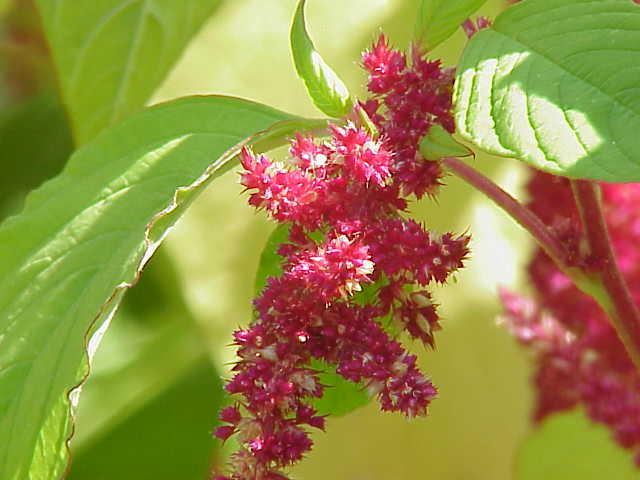 AmaranthAmaranthus
A tall, colourful plant grown for its flowers, leaves and edible seeds
🇲🇽 Mexico and 7 more · Wildflower
AmaranthAmaranthus
A tall, colourful plant grown for its flowers, leaves and edible seeds
🇲🇽 Mexico and 7 more · Wildflower
 BromeliadsBromeliaceae
A family of tropical flowering plants from the Americas, including the pineapple
🇨🇱 Chile and 7 more · Wildflower
BromeliadsBromeliaceae
A family of tropical flowering plants from the Americas, including the pineapple
🇨🇱 Chile and 7 more · Wildflower