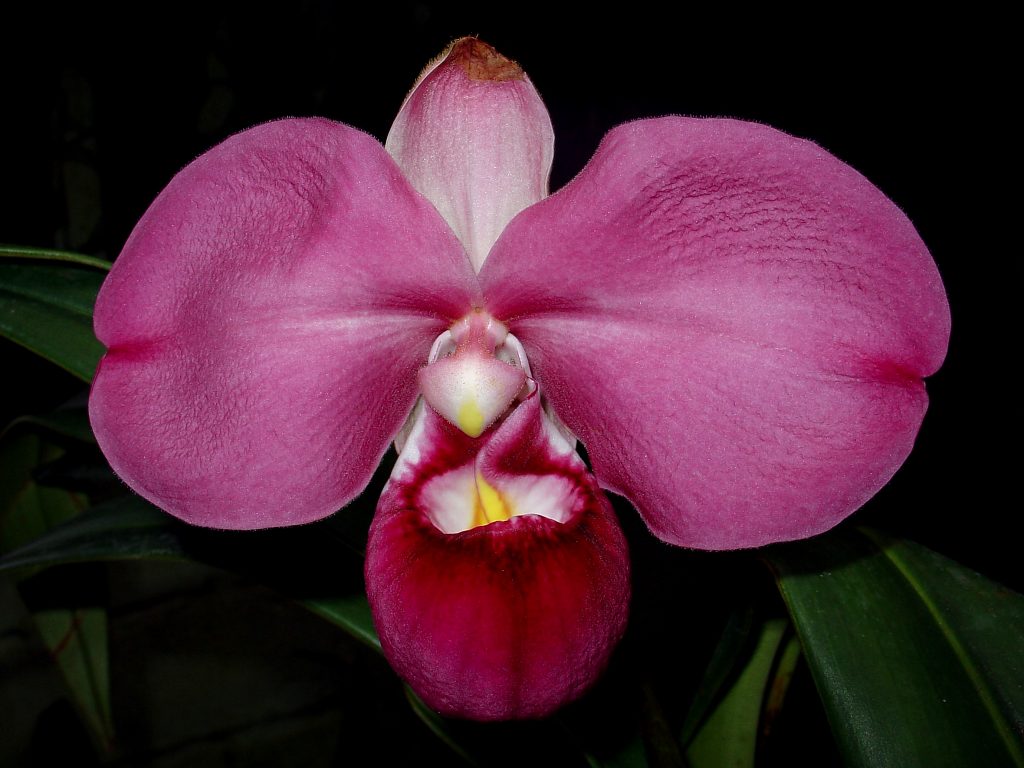
Kovach's Phragmipedium
Phragmipedium kovachii, family Orchidaceae
A large pink-and-purple orchid from Peruvian cloud forests
This terrestrial orchid forms clumps and bears solitary, showy flowers up to 20 cm wide in shades of pink to deep purple. It grows only on limestone cliffs in a small part of northern Peru and is critically endangered due to illegal collection.
- Flowers can reach 20 cm across, among the largest in its genus
- Grows only on limestone cliffs in two Peruvian regions
- Named after Michael Kovach, who smuggled the first specimen
- Listed as critically endangered by the IUCN
- Protected under CITES Appendix I
What does Kovach's Phragmipedium look like?
Kovach's Phragmipedium grows in tight groups with glossy green leaves up to 64 cm long. Each plant sends up a tall stalk bearing one large flower. The petals range from pink to dark purple, while the lip is cup-shaped and vivid fuchsia. Sepals are rose-pink inside and covered in golden-brown hairs outside.
Where does Kovach's Phragmipedium come from?
Scientists first described this orchid in 2002 after it was brought illegally from Peru to a U.S. botanical garden. Though another botanist prepared a separate description using the name Phragmipedium peruvianum, the earlier published name kovachii has priority. It was later placed in its own subgenus, Schluckebieria.
When and how Kovach's Phragmipedium blooms
It grows on south-facing limestone cliffs in montane forests between 1600 and 2000 metres elevation. The soil is rich in calcium carbonate, slightly alkaline, and constantly moist from rainfall. Clumps typically contain 15 to 20 individual plants rooted in organic matter on rock faces.


What Kovach's Phragmipedium means
The species gained notoriety when its type specimen was smuggled into the United States, leading to legal penalties for both the collector and the botanical garden involved. Despite CITES protection, thousands of wild plants were removed after its scientific announcement, pushing it toward extinction in nature.
Questions people ask about Kovach's Phragmipedium
Where does Phragmipedium kovachii come from?
It is found only in a small area of northern Peru, specifically in the Amazonas and San Martín regions, growing on limestone cliffs in cloud forest.
Why is it critically endangered?
Overcollection after its scientific description led to the depletion of several wild populations. An estimated 5,000 or more plants were taken from the wild illegally.
What do the flowers look like?
Each plant produces one large flower up to 20 cm wide, with pink to purple petals and a fuchsia, cup-shaped lip. The sepals are rose-pink inside and hairy outside.
Is it legal to trade this orchid?
It is listed in CITES Appendix I, making international commercial trade illegal. Peru now licenses nurseries to propagate it legally to reduce wild harvesting.
Good reading and sources
- IUCN Red List of Threatened SpeciesIUCN Red List, Article
- Plants of the World OnlineRoyal Botanic Gardens, Kew, Plant database
- Where it has been recordedGBIF, Plant database
- Sightings and photos by naturalistsiNaturalist, Plant database
- Phragmipedium kovachii on WikipediaEncyclopedia
- More photos on Wikimedia CommonsPhotos
- Wikidata recordOpen data
The facts on this page come from the Wikipedia article "Phragmipedium kovachii", written by its contributors and used under the CC BY-SA 4.0 licence, and from its Wikidata record (CC0). Phool rewrote the text in its own words, with AI assistance, and compares every page with the article to make sure no passage is copied. It may be reused under the same CC BY-SA 4.0 licence with a link back.
It may contain mistakes. It is not medical or foraging advice: many flowers are poisonous, and traditional uses are reported, not recommended. If something is wrong, tell us. Last refreshed 2026-10-03.
Others in the family Orchidaceae
The whole family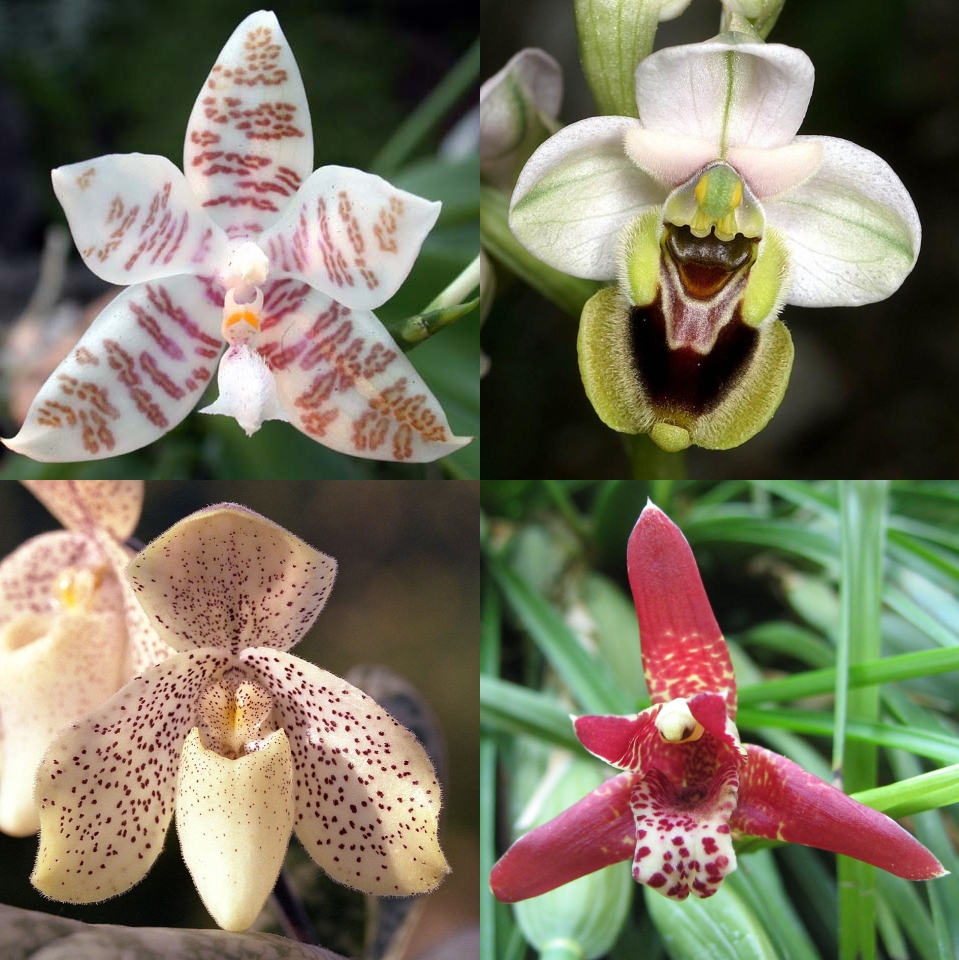 OrchidOrchidaceae
A vast family of colourful, often fragrant flowers found almost everywhere on earth
Orchidaceae · Wildflower
OrchidOrchidaceae
A vast family of colourful, often fragrant flowers found almost everywhere on earth
Orchidaceae · Wildflower
 Vanilla
Climbing orchids with pods used for the world’s most popular flavor
🇲🇽 Mexico and 7 more · Wildflower
Vanilla
Climbing orchids with pods used for the world’s most popular flavor
🇲🇽 Mexico and 7 more · Wildflower
 Orchis
A group of wild orchids with tuberous roots from Europe, North Africa and Asia
🇹🇷 Turkey and 7 more · Wildflower
Orchis
A group of wild orchids with tuberous roots from Europe, North Africa and Asia
🇹🇷 Turkey and 7 more · Wildflower
 Pansy orchidMiltoniopsis
An orchid with flowers that resemble garden pansies
🇨🇷 Costa Rica and 5 more · Orchid
Pansy orchidMiltoniopsis
An orchid with flowers that resemble garden pansies
🇨🇷 Costa Rica and 5 more · Orchid
More from Peru
All the flowers of Peru CactusCactaceae
Succulent plants with spines, native to the Americas
🇲🇽 Mexico and 7 more · Wildflower
CactusCactaceae
Succulent plants with spines, native to the Americas
🇲🇽 Mexico and 7 more · Wildflower
 Thorn-appleDatura stramonium
A poisonous, night-blooming plant with trumpet-shaped white or violet flowers
🇨🇳 China and 7 more · Wildflower
Thorn-appleDatura stramonium
A poisonous, night-blooming plant with trumpet-shaped white or violet flowers
🇨🇳 China and 7 more · Wildflower
 PoinsettiaEuphorbia pulcherrima
The red-bracted shrub of Christmas displays, native to Mexico and Central America
🇲🇽 Mexico and 8 more · Wildflower
PoinsettiaEuphorbia pulcherrima
The red-bracted shrub of Christmas displays, native to Mexico and Central America
🇲🇽 Mexico and 8 more · Wildflower
 MarigoldTagetes
A group of bright annual and perennial flowers known worldwide as marigolds
🇲🇽 Mexico and 7 more · Wildflower
MarigoldTagetes
A group of bright annual and perennial flowers known worldwide as marigolds
🇲🇽 Mexico and 7 more · Wildflower