
Rose moss
Portulaca grandiflora, family Portulacaceae
A low, colourful succulent with bright flowers for sunny gardens and containers
Rose moss is a small, fast-growing succulent from southern Brazil, Argentina, and Uruguay. Its fleshy leaves and bright flowers in red, orange, pink, white, or yellow make it a popular bedding and container plant. It thrives in sun and sandy soil, spreading easily and needing little care.
- Native to southern Brazil, Argentina, and Uruguay
- Flowers come in red, orange, pink, white, and yellow
- Grows easily in sunny, sandy spots and spreads on its own
- Not edible due to its bitter taste
- Visited by honeybees for pollen and nectar
What does Rose moss look like?
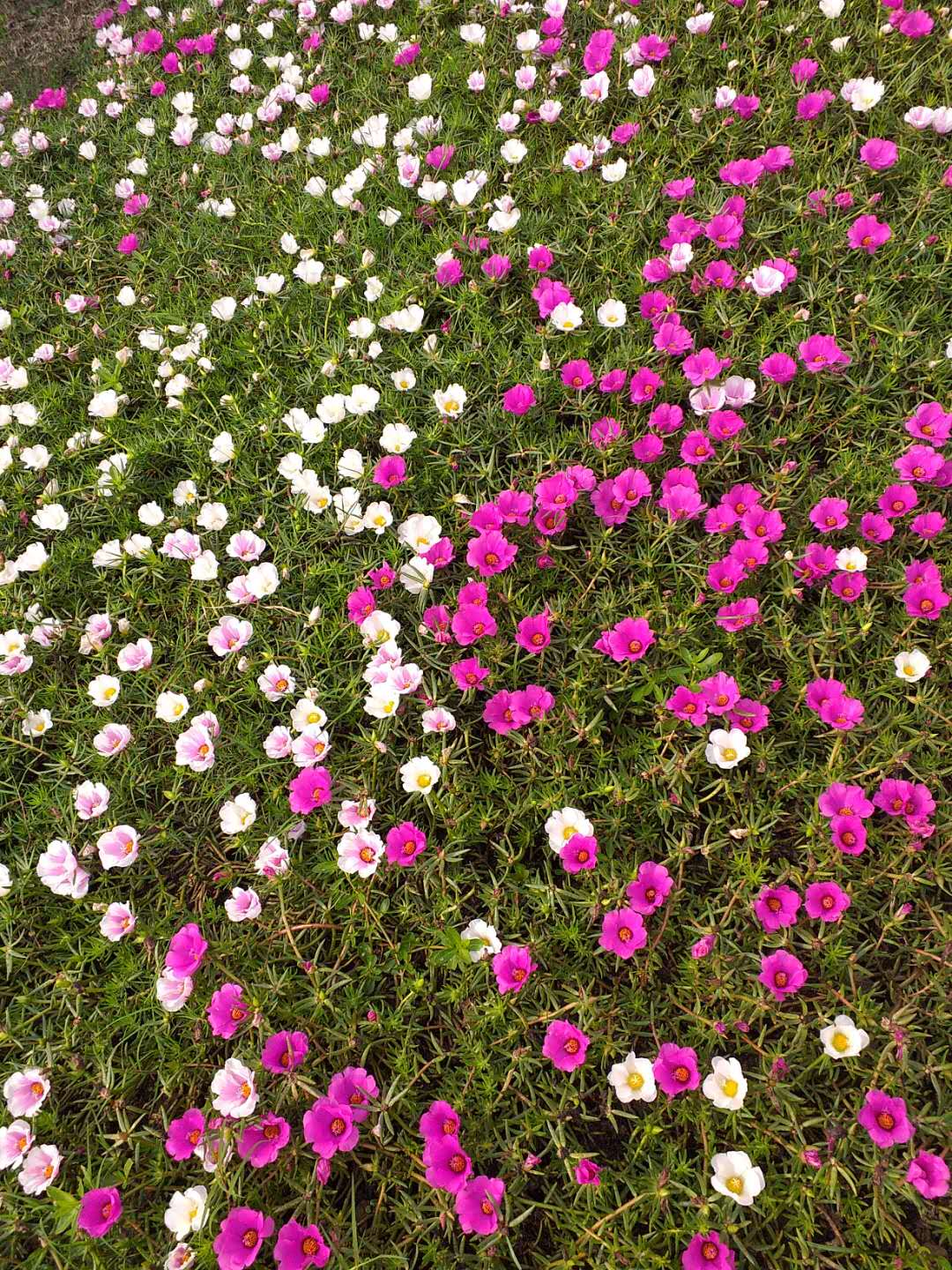
Rose moss is a small annual plant, usually under 30 cm tall, with thick, fleshy leaves up to 2.5 cm long. The leaves are arranged alternately or in clusters and are almost stalk-shaped, tapering at the tip. Its flowers are showy, 2.5–4 cm across, with five petals in bright shades of red, orange, pink, white, or yellow. Some cultivated forms have extra petals, giving a fuller look. The plant forms upright or spreading shoots that often branch near the base.
Where does Rose moss come from?
Native to southern Brazil, Argentina, and Uruguay, rose moss grows wild in sandy soils and open, sunny places. It has spread widely as a garden plant, especially in temperate regions and frost-free climates, and is seen in cities with old architecture in the Balkans and South Asia. Despite names like 'Mexican rose' or 'moss rose', it is not related to true roses but is closer to carnations and cacti.
When and how Rose moss blooms
Rose moss blooms in summer, needing full sun and well-drained, sandy soil. It is usually grown from seed, often sold in mixed colours. The plant needs little care and can spread easily, even growing between stones in old pavements. In frost-free places, it may become naturalized. Many garden varieties have been bred for double flowers and a range of colours.



How Rose moss is used
This plant is mainly grown as an ornamental for its bright, colourful flowers. It is popular in bedding displays and containers, and can be found in gardens and sometimes growing wild in cities. Honeybees visit the flowers for pollen and nectar. Unlike some other Portulaca species, rose moss is not eaten due to its bitter taste.
Kinds of Rose moss
Gardeners have developed many cultivars of rose moss, including double-flowered types and varieties with variegated or unusual colours. Seeds are often sold as mixtures. There are also hybrids with other Portulaca species, such as P. oleracea, P. umbraticola, and P. villosa.
What Rose moss means
Rose moss is valued for its ease of growth and vibrant summer display. It is not linked to any particular symbolism or religious use in the sources. Its ability to thrive in neglected or stony places has made it a familiar sight in cities with historic architecture. The plant is not edible and is grown purely for ornament.
Where Rose moss is used and seen

Traditions that use it
Questions people ask about Rose moss
Where does rose moss come from?
Rose moss is native to southern Brazil, Argentina, and Uruguay. It grows wild in sandy soils and open, sunny areas in these regions, and has spread widely as a garden plant in many other parts of the world.
What does rose moss look like?
It is a small, succulent annual with thick, fleshy leaves and bright flowers about 2.5–4 cm across. The flowers have five petals and come in red, orange, pink, white, or yellow. Some garden forms have extra petals.
How is rose moss used?
Rose moss is mainly grown as an ornamental plant for gardens, containers, and bedding displays. It is valued for its colourful summer flowers and ability to grow in sunny, dry places with little care.
Is rose moss edible?
No, unlike some other Portulaca species, rose moss is not edible because it has a bitter taste. It is grown only for its flowers.
What does rose moss symbolise?
The sources do not mention any particular symbolism or cultural meaning for rose moss. It is mainly valued for its ornamental qualities.
Good reading and sources
- Encyclopaedia BritannicaArticle
- USDA Plants DatabaseUS Department of Agriculture, Article
- Plants of the World OnlineRoyal Botanic Gardens, Kew, Plant database
- Where it has been recordedGBIF, Plant database
- Sightings and photos by naturalistsiNaturalist, Plant database
- Portulaca grandiflora on WikipediaEncyclopedia
- More photos on Wikimedia CommonsPhotos
- Wikidata recordOpen data
The facts on this page come from the Wikipedia article "Portulaca grandiflora", written by its contributors and used under the CC BY-SA 4.0 licence, and from its Wikidata record (CC0). Phool rewrote the text in its own words, with AI assistance, and compares every page with the article to make sure no passage is copied. It may be reused under the same CC BY-SA 4.0 licence with a link back.
It may contain mistakes. It is not medical or foraging advice: many flowers are poisonous, and traditional uses are reported, not recommended. If something is wrong, tell us. Last refreshed 2026-10-03.
Others in the family Portulacaceae
The whole family
More from Brazil
All the flowers of Brazil CactusCactaceae
Succulent plants with spines, native to the Americas
🇲🇽 Mexico and 7 more · Wildflower
CactusCactaceae
Succulent plants with spines, native to the Americas
🇲🇽 Mexico and 7 more · Wildflower
 AmaranthAmaranthus
A tall, colourful plant grown for its flowers, leaves and edible seeds
🇲🇽 Mexico and 7 more · Wildflower
AmaranthAmaranthus
A tall, colourful plant grown for its flowers, leaves and edible seeds
🇲🇽 Mexico and 7 more · Wildflower
 Sensitive PlantMimosa pudica
A touch-sensitive plant whose leaves fold up when disturbed
🇧🇷 Brazil and 8 more · Wildflower
Sensitive PlantMimosa pudica
A touch-sensitive plant whose leaves fold up when disturbed
🇧🇷 Brazil and 8 more · Wildflower
 Passion fruitPassiflora edulis
A tropical vine grown for its sweet-sour, aromatic fruit
🇧🇷 Brazil and 6 more · Climber
Passion fruitPassiflora edulis
A tropical vine grown for its sweet-sour, aromatic fruit
🇧🇷 Brazil and 6 more · Climber