
Black-eyed Susan
Rudbeckia hirta, family Asteraceae
A daisy-like wildflower with a dark centre and bright yellow petals
Black-eyed Susan is a tall, upright plant with yellow, daisy-shaped flowers and a dark, raised centre. Native to eastern and central parts of North America, it is grown in gardens and parks for its summer and autumn blooms, and is the state flower of Maryland.
- State flower of Maryland since 1918
- Native to eastern and central North America
- Flowers attract butterflies and pollinators
- Used in traditional medicine by Native Americans
- Popular garden plant with many cultivars
What does Black-eyed Susan look like?
Black-eyed Susan grows up to a metre tall, with rough, hairy leaves and sturdy, branching stems. Its flower heads look like daisies, with bright yellow petals arranged around a raised, dark brown or black centre. Each flower can reach about 10 cm across. Breeders have developed many forms, so flowers may also show orange, red, or brown shades. The plant blooms in late summer and early autumn, attracting butterflies and other insects.
Where does Black-eyed Susan come from?
This plant is originally from the eastern and central regions of North America, where it grows wild in fields and open spaces. Over time, it has spread and become established in other places, including all the lower 48 states of the US and every Canadian province. It has also naturalized in parts of China. The name 'hirta' refers to the hairy texture of its leaves and stems. Many local forms are recognized, each found in different parts of North America.
When and how Black-eyed Susan blooms
Black-eyed Susan flowers from late summer into autumn. It is usually grown from seed and thrives in sunny spots with well-drained soil. Gardeners plant it in borders, wildflower meadows, containers, and prairie-style gardens. Some forms are annuals, while others can live for more than one year. Cultivars like 'Indian Summer' and 'Toto' are popular for their large or double blooms.


How Black-eyed Susan is used
People grow Black-eyed Susan for its bright flowers in gardens and as cut flowers for arrangements. It is the official state flower of Maryland, where it appears in ceremonies and celebrations. Native American groups used the plant in traditional medicine, applying roots for various remedies. Its flowers also attract butterflies and serve as a food source for some caterpillars.
Kinds of Black-eyed Susan
There are four main varieties, each found in different regions of North America. Some, like 'Gloriosa daisy', are cultivated forms with larger or double flowers and striking colour patterns, often grown as annuals. Breeders have selected many cultivars for gardens, offering a range of flower sizes and colours.
What Black-eyed Susan means
Black-eyed Susan holds special meaning in Maryland as the state flower, chosen in 1918. It is featured in local ceremonies and is linked to the Preakness Stakes horse race, where a blanket of flowers resembling Black-eyed Susans is placed on the winning horse. The flower also inspired the black and gold colours of the University of Southern Mississippi.
Questions people ask about Black-eyed Susan
Where does Black-eyed Susan come from?
Black-eyed Susan is originally from eastern and central North America, but it has also spread to all parts of the United States and Canada, and has become naturalized in China.
What does Black-eyed Susan look like?
It is a tall plant with rough, hairy leaves and bright yellow, daisy-like flowers. The centre of each flower is raised and dark brown or black, and the flowers can be up to 10 cm across.
How is Black-eyed Susan used?
It is widely grown in gardens and parks for its colourful flowers, used as a cut flower, and serves as the state flower of Maryland. Native Americans also used it in traditional medicine.
Does Black-eyed Susan have any special meaning?
Yes, it is the state flower of Maryland and is used in ceremonies and celebrations there. It also inspired the colours of the University of Southern Mississippi.
Are there different types of Black-eyed Susan?
Yes, there are several wild varieties across North America and many cultivated forms with different flower sizes and colours, including 'Gloriosa daisy'.
Good reading and sources
- Encyclopaedia BritannicaArticle
- Rudbeckia hirta 'Indian Summer' | black-eyed Susan 'Indian Summer'Royal Horticultural Society, Article
- Plants of the World OnlineRoyal Botanic Gardens, Kew, Plant database
- Where it has been recordedGBIF, Plant database
- Sightings and photos by naturalistsiNaturalist, Plant database
- Rudbeckia hirta on WikipediaEncyclopedia
- More photos on Wikimedia CommonsPhotos
- Wikidata recordOpen data
The facts on this page come from the Wikipedia article "Rudbeckia hirta", written by its contributors and used under the CC BY-SA 4.0 licence, and from its Wikidata record (CC0). Phool rewrote the text in its own words, with AI assistance, and compares every page with the article to make sure no passage is copied. It may be reused under the same CC BY-SA 4.0 licence with a link back.
It may contain mistakes. It is not medical or foraging advice: many flowers are poisonous, and traditional uses are reported, not recommended. If something is wrong, tell us. Last refreshed 2026-10-03.
Others in the family Asteraceae
The whole family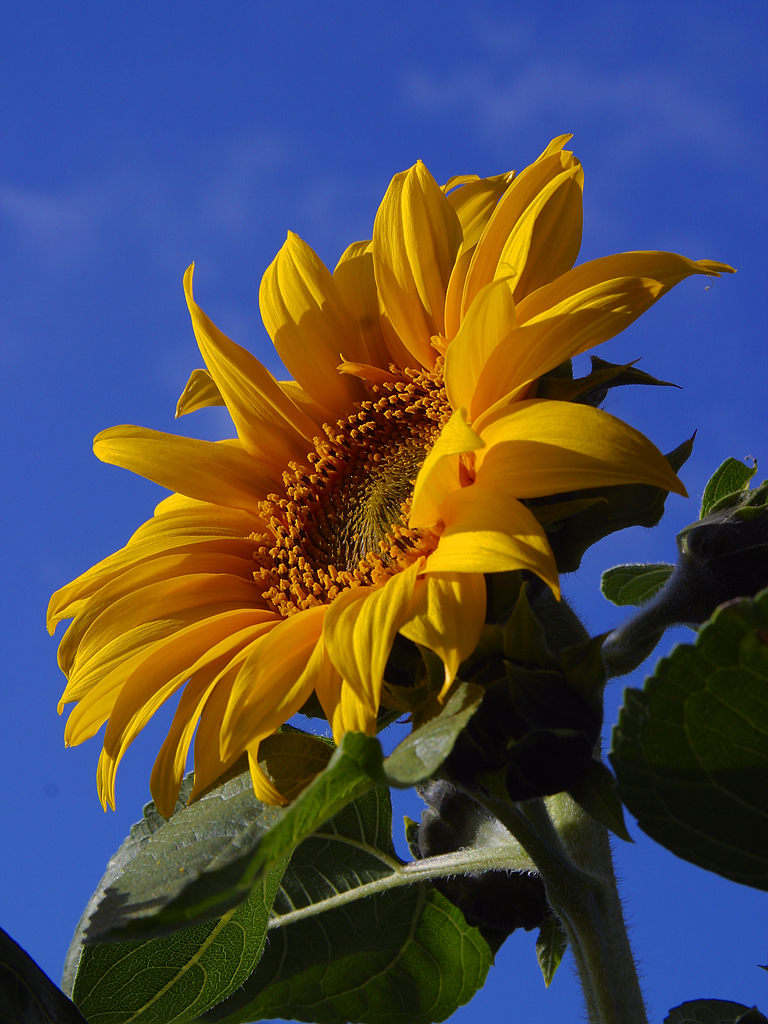 Common sunflowerHelianthus annuus
A tall annual plant grown for its large yellow flower heads and edible seeds
🇨🇦 Canada and 4 more · Wildflower
Common sunflowerHelianthus annuus
A tall annual plant grown for its large yellow flower heads and edible seeds
🇨🇦 Canada and 4 more · Wildflower
 Asteraceae
The vast family of daisies, asters, and sunflowers with star-like flower heads
Asteraceae · Wildflower
Asteraceae
The vast family of daisies, asters, and sunflowers with star-like flower heads
Asteraceae · Wildflower
 DandelionTaraxacum
A yellow-flowered perennial found in fields, lawns, and gardens worldwide
Taraxacum · Wildflower
DandelionTaraxacum
A yellow-flowered perennial found in fields, lawns, and gardens worldwide
Taraxacum · Wildflower
 Dahlia
A bushy perennial with tuberous roots and bright, star-shaped blooms
🇲🇽 Mexico and 1 more · Garden flower
Dahlia
A bushy perennial with tuberous roots and bright, star-shaped blooms
🇲🇽 Mexico and 1 more · Garden flower
More from the United States
All the flowers of the United States PeachPrunus persica
A flowering fruit tree from China, grown for its pink blossoms and sweet fruit
🇨🇳 China and 7 more · Flowering tree
PeachPrunus persica
A flowering fruit tree from China, grown for its pink blossoms and sweet fruit
🇨🇳 China and 7 more · Flowering tree
 AlmondPrunus amygdalus
A Mediterranean tree grown for its fragrant spring flowers and edible seeds
🇮🇷 Iran and 6 more · Flowering tree
AlmondPrunus amygdalus
A Mediterranean tree grown for its fragrant spring flowers and edible seeds
🇮🇷 Iran and 6 more · Flowering tree
 CactusCactaceae
Succulent plants with spines, native to the Americas
🇲🇽 Mexico and 7 more · Wildflower
CactusCactaceae
Succulent plants with spines, native to the Americas
🇲🇽 Mexico and 7 more · Wildflower
 Chrysanthemum菊花
Autumn-blooming flower with thousands of varieties, cherished in East Asia and beyond
🇨🇳 China and 6 more · Wildflower
Chrysanthemum菊花
Autumn-blooming flower with thousands of varieties, cherished in East Asia and beyond
🇨🇳 China and 6 more · Wildflower