
Brahmakamal
Saussurea obvallata, family Asteraceae
A Himalayan alpine flower with papery bracts, sacred in Indian hill temples
Brahmakamal (Saussurea obvallata) is a perennial flower from the high-altitude meadows of the Himalayas, found in India, Nepal, Bhutan, Pakistan, and southwest China. Its purple flower heads are hidden by yellowish-green papery bracts, and it is used as an offering in Indian hill temples and as Uttarakhand's state flower.
- Native to Himalayan alpine meadows at 3,700–4,600 m altitude
- Purple flowers hidden by yellowish-green papery bracts
- State flower of Uttarakhand, India
- Offered at hill temples like Badrinath
- Blooms during the monsoon, July to September
What does Brahmakamal look like?
Brahmakamal is a small perennial, growing up to about 30 cm tall. Its flower heads are purple but mostly hidden by layers of yellowish-green, papery bracts that protect them from the cold. The plant grows among rocks and grasses on high Himalayan slopes, and the above-ground parts die back after flowering, reappearing in spring.
Where does Brahmakamal come from?
This flower grows wild in the alpine meadows of the Himalayas, at elevations between 3,700 and 4,600 meters. Its range includes India, Nepal, Bhutan, Pakistan, and southwest China. The genus Saussurea is named after Horace Bénédict de Saussure, an alpine scientist. The species name obvallata refers to the flower's bracts, which form a wall-like enclosure.
When and how Brahmakamal blooms
Brahmakamal blooms during the monsoon, from July to September. It thrives in rocky, grassy slopes at high altitudes. The flowers are pollinated by insects and are hermaphrodite, containing both male and female organs. After flowering, the plant's visible parts die back, returning with the next growing season.
How Brahmakamal is used
The flower is offered in worship at hill temples in India, such as the shrines at Badrinath. It is also the state flower of Uttarakhand. Locally, the thick, curved root is used in traditional medicine for treating bruises and cuts. Its image has appeared on Indian postage stamps.
Kinds of Brahmakamal
The sources do not mention notable varieties or cultivars of Saussurea obvallata. The genus Saussurea includes many alpine species, but Brahmakamal is especially recognized in the Indian Himalayas.
What Brahmakamal means
Brahmakamal holds cultural importance in India, especially in Uttarakhand, where it is the state flower. It is offered at sacred hill temples and has been featured on a postage stamp. The flower's unique form and rarity at high altitudes add to its reverence in local traditions.
Traditions that use it
Where to see Brahmakamal

Questions people ask about Brahmakamal
Where does Brahmakamal grow naturally?
Brahmakamal grows wild in the alpine meadows of the Himalayas, at elevations between 3,700 and 4,600 meters, in India, Nepal, Bhutan, Pakistan, and southwest China.
What does the Brahmakamal flower look like?
The flower heads are purple and mostly hidden by layers of yellowish-green, papery bracts. The plant is a small perennial, about 30 cm tall, found among rocks and grasses on high mountain slopes.
How is Brahmakamal used in local culture?
Brahmakamal is offered in worship at hill temples in India, such as Badrinath, and is the state flower of Uttarakhand. Its root is used in local medicine for bruises and cuts.
When does Brahmakamal bloom?
It blooms during the monsoon season, from July to September. After flowering, the above-ground parts die back and reappear in April.
What does Brahmakamal symbolise?
Brahmakamal is revered in Indian culture, especially in Uttarakhand, and is associated with sacred offerings at hill temples. It is also featured on Indian postage stamps.
Good reading and sources
- Plants of the World OnlineRoyal Botanic Gardens, Kew, Plant database
- Where it has been recordedGBIF, Plant database
- Sightings and photos by naturalistsiNaturalist, Plant database
- Saussurea obvallata on WikipediaEncyclopedia
- More photos on Wikimedia CommonsPhotos
- Wikidata recordOpen data
The facts on this page come from the Wikipedia article "Saussurea obvallata", written by its contributors and used under the CC BY-SA 4.0 licence, and from its Wikidata record (CC0). Phool rewrote the text in its own words, with AI assistance, and compares every page with the article to make sure no passage is copied. It may be reused under the same CC BY-SA 4.0 licence with a link back.
It may contain mistakes. It is not medical or foraging advice: many flowers are poisonous, and traditional uses are reported, not recommended. If something is wrong, tell us. Last refreshed 2026-10-03.
Others in the family Asteraceae
The whole family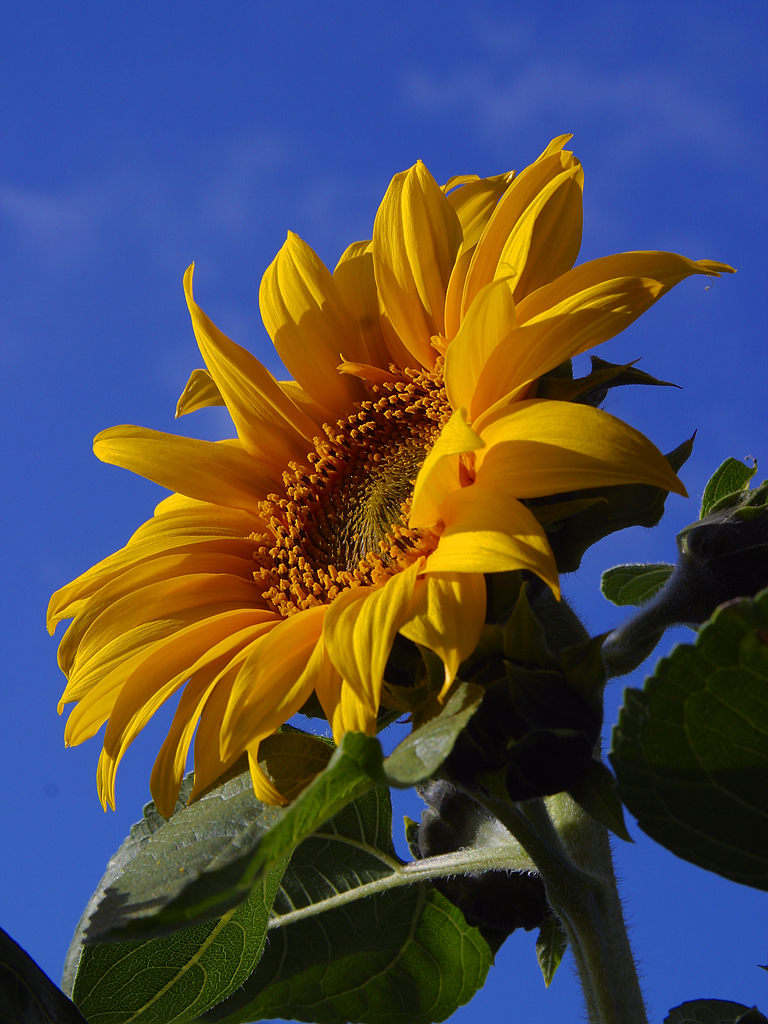 Common sunflowerHelianthus annuus
A tall annual plant grown for its large yellow flower heads and edible seeds
🇨🇦 Canada and 4 more · Wildflower
Common sunflowerHelianthus annuus
A tall annual plant grown for its large yellow flower heads and edible seeds
🇨🇦 Canada and 4 more · Wildflower
 Chrysanthemum菊花
Autumn-blooming flower with thousands of varieties, cherished in East Asia and beyond
🇨🇳 China and 6 more · Wildflower
Chrysanthemum菊花
Autumn-blooming flower with thousands of varieties, cherished in East Asia and beyond
🇨🇳 China and 6 more · Wildflower
 Asteraceae
The vast family of daisies, asters, and sunflowers with star-like flower heads
Asteraceae · Wildflower
Asteraceae
The vast family of daisies, asters, and sunflowers with star-like flower heads
Asteraceae · Wildflower
 DandelionTaraxacum
A yellow-flowered perennial found in fields, lawns, and gardens worldwide
Taraxacum · Wildflower
DandelionTaraxacum
A yellow-flowered perennial found in fields, lawns, and gardens worldwide
Taraxacum · Wildflower
More from India
All the flowers of India TulipTulipa
Spring-blooming bulbs with showy, cup-shaped flowers in many colours
🇳🇱 Netherlands and 7 more · Wildflower
TulipTulipa
Spring-blooming bulbs with showy, cup-shaped flowers in many colours
🇳🇱 Netherlands and 7 more · Wildflower
 FennelFoeniculum vulgare
A tall, aromatic herb with feathery leaves and yellow umbels, used for food and spice
🇨🇳 China and 7 more · Herb or useful flower
FennelFoeniculum vulgare
A tall, aromatic herb with feathery leaves and yellow umbels, used for food and spice
🇨🇳 China and 7 more · Herb or useful flower
 Common flaxLinum usitatissimum
The slender blue-flowered plant grown for linen and linseed
🇨🇳 China and 7 more · Wildflower
Common flaxLinum usitatissimum
The slender blue-flowered plant grown for linen and linseed
🇨🇳 China and 7 more · Wildflower
 Eucalyptus
The tall, aromatic trees and shrubs known as gum trees or eucalypts
🇦🇺 Australia and 7 more · Flowering tree
Eucalyptus
The tall, aromatic trees and shrubs known as gum trees or eucalypts
🇦🇺 Australia and 7 more · Flowering tree