
Common dandelion
Taraxacum officinale, family Asteraceae
A familiar yellow wildflower with fluffy seed heads found across temperate regions
The common dandelion is a perennial plant in the daisy family, easily recognised by its bright yellow blooms and round, white seed heads. Native to Eurasia and China, it now grows widely in lawns, fields, and roadsides around the world, valued for its role in supporting pollinators and as a traditional food and herbal plant.
- Bright yellow flowers turn into round, white seed heads carried by the wind
- Native to China and Eurasia, now found worldwide in temperate regions
- Leaves, flowers, and roots are used for food and traditional remedies
- Important early food source for pollinators in spring
- Considered a weed but also valued as a wildflower
What does Common dandelion look like?
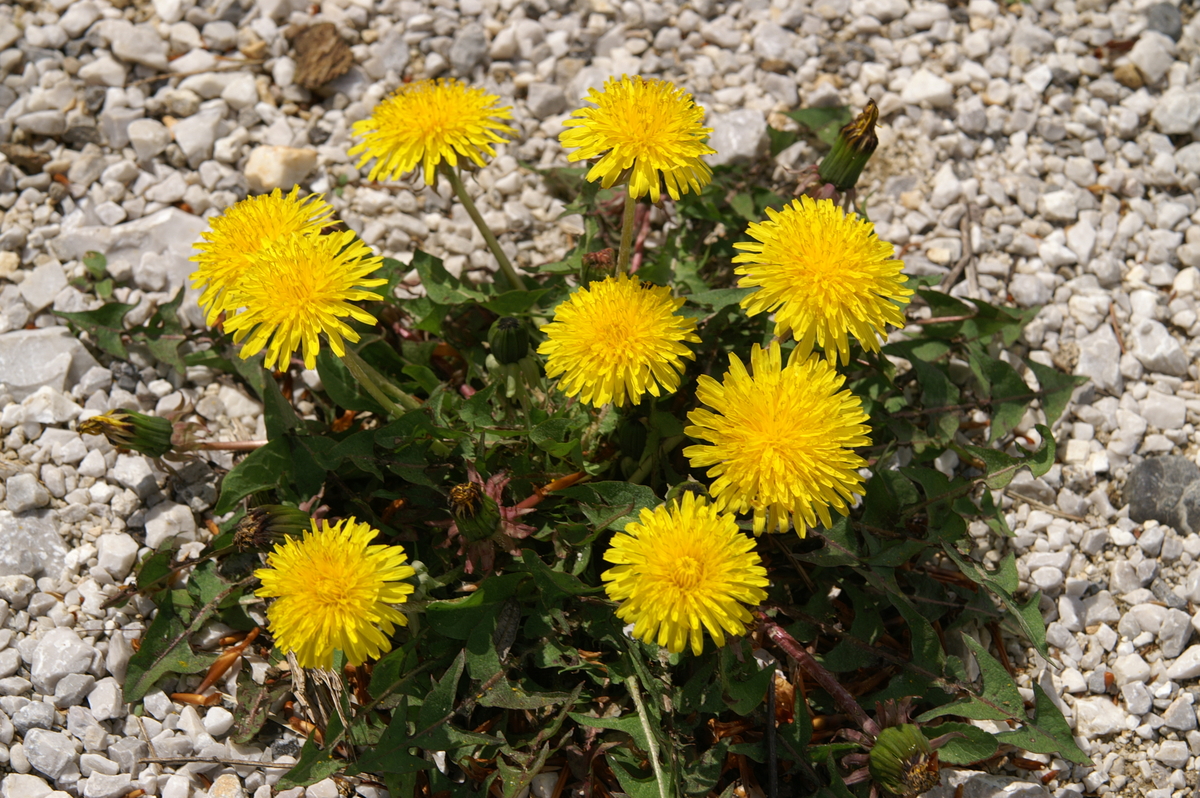
The common dandelion grows low to the ground with a rosette of jagged, deeply lobed leaves. Its hollow stems, which may have a purplish tint, reach up to 40 cm tall and each holds a single, bright yellow flower head made up of many small strap-shaped florets. When the flowers fade, they form round, silver-white seed heads that break apart in the wind. The plant produces a milky sap when cut, and its leaves and stems are smooth or lightly hairy.
Where does Common dandelion come from?
Taraxacum officinale is native to China and other parts of Eurasia. Over time, it has spread to nearly every continent, thriving in temperate climates and adapting to a wide range of soils and conditions. Its ability to reproduce both sexually and asexually, and to regrow from root pieces, has helped it become one of the most widespread wildflowers. The plant was introduced to new regions, including North America, as a food source and quickly became naturalised.
When and how Common dandelion blooms
Dandelions flower mainly in spring and summer, but can bloom at other times in mild climates. They grow from a deep taproot and spread by both seeds and root fragments. The seeds, attached to silky parachutes, are carried far by the wind. Dandelions thrive in moist, disturbed soils and can tolerate crowding, heat, and drought. They are easily found in lawns, fields, and along roadsides.


How Common dandelion is used
People have long gathered dandelion leaves, flowers, and roots for food and traditional remedies. The young leaves are eaten raw or cooked, while the roots and flowers are used in drinks and herbal preparations. Dandelions are also valued for attracting bees and birds, especially in early spring when few other flowers are available. In some places, they are grown intentionally in gardens for these uses.
Kinds of Common dandelion
There are many forms of dandelion, with hundreds of microspecies recognised in Europe alone. Some reproduce only by seed without fertilisation, while others require pollination. In North America, most plants are clones that spread by apomixis. The taxonomy is complex, with some closely related plants now considered separate species.
What Common dandelion means
Dandelions are often seen as weeds, especially in lawns and gardens, but are also appreciated for their resilience and usefulness. The plant is not threatened and is listed as 'Least Concern' for conservation. Its seed heads, sometimes called 'clocks' or 'blowballs', are part of children's games and folklore. The name 'dandelion' refers to the jagged shape of its leaves.
Questions people ask about Common dandelion
Where does the common dandelion come from?
The common dandelion is originally from China and other parts of Eurasia. It has spread widely and now grows in temperate regions across the world, including North America, Australia, and New Zealand.
What does the common dandelion look like?
It has a rosette of jagged leaves, hollow stems, and bright yellow flower heads. After flowering, it forms round, white seed heads that disperse in the wind.
How is the common dandelion used?
People use its leaves, flowers, and roots as food and in traditional herbal medicine. It is also valued for attracting pollinators and birds.
Why is the dandelion sometimes called a weed?
Dandelions spread quickly and grow in lawns, gardens, and fields, often where they are not wanted. Their seeds travel easily on the wind, making them hard to control.
What does the dandelion symbolise?
While the sources do not mention a specific symbolism, dandelions are often associated with resilience and are part of children's games and folklore.
Good reading and sources
- Encyclopaedia BritannicaArticle
- IUCN Red List of Threatened SpeciesIUCN Red List, Article
- Why the dandelion blows away some plant collectorsThe Guardian, Article
- Plants of the World OnlineRoyal Botanic Gardens, Kew, Plant database
- Where it has been recordedGBIF, Plant database
- Sightings and photos by naturalistsiNaturalist, Plant database
- Taraxacum officinale on WikipediaEncyclopedia
- More photos on Wikimedia CommonsPhotos
- Wikidata recordOpen data
The facts on this page come from the Wikipedia article "Taraxacum officinale", written by its contributors and used under the CC BY-SA 4.0 licence, and from its Wikidata record (CC0). Phool rewrote the text in its own words, with AI assistance, and compares every page with the article to make sure no passage is copied. It may be reused under the same CC BY-SA 4.0 licence with a link back.
It may contain mistakes. It is not medical or foraging advice: many flowers are poisonous, and traditional uses are reported, not recommended. If something is wrong, tell us. Last refreshed 2026-10-03.
Others in the family Asteraceae
The whole family Chrysanthemum菊花
Autumn-blooming flower with thousands of varieties, cherished in East Asia and beyond
🇨🇳 China and 6 more · Wildflower
Chrysanthemum菊花
Autumn-blooming flower with thousands of varieties, cherished in East Asia and beyond
🇨🇳 China and 6 more · Wildflower
 Asteraceae
The vast family of daisies, asters, and sunflowers with star-like flower heads
Asteraceae · Wildflower
Asteraceae
The vast family of daisies, asters, and sunflowers with star-like flower heads
Asteraceae · Wildflower
 DandelionTaraxacum
A yellow-flowered perennial found in fields, lawns, and gardens worldwide
Taraxacum · Wildflower
DandelionTaraxacum
A yellow-flowered perennial found in fields, lawns, and gardens worldwide
Taraxacum · Wildflower
 Dahlia
A bushy perennial with tuberous roots and bright, star-shaped blooms
🇲🇽 Mexico and 1 more · Garden flower
Dahlia
A bushy perennial with tuberous roots and bright, star-shaped blooms
🇲🇽 Mexico and 1 more · Garden flower
More from China
All the flowers of China PeachPrunus persica
A flowering fruit tree from China, grown for its pink blossoms and sweet fruit
🇨🇳 China and 7 more · Flowering tree
PeachPrunus persica
A flowering fruit tree from China, grown for its pink blossoms and sweet fruit
🇨🇳 China and 7 more · Flowering tree
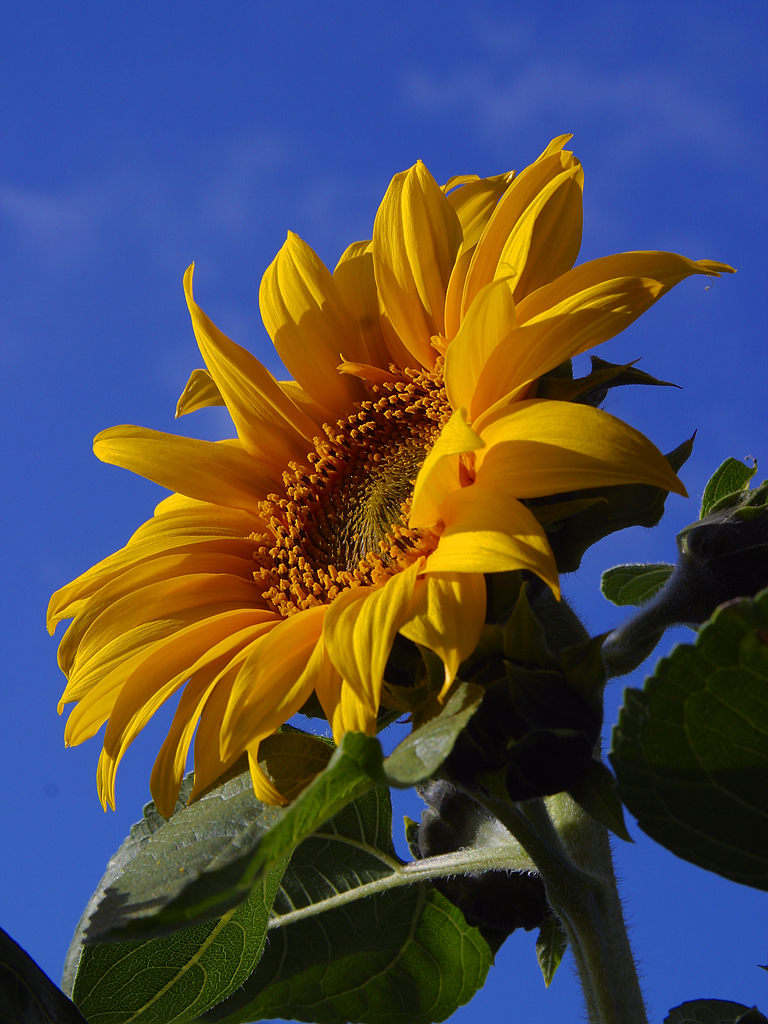 Common sunflowerHelianthus annuus
A tall annual plant grown for its large yellow flower heads and edible seeds
🇨🇦 Canada and 4 more · Wildflower
Common sunflowerHelianthus annuus
A tall annual plant grown for its large yellow flower heads and edible seeds
🇨🇦 Canada and 4 more · Wildflower
 PomegranatePunica granatum
A shrub with bright red flowers and a fruit full of edible seeds
🇮🇷 Iran and 9 more · Flowering shrub
PomegranatePunica granatum
A shrub with bright red flowers and a fruit full of edible seeds
🇮🇷 Iran and 9 more · Flowering shrub
 BirchBetula
Slender trees with papery bark found across the northern world
🇨🇳 China and 7 more · Wildflower
BirchBetula
Slender trees with papery bark found across the northern world
🇨🇳 China and 7 more · Wildflower