
Mashua
Tropaeolum tuberosum, family Tropaeolaceae
An Andean climbing plant with edible tubers and bright bi-coloured flowers
Mashua is a herbaceous perennial climber grown in the Andes for its starchy, edible tubers and showy orange-red and yellow flowers. Though mainly a food crop for Indigenous communities in Peru, Bolivia, Ecuador and Colombia, it is also valued ornamentally in temperate gardens.
- Flowers are bi-coloured: orange-red sepals and yellow petals
- Tubers are rich in vitamin C, exceeding potato levels
- Used traditionally as an anaphrodisiac for Inca soldiers
- Grows well above 3,000 metres with high yields
- Natural pest resistance makes it valuable in agroecology
What does Mashua look like?
Mashua is a vigorous climbing plant that can reach 2 to 4 metres tall. It has round, five-lobed leaves on twining stalks. Its flowers are tubular and striking: the outer sepals are orange-red while the inner petals are bright yellow. The plant forms underground tubers that are the main part used by people.
Where does Mashua come from?
Mashua has been cultivated for centuries in the Andes of South America, especially by Indigenous groups in Peru and Bolivia. Though fully domesticated, it can survive outside cultivation due to its hardiness. It spread through traditional farming systems across highland regions of Ecuador and Colombia as well.
When and how Mashua blooms
It grows best at high elevations, even in poor soils, and resists many pests naturally. The plant flowers in summer and autumn. In frost-prone areas, it needs winter protection. Tubers form underground and are harvested after the growing season, often roasted in earthen ovens.

How Mashua is used
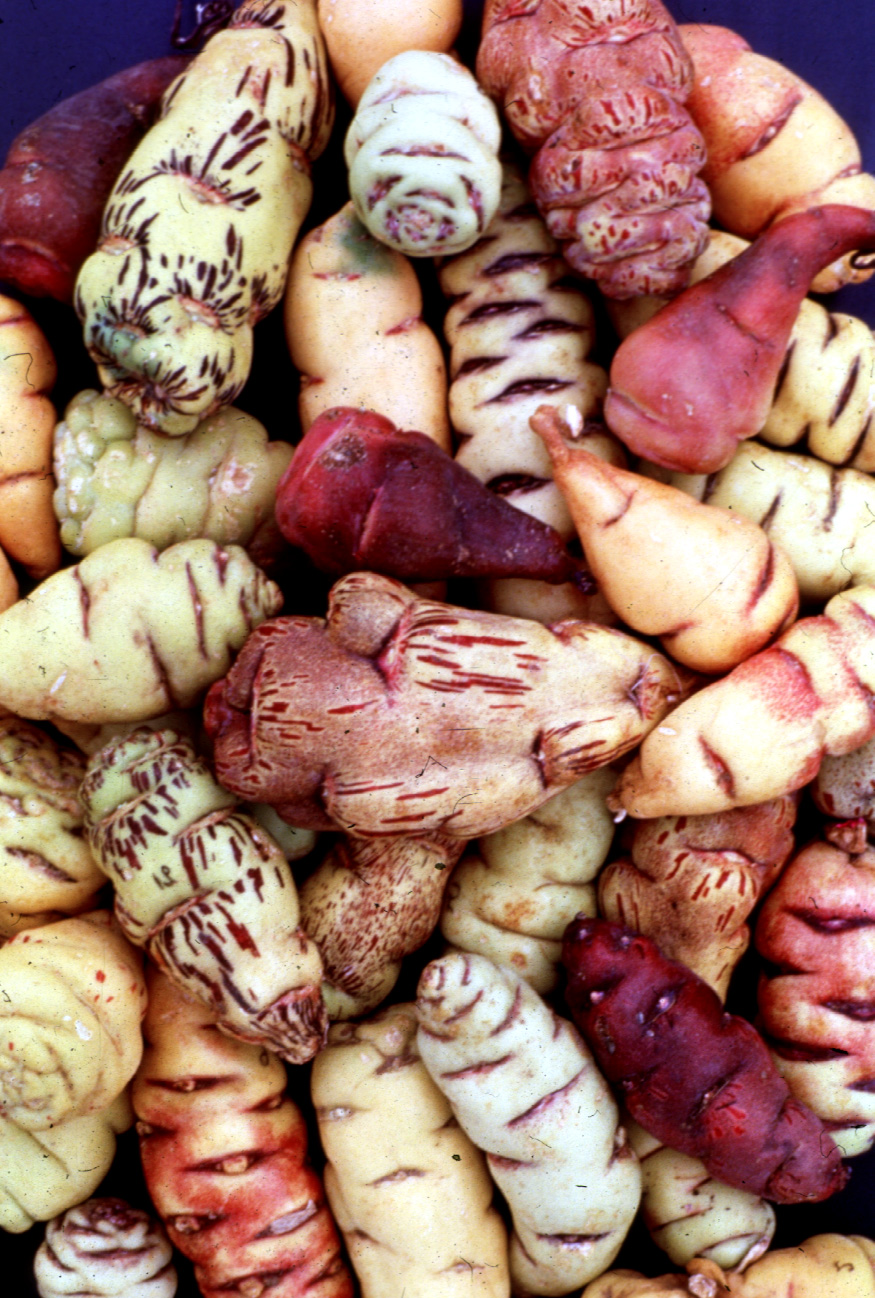
The tubers are eaten cooked, roasted, or raw in salads, though raw mashua tastes bitter. Traditionally, it was given to Inca soldiers for its reputed effect on desire. Today it is also grown in gardens outside the Andes for its vivid flowers and trailing habit.
Kinds of Mashua
Different tuber colours exist, yellow, purple, and yellow-purple, and these affect nutritional content. One ornamental form, 'Ken Aslet', is recognised for garden use in temperate climates.
What Mashua means
Historical accounts say the Inca fed mashua to troops to reduce longing for home. Modern studies note compounds that may lower testosterone and aid wound healing. Its pest-repelling traits make it useful in companion planting, especially with potatoes in Colombia.
Questions people ask about Mashua
Where does mashua come from?
Mashua originates from the Andes, where it has been grown for centuries in Peru, Bolivia, Ecuador, and Colombia, especially by Indigenous communities.
Is mashua eaten or just grown for flowers?
It is primarily grown for its edible tubers, which are cooked or roasted. The flowers are ornamental but not typically consumed.
Why was mashua given to Inca soldiers?
Spanish chronicler Bernabé Cobo wrote that the Inca gave mashua to troops so they would forget their wives, due to its reputed anaphrodisiac effect.
Can mashua be grown in home gardens?
Yes, in temperate zones it is grown as an ornamental climber for its summer and autumn flowers, though it needs frost protection in winter.
What makes mashua useful in farming?
It resists insects, nematodes, and bacteria due to natural compounds, and is planted with potatoes in Colombia to repel pests.
Good reading and sources
- Tropaeolum tuberosum var. lineomaculatum 'Ken Aslet'Royal Horticultural Society, Article
- USDA Plants DatabaseUS Department of Agriculture, Article
- Plants of the World OnlineRoyal Botanic Gardens, Kew, Plant database
- Where it has been recordedGBIF, Plant database
- Sightings and photos by naturalistsiNaturalist, Plant database
- Tropaeolum tuberosum on WikipediaEncyclopedia
- More photos on Wikimedia CommonsPhotos
- Wikidata recordOpen data
The facts on this page come from the Wikipedia article "Tropaeolum tuberosum", written by its contributors and used under the CC BY-SA 4.0 licence, and from its Wikidata record (CC0). Phool rewrote the text in its own words, with AI assistance, and compares every page with the article to make sure no passage is copied. It may be reused under the same CC BY-SA 4.0 licence with a link back.
It may contain mistakes. It is not medical or foraging advice: many flowers are poisonous, and traditional uses are reported, not recommended. If something is wrong, tell us. Last refreshed 2026-10-03.
Others in the family Tropaeolaceae
The whole family

More from Peru
All the flowers of Peru CactusCactaceae
Succulent plants with spines, native to the Americas
🇲🇽 Mexico and 7 more · Wildflower
CactusCactaceae
Succulent plants with spines, native to the Americas
🇲🇽 Mexico and 7 more · Wildflower
 PoinsettiaEuphorbia pulcherrima
The red-bracted shrub of Christmas displays, native to Mexico and Central America
🇲🇽 Mexico and 8 more · Wildflower
PoinsettiaEuphorbia pulcherrima
The red-bracted shrub of Christmas displays, native to Mexico and Central America
🇲🇽 Mexico and 8 more · Wildflower
 MarigoldTagetes
A group of bright annual and perennial flowers known worldwide as marigolds
🇲🇽 Mexico and 7 more · Wildflower
MarigoldTagetes
A group of bright annual and perennial flowers known worldwide as marigolds
🇲🇽 Mexico and 7 more · Wildflower
 Datura
A group of trumpet-shaped, highly toxic flowering plants in the nightshade family
🇲🇽 Mexico and 7 more · Wildflower
Datura
A group of trumpet-shaped, highly toxic flowering plants in the nightshade family
🇲🇽 Mexico and 7 more · Wildflower