
Tulipa suaveolens
Wild Eurasian tulip with bowl-shaped flowers in many colours
Tulipa suaveolens is a wild tulip from the Eurasian steppe, with bowl-shaped flowers in red, pink, yellow, white, and more. It is thought to be the main wild ancestor of the garden tulip and is protected in Russia and Kazakhstan.
- Probable wild ancestor of the garden tulip
- Flowers in red, pink, yellow, white, and more
- Native to the Eurasian steppe from Ukraine to China
- Protected species in Russia and Kazakhstan
- Known as Kefe Lale in Turkey
What does Tulipa suaveolens look like?
Tulipa suaveolens grows from a bulb with a dark brown tunic lined with stiff hairs. Its leaves are bluish-green, wavy, and can reach up to 20 cm long. The plant stands 15–30 cm tall and has a smooth or slightly hairy stem. Its bowl-shaped flowers come in a wide range of colours, including red, pink, mauve, yellow, and white, with some forms showing red petals edged in yellow or white.
Where does Tulipa suaveolens come from?
This tulip is native to the vast grasslands of the Eurasian steppe, stretching from southern and eastern Ukraine through Russia, Kazakhstan, western Siberia, Central Asia, and into western China, Iran, and Azerbaijan. It often grows in meadows and open lawns, sometimes forming dense displays. In Turkey, it is known as Kefe Lale, and bulbs were historically moved to gardens in Istanbul. The species was first described in 1794, and its name means 'sweet-smelling' in Latin.
When and how Tulipa suaveolens blooms
Tulipa suaveolens grows from bulbs planted in the ground. It thrives in open steppe habitats, often in meadows or even semi-desert areas up to 600 meters above sea level. The plant produces a few wavy leaves and a single flower per stem. In cultivation, it has been hybridised with other tulip species to create many garden varieties.


How Tulipa suaveolens is used
This wild tulip is valued for its beauty and is considered a protected species in Russia and Kazakhstan. It is important in the history of tulip breeding, as it is believed to be the main ancestor of the garden tulip. In the past, its bulbs were collected for royal gardens and later used in hybridisation for ornamental purposes.
Kinds of Tulipa suaveolens
Tulipa suaveolens is also known as Tulipa schrenkii and has several colour forms, including flowers with contrasting petal edges. It is closely related to the garden tulip, Tulipa gesneriana, and has contributed to the development of low-growing Duc-tulips in the Netherlands. Some populations in Turkey may be from cultivated origins.
What Tulipa suaveolens means
Tulipa suaveolens is a key species in the story of tulip cultivation and trade. It played a central role in the development of the garden tulip, which became famous in Europe, especially in the Netherlands. In Russia and Kazakhstan, it is protected due to its importance and declining wild populations. Paintings from the early 17th century show its presence in art and gardens.
Questions people ask about Tulipa suaveolens
Where does Tulipa suaveolens come from?
It grows wild across the Eurasian steppe, from Ukraine and Russia through Kazakhstan, western Siberia, Central Asia, and into western China, Iran, and Azerbaijan.
What does Tulipa suaveolens look like?
It is a bulbous plant with wavy bluish-green leaves and bowl-shaped flowers. The flowers can be red, pink, mauve, yellow, white, or have mixed colours with contrasting petal edges.
Why is Tulipa suaveolens important?
It is considered the main wild ancestor of the garden tulip, Tulipa gesneriana, and played a major role in the history of tulip breeding and cultivation in Europe.
Is Tulipa suaveolens protected?
Yes, it is a protected species in Russia and Kazakhstan due to its ecological and historical importance.
What does Tulipa suaveolens symbolise?
The sources do not mention a specific symbolism, but its role as the ancestor of the garden tulip links it to the cultural history of tulips in Europe and Asia.
Good reading and sources
- Plants of the World OnlineRoyal Botanic Gardens, Kew, Plant database
- Where it has been recordedGBIF, Plant database
- Sightings and photos by naturalistsiNaturalist, Plant database
- Tulipa suaveolens on WikipediaEncyclopedia
- More photos on Wikimedia CommonsPhotos
- Wikidata recordOpen data
The facts on this page come from the Wikipedia article "Tulipa suaveolens", written by its contributors and used under the CC BY-SA 4.0 licence, and from its Wikidata record (CC0). Phool rewrote the text in its own words, with AI assistance, and compares every page with the article to make sure no passage is copied. It may be reused under the same CC BY-SA 4.0 licence with a link back.
It may contain mistakes. It is not medical or foraging advice: many flowers are poisonous, and traditional uses are reported, not recommended. If something is wrong, tell us. Last refreshed 2026-10-03.
Others in the family Liliaceae
The whole family TulipTulipa
Spring-blooming bulbs with showy, cup-shaped flowers in many colours
🇳🇱 Netherlands and 7 more · Wildflower
TulipTulipa
Spring-blooming bulbs with showy, cup-shaped flowers in many colours
🇳🇱 Netherlands and 7 more · Wildflower
 LilyLilium
Tall bulb flowers with large, colourful blooms in many gardens and cultures
Lilium · Wildflower
LilyLilium
Tall bulb flowers with large, colourful blooms in many gardens and cultures
Lilium · Wildflower
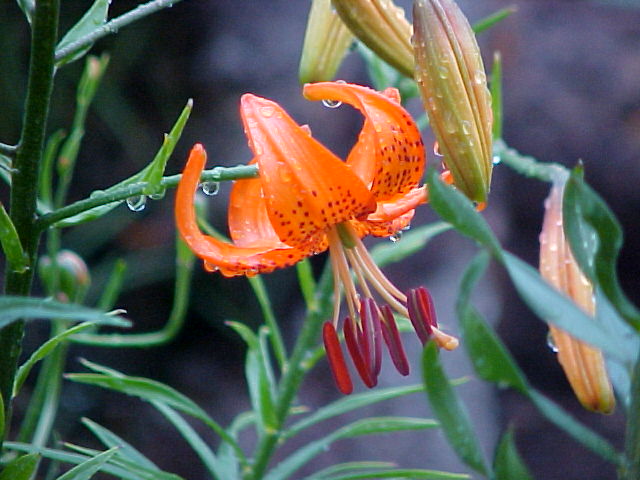 Lilium davidii
A tall Asian lily with edible bulbs and orange recurved flowers
🇨🇳 China and 1 more · Wildflower
Lilium davidii
A tall Asian lily with edible bulbs and orange recurved flowers
🇨🇳 China and 1 more · Wildflower
 Chinese LilyLilium brownii
A wild and cultivated lily from China with edible bulbs
🇨🇳 China and 3 more · Wildflower
Chinese LilyLilium brownii
A wild and cultivated lily from China with edible bulbs
🇨🇳 China and 3 more · Wildflower
More from Russia
All the flowers of Russia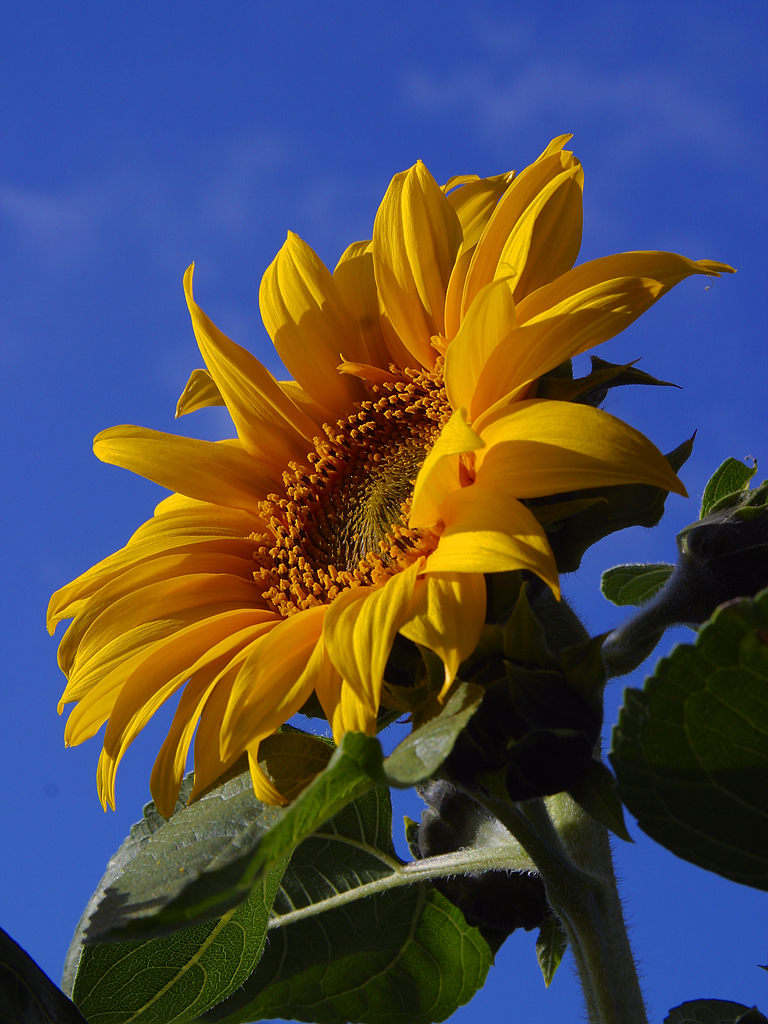 Common sunflowerHelianthus annuus
A tall annual plant grown for its large yellow flower heads and edible seeds
🇨🇦 Canada and 4 more · Wildflower
Common sunflowerHelianthus annuus
A tall annual plant grown for its large yellow flower heads and edible seeds
🇨🇦 Canada and 4 more · Wildflower
 BirchBetula
Slender trees with papery bark found across the northern world
🇨🇳 China and 7 more · Wildflower
BirchBetula
Slender trees with papery bark found across the northern world
🇨🇳 China and 7 more · Wildflower
 Common flaxLinum usitatissimum
The slender blue-flowered plant grown for linen and linseed
🇨🇳 China and 7 more · Wildflower
Common flaxLinum usitatissimum
The slender blue-flowered plant grown for linen and linseed
🇨🇳 China and 7 more · Wildflower
 LindenTilia
Tall, broad-leaved trees with fragrant yellow flowers and heart-shaped leaves
🇨🇳 China and 7 more · Flowering tree
LindenTilia
Tall, broad-leaved trees with fragrant yellow flowers and heart-shaped leaves
🇨🇳 China and 7 more · Flowering tree