
Vanda
In its own language: वन्दाका
A tropical orchid genus prized for its vivid, long-lasting flowers
Vanda is a genus of about 90 orchid species found from India and Southeast Asia to New Guinea and northern Australia. These orchids are valued for their striking, fragrant flowers in many colors and are widely grown for gardens, cut flowers, and hybrid breeding.
- Vanda orchids are native to Asia, New Guinea, and northern Australia
- Their flowers come in many colors, including rare blue shades
- Vanda coerulea and others are endangered and protected by law
- The genus is important in the cut flower and hybrid market
What does Vanda look like?
Vanda orchids are mostly large epiphytes, meaning they grow on other plants, with some species growing on rocks or the ground. They have a single upright stem and broad, flat or sometimes cylindrical leaves. Their flowers appear on side branches and can be yellow-brown with markings, or come in white, green, orange, red, burgundy, and rare blue shades. The blooms are showy, fragrant, and last two to three weeks. Plants may grow quite large, with thick aerial roots.
Where does Vanda come from?
The name Vanda comes from the Sanskrit word for Vanda roxburghii, now known as Vanda tessellata. Vanda species are native to a wide region stretching from India and the Himalaya through Southeast Asia, Indonesia, and the Philippines, reaching New Guinea, southern China, and northern Australia. They have adapted to a range of habitats, mainly as epiphytes in disturbed forests with high light. The genus has become important in horticulture and breeding.
When and how Vanda blooms
Vanda orchids bloom every few months, with each flowering lasting two to three weeks. Most species grow best with high light and good air movement. Epiphytic types are often grown in large wooden baskets with no soil, allowing their aerial roots to spread. They need regular watering and feeding. Terrestrial species with cylindrical leaves are easier to grow. Damaging mature roots can set back flowering.


How Vanda is used
Vandas are grown for their decorative flowers, both in gardens and as cut flowers. Their vivid colors, especially the rare blue of Vanda coerulea, are highly valued in hybrid breeding. The genus is one of the most important for orchid growers and the flower trade. Some species are used as emblems, and the flowers are often given as gifts.
Kinds of Vanda
There are about 90 species of Vanda, with many natural and cultivated hybrids. Vanda coerulea is famous for its blue flowers, while Vanda dearei is a key source of yellow in hybrids. Recent studies have merged several former genera, such as Ascocentrum and Neofinetia, into Vanda. Natural hybrids occur in regions like Assam, Myanmar, and the Philippines.
What Vanda means
Vanda orchids are highly prized by growers for their beauty and fragrance. Some, like Vanda coerulea, are endangered and protected by international trade laws. The genus has a strong presence in the cut flower market and hybridization. Their flowers are symbols of beauty and are sometimes used as emblems in their native regions.
Where to see Vanda

Questions people ask about Vanda
Where do Vanda orchids come from?
Vanda orchids are native to a wide area from India and the Himalaya through Southeast Asia, Indonesia, and the Philippines, reaching New Guinea, southern China, and northern Australia.
What do Vanda flowers look like?
Vanda flowers are large, showy, and fragrant, with colors ranging from yellow-brown with markings to white, green, orange, red, burgundy, and rare blue. The blooms last two to three weeks.
Why are Vanda orchids important to growers?
Vanda orchids are valued for their vivid, long-lasting flowers and are widely used in hybrid breeding and the cut flower trade. Their rare blue and yellow colors are especially prized.
Are any Vanda species endangered?
Yes, several Vanda species, especially Vanda coerulea, are endangered in the wild and protected by international trade laws due to habitat loss and over-collection.
What do Vanda orchids symbolise?
The sources do not mention a specific symbolism for Vanda orchids, but they are highly prized for their beauty and are sometimes used as emblems in their native regions.
Good reading and sources
- Encyclopaedia BritannicaArticle
- USDA Plants DatabaseUS Department of Agriculture, Article
- Plants of the World OnlineRoyal Botanic Gardens, Kew, Plant database
- Where it has been recordedGBIF, Plant database
- Sightings and photos by naturalistsiNaturalist, Plant database
The facts on this page come from the Wikipedia article "Vanda", written by its contributors and used under the CC BY-SA 4.0 licence, and from its Wikidata record (CC0). Phool rewrote the text in its own words, with AI assistance, and compares every page with the article to make sure no passage is copied. It may be reused under the same CC BY-SA 4.0 licence with a link back.
It may contain mistakes. It is not medical or foraging advice: many flowers are poisonous, and traditional uses are reported, not recommended. If something is wrong, tell us. Last refreshed 2026-10-03.
Others in the family Orchidaceae
The whole family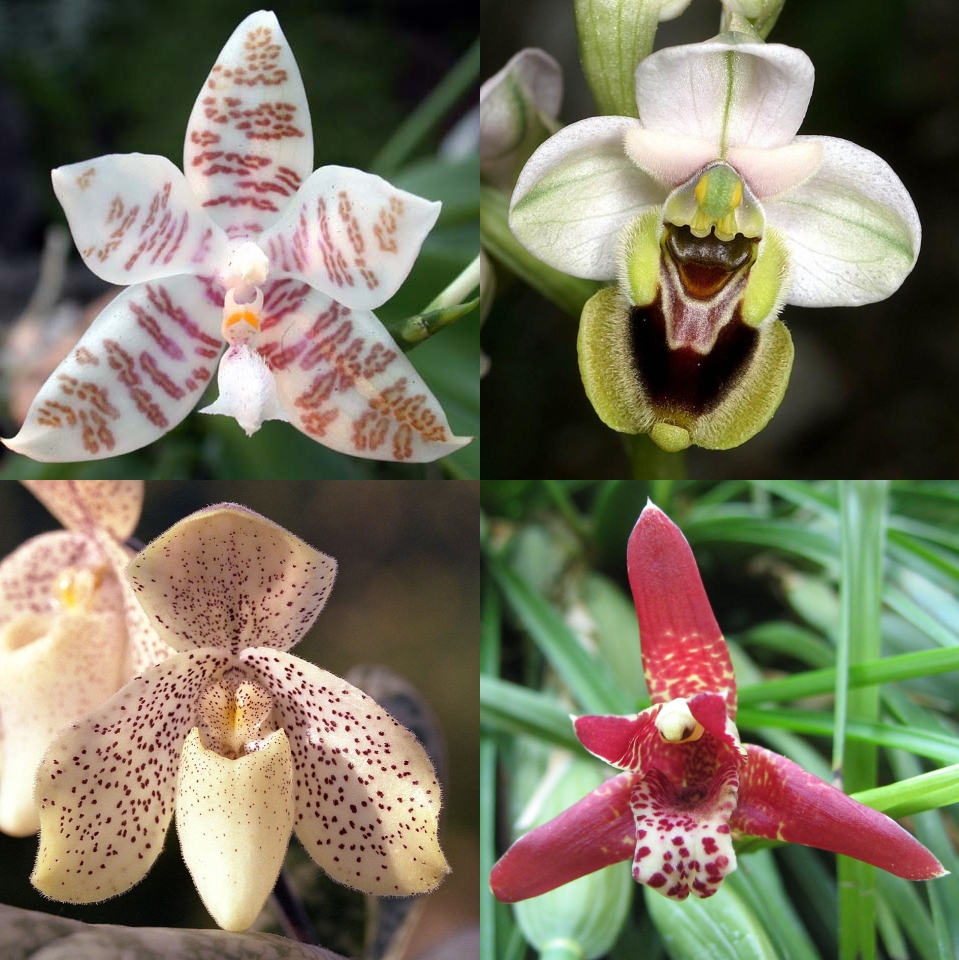 OrchidOrchidaceae
A vast family of colourful, often fragrant flowers found almost everywhere on earth
Orchidaceae · Wildflower
OrchidOrchidaceae
A vast family of colourful, often fragrant flowers found almost everywhere on earth
Orchidaceae · Wildflower
 Vanilla
Climbing orchids with pods used for the world’s most popular flavor
🇲🇽 Mexico and 7 more · Wildflower
Vanilla
Climbing orchids with pods used for the world’s most popular flavor
🇲🇽 Mexico and 7 more · Wildflower
 Orchis
A group of wild orchids with tuberous roots from Europe, North Africa and Asia
🇹🇷 Turkey and 7 more · Wildflower
Orchis
A group of wild orchids with tuberous roots from Europe, North Africa and Asia
🇹🇷 Turkey and 7 more · Wildflower
 Pansy orchidMiltoniopsis
An orchid with flowers that resemble garden pansies
🇨🇷 Costa Rica and 5 more · Orchid
Pansy orchidMiltoniopsis
An orchid with flowers that resemble garden pansies
🇨🇷 Costa Rica and 5 more · Orchid
More from India
All the flowers of India PeachPrunus persica
A flowering fruit tree from China, grown for its pink blossoms and sweet fruit
🇨🇳 China and 7 more · Flowering tree
PeachPrunus persica
A flowering fruit tree from China, grown for its pink blossoms and sweet fruit
🇨🇳 China and 7 more · Flowering tree
 PomegranatePunica granatum
A shrub with bright red flowers and a fruit full of edible seeds
🇮🇷 Iran and 9 more · Flowering shrub
PomegranatePunica granatum
A shrub with bright red flowers and a fruit full of edible seeds
🇮🇷 Iran and 9 more · Flowering shrub
 TulipTulipa
Spring-blooming bulbs with showy, cup-shaped flowers in many colours
🇳🇱 Netherlands and 7 more · Wildflower
TulipTulipa
Spring-blooming bulbs with showy, cup-shaped flowers in many colours
🇳🇱 Netherlands and 7 more · Wildflower
 FennelFoeniculum vulgare
A tall, aromatic herb with feathery leaves and yellow umbels, used for food and spice
🇨🇳 China and 7 more · Herb or useful flower
FennelFoeniculum vulgare
A tall, aromatic herb with feathery leaves and yellow umbels, used for food and spice
🇨🇳 China and 7 more · Herb or useful flower