
Vanda falcata
A small fragrant orchid from East Asia, prized for its white flowers and many forms
Vanda falcata, called the wind orchid, is a small orchid native to China, Korea, and Japan. It grows on trees or rocks and produces fragrant white flowers, often with a curved spur. In Japan, special cultivated forms known as fūkiran have long been treasured, especially for their leaf and flower variations.
- Native to China, Korea, and Japan
- Produces fragrant white flowers with a curved spur
- Grows on trees or rocks as an epiphyte
- Cultivated forms called fūkiran are highly prized in Japan
- Pollinated by hawkmoths in the wild
What does Vanda falcata look like?
Vanda falcata is a compact orchid, usually 8–12 cm tall, with 4 to 20 narrow, leathery leaves that are sheathed at the base. Its flower stalks bear 2 to 10 white, fragrant flowers, each with a distinct curved spur. The roots are thick and whitish, clinging to tree bark or rocks. The plant’s neat shape and sweet scent make it popular among collectors, especially in Japan.
Where does Vanda falcata come from?
This orchid grows wild in China, Korea, and Japan, often on tree branches or rocky cliffs. It was first described in the West in 1784 from a Japanese specimen. Over time, it has been classified under several genera, including Orchis and Neofinetia, before being placed in Vanda. Written records of its cultivation date to the late Ming dynasty in China and the 17th century in Japan.
When and how Vanda falcata blooms
Vanda falcata blooms mostly in summer, often during the East Asian rainy season. In nature, it thrives in warm, humid conditions with good air movement. Gardeners often mount it on cork or tree-fern fiber, or in Japan, on mounds of sphagnum moss. The plant grows from offsets and produces roots that absorb water and nutrients from the air and rain.


How Vanda falcata is used
In Japan, Vanda falcata has been grown since the Edo period, especially prized by the nobility for its many unique forms. Today, it is still a popular houseplant and collector’s orchid, valued for its beauty and fragrance. Some cultivated forms are known as fūkiran, meaning 'orchid of wealth and rank.'
Kinds of Vanda falcata
There are many cultivated varieties of Vanda falcata, selected for differences in leaf shape, variegation, and flower form. In Japan, these are called fūkiran and are highly collectible. The species has also been used to create numerous hybrids with other orchids, though many hybrid names are now obsolete due to taxonomic changes.
What Vanda falcata means
Vanda falcata is a symbol of refinement in Japanese horticulture. Its special forms were once reserved for the elite, and the plant is still associated with wealth and status. Because of its many natural and cultivated variations, it has been proposed as a model organism for studying orchid flower development.
Questions people ask about Vanda falcata
Where does Vanda falcata come from?
Vanda falcata is native to East Asia, specifically China, Korea, and Japan, where it grows on trees and rocks in humid forests.
What does the wind orchid look like?
It is a small orchid with narrow, leathery leaves and produces clusters of white, fragrant flowers, each with a curved spur.
How is Vanda falcata used or valued?
It is grown as a houseplant and collector’s orchid, especially in Japan, where special forms called fūkiran are treasured for their unique appearance.
What does Vanda falcata symbolise?
In Japan, cultivated forms of Vanda falcata have been associated with wealth and rank, reflecting their historical enjoyment by the nobility.
When does Vanda falcata flower?
It usually blooms in summer, often during the East Asian rainy season, but can sometimes flower as late as December.
Good reading and sources
- Plants of the World OnlineRoyal Botanic Gardens, Kew, Plant database
- Where it has been recordedGBIF, Plant database
- Sightings and photos by naturalistsiNaturalist, Plant database
- Vanda falcata on WikipediaEncyclopedia
- More photos on Wikimedia CommonsPhotos
- Wikidata recordOpen data
The facts on this page come from the Wikipedia article "Vanda falcata", written by its contributors and used under the CC BY-SA 4.0 licence, and from its Wikidata record (CC0). Phool rewrote the text in its own words, with AI assistance, and compares every page with the article to make sure no passage is copied. It may be reused under the same CC BY-SA 4.0 licence with a link back.
It may contain mistakes. It is not medical or foraging advice: many flowers are poisonous, and traditional uses are reported, not recommended. If something is wrong, tell us. Last refreshed 2026-10-03.
Others in the family Orchidaceae
The whole family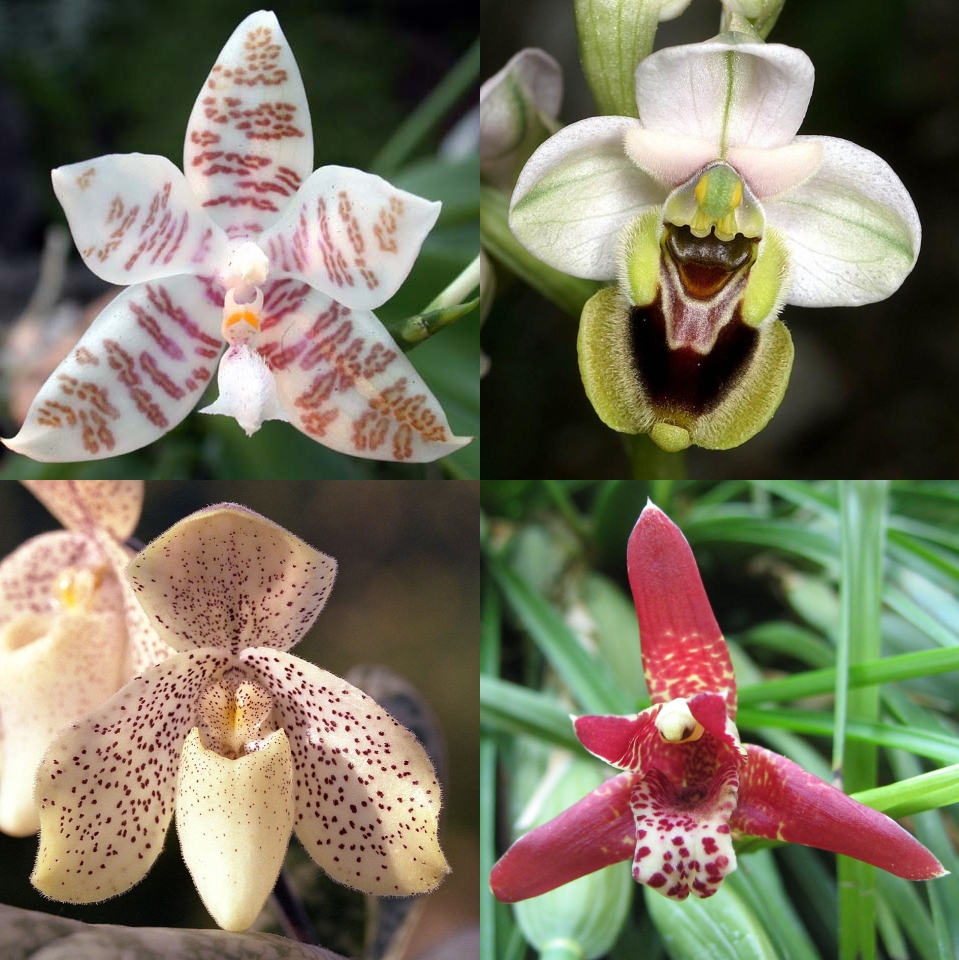 OrchidOrchidaceae
A vast family of colourful, often fragrant flowers found almost everywhere on earth
Orchidaceae · Wildflower
OrchidOrchidaceae
A vast family of colourful, often fragrant flowers found almost everywhere on earth
Orchidaceae · Wildflower
 Vanilla
Climbing orchids with pods used for the world’s most popular flavor
🇲🇽 Mexico and 7 more · Wildflower
Vanilla
Climbing orchids with pods used for the world’s most popular flavor
🇲🇽 Mexico and 7 more · Wildflower
 Orchis
A group of wild orchids with tuberous roots from Europe, North Africa and Asia
🇹🇷 Turkey and 7 more · Wildflower
Orchis
A group of wild orchids with tuberous roots from Europe, North Africa and Asia
🇹🇷 Turkey and 7 more · Wildflower
 Paphiopedilum glaucophyllum
A Southeast Asian slipper orchid with blue-green leaves and striped flowers
🇮🇩 Indonesia · Wildflower
Paphiopedilum glaucophyllum
A Southeast Asian slipper orchid with blue-green leaves and striped flowers
🇮🇩 Indonesia · Wildflower
More from Japan
All the flowers of Japan PeachPrunus persica
A flowering fruit tree from China, grown for its pink blossoms and sweet fruit
🇨🇳 China and 7 more · Flowering tree
PeachPrunus persica
A flowering fruit tree from China, grown for its pink blossoms and sweet fruit
🇨🇳 China and 7 more · Flowering tree
 BirchBetula
Slender trees with papery bark found across the northern world
🇨🇳 China and 7 more · Wildflower
BirchBetula
Slender trees with papery bark found across the northern world
🇨🇳 China and 7 more · Wildflower
 Chrysanthemum菊花
Autumn-blooming flower with thousands of varieties, cherished in East Asia and beyond
🇨🇳 China and 6 more · Wildflower
Chrysanthemum菊花
Autumn-blooming flower with thousands of varieties, cherished in East Asia and beyond
🇨🇳 China and 6 more · Wildflower
 Sacred lotusNelumbo nucifera
The pink aquatic flower sacred in Asia and grown for food, worship and beauty
🇮🇳 India and 7 more · Water flower
Sacred lotusNelumbo nucifera
The pink aquatic flower sacred in Asia and grown for food, worship and beauty
🇮🇳 India and 7 more · Water flower